" transform="translate(3 3)" width="44px"/></svg>)
1933
1972
1907
1913
1922
2000
2017
1946
1934
1979
Leica Camera Models: Complete History & Timeline
Early Leica, M39, & 35mm M-mount,
1923

1923
Leica
0-serie
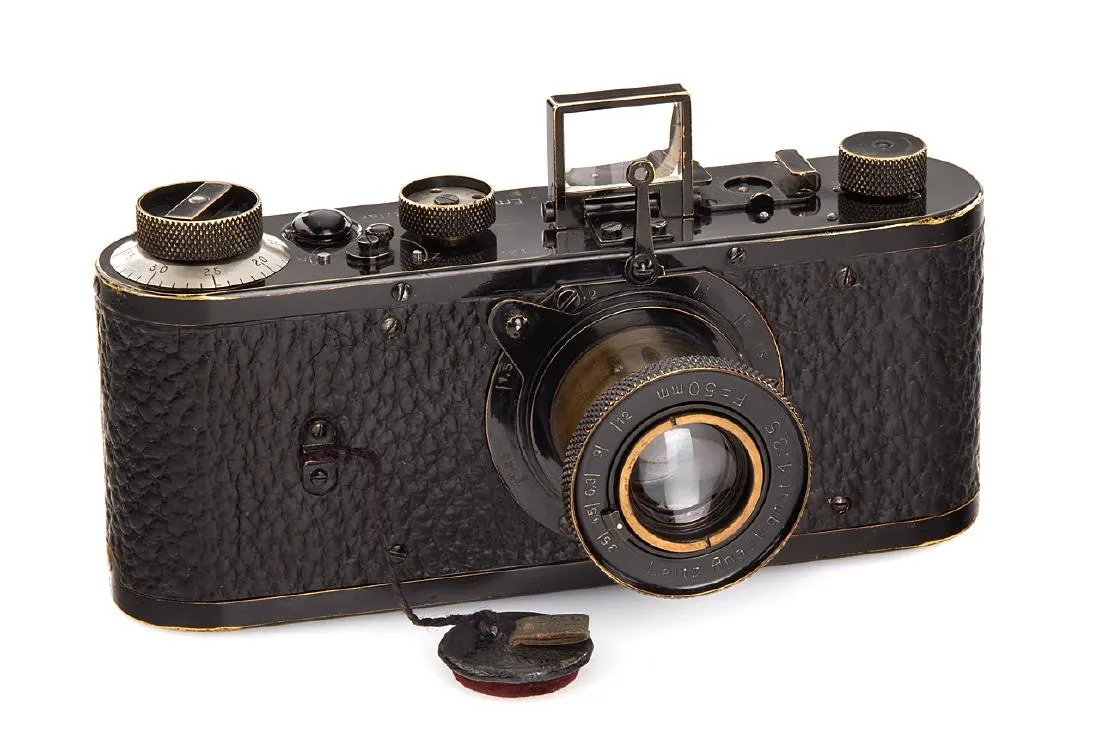
The Leica 0-Serie was the experimental group made before regular Leica production began. Twenty-five cameras, numbered 101–125, are recorded from 1923. They were distributed to photographers, Leitz employees and other testers so that the design could be assessed under practical conditions. Individual cameras differed in details such as the shutter, finder and lens as development continued. The basic arrangement was already established: 35mm cinema film travelled horizontally through the camera, producing a 24 × 36mm negative. Experience gained from these cameras led to the Leica I and regular production in 1925.
1923
1923
Leica
0-serie
The Leica 0-Serie was the experimental group made before regular Leica production began. Twenty-five cameras, numbered 101–125, are recorded from 1923. They were distributed to photographers, Leitz employees and other testers so that the design could be assessed under practical conditions. Individual cameras differed in details such as the shutter, finder and lens as development continued. The basic arrangement was already established: 35mm cinema film travelled horizontally through the camera, producing a 24 × 36mm negative. Experience gained from these cameras led to the Leica I and regular production in 1925.
1925
1925-1931
Leica
I (Model A)

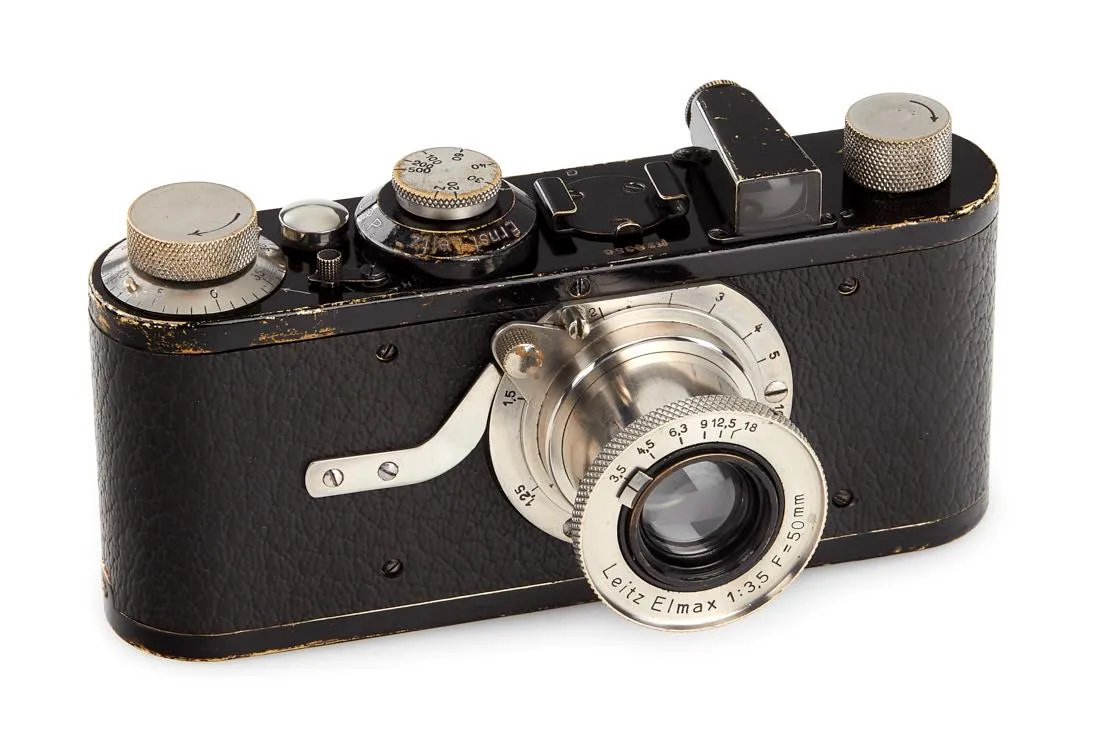
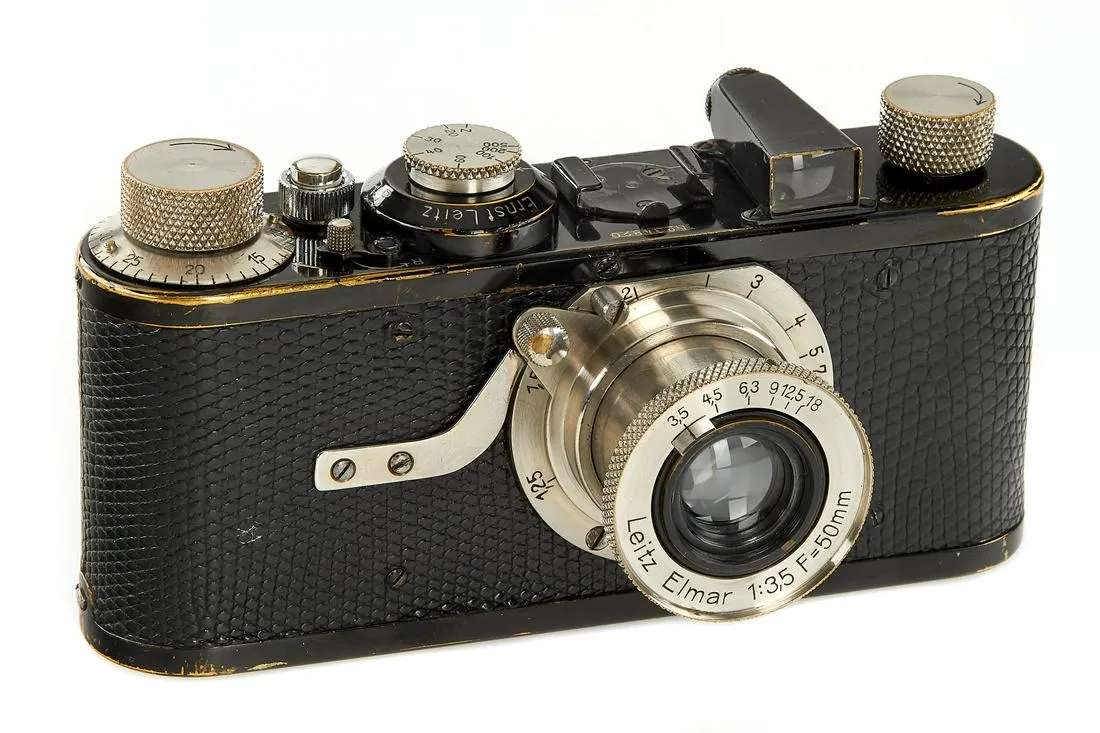
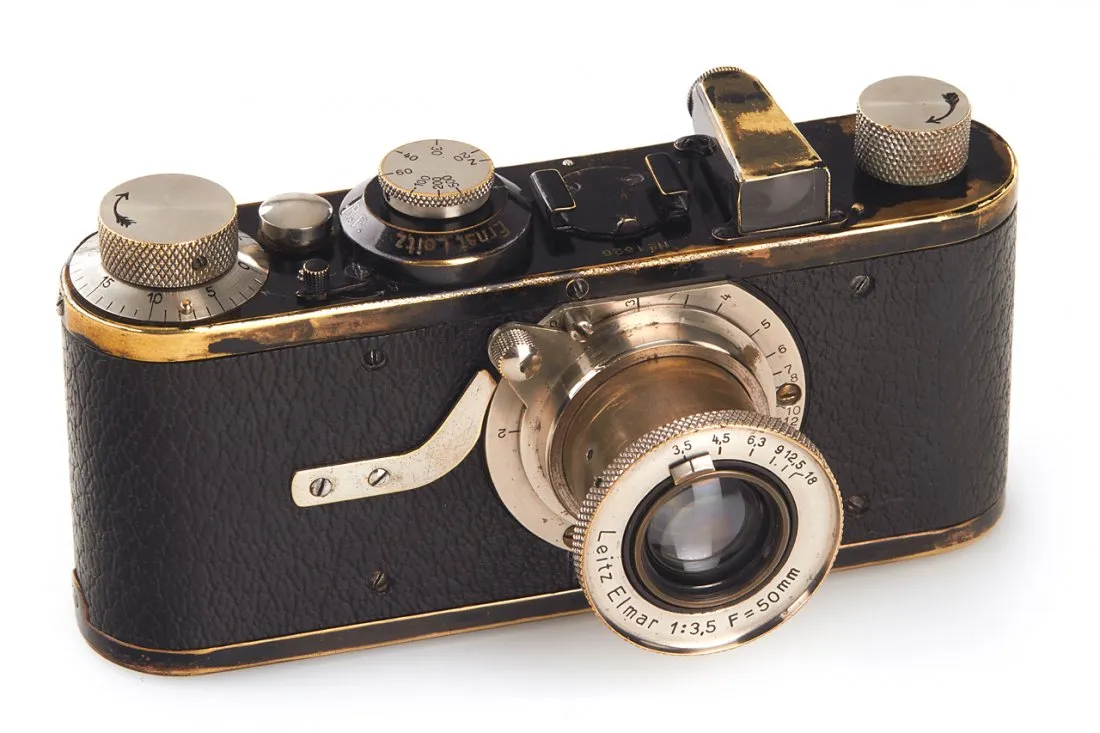
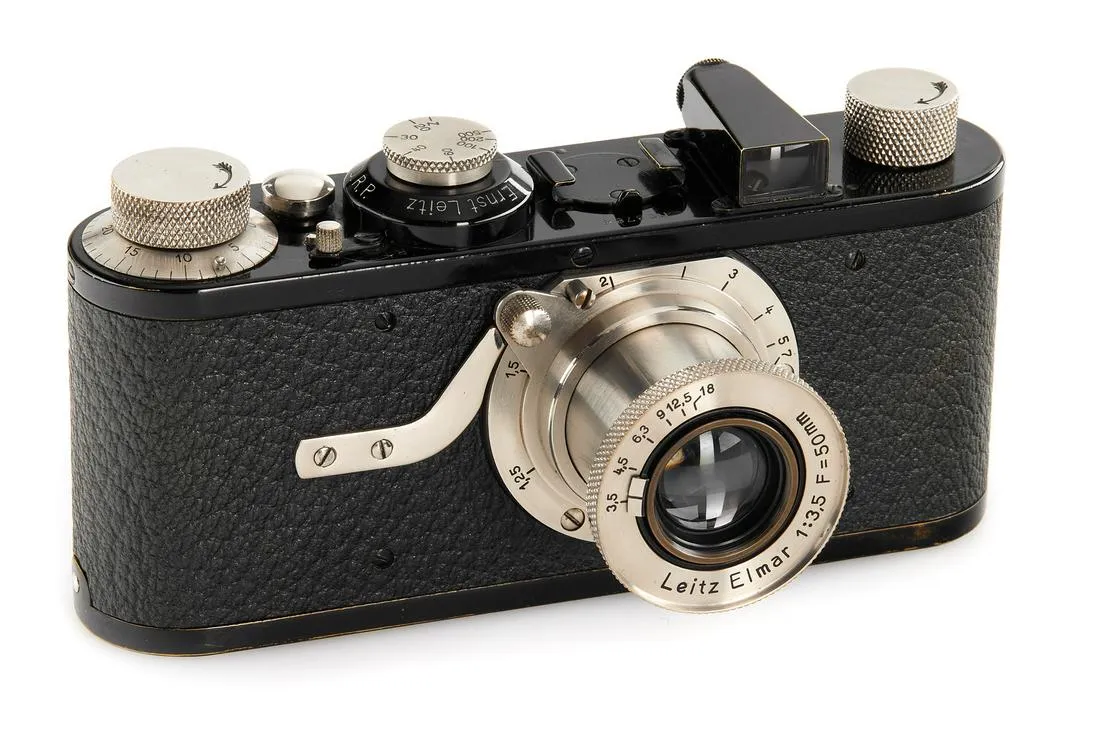


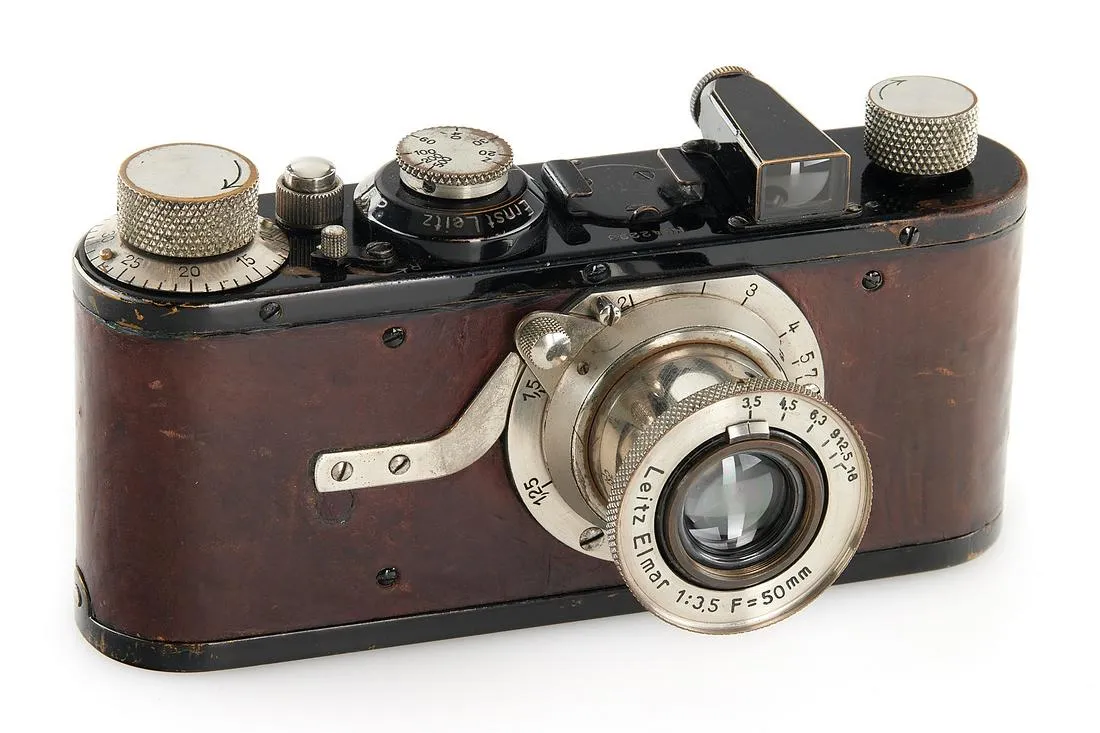
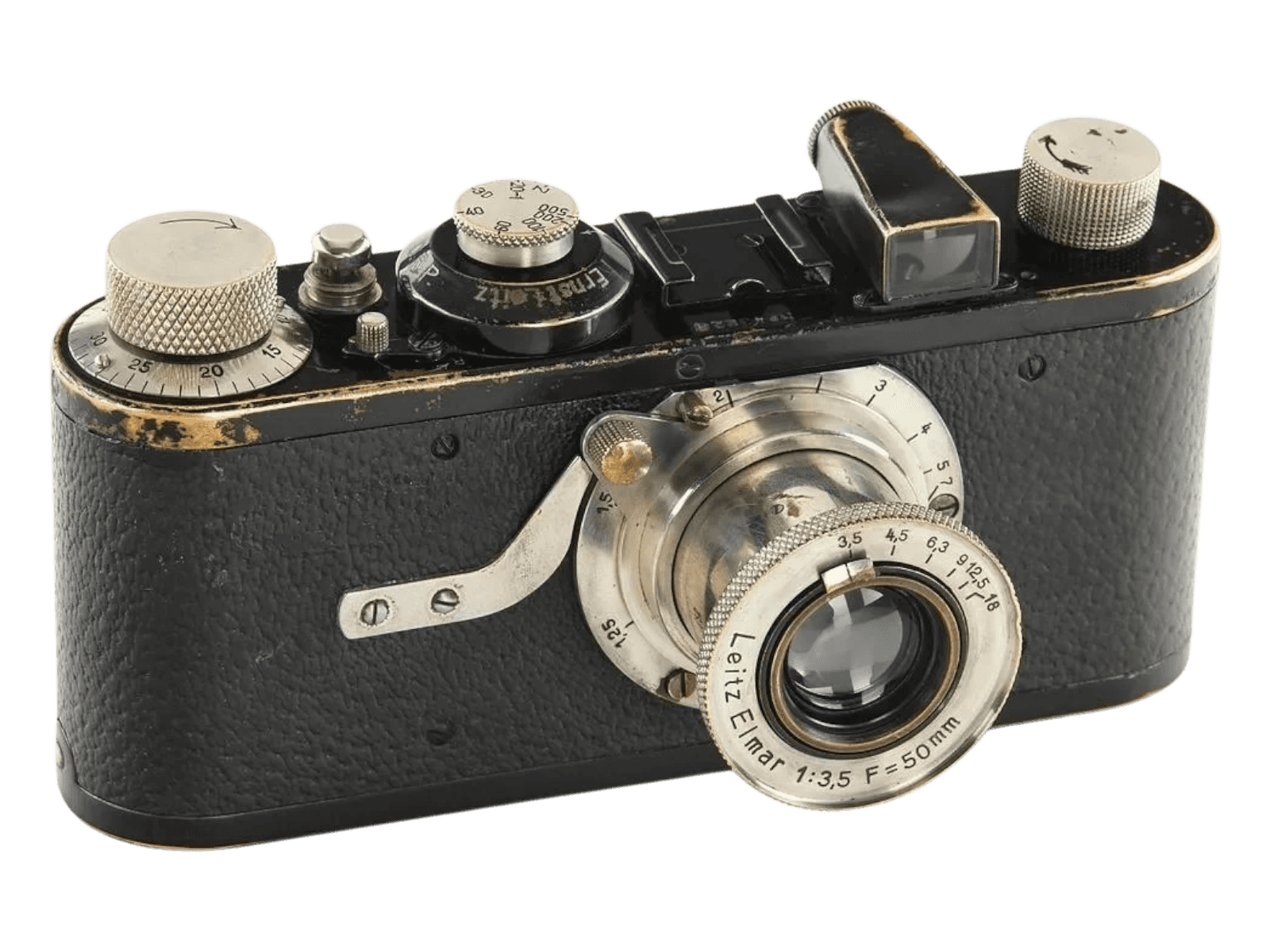
Presented publicly at the Leipzig Spring Fair in 1925, the Leica I Model A was the first Leica made in regular commercial production. It uses the 24 × 36mm format on 35mm film but has a fixed lens rather than an interchangeable mount. Various versions were fitted with Anastigmat, Elmax, Elmar and later Hektor lenses. Focusing was by distance scale or with a separate accessory rangefinder. The cloth focal-plane shutter provided speeds up to 1/500 second. The Model A established the compact body arrangement from which the later Leica screw-mount cameras developed.
1925
1925-1931
Leica
I (Model A)
Presented publicly at the Leipzig Spring Fair in 1925, the Leica I Model A was the first Leica made in regular commercial production. It uses the 24 × 36mm format on 35mm film but has a fixed lens rather than an interchangeable mount. Various versions were fitted with Anastigmat, Elmax, Elmar and later Hektor lenses. Focusing was by distance scale or with a separate accessory rangefinder. The cloth focal-plane shutter provided speeds up to 1/500 second. The Model A established the compact body arrangement from which the later Leica screw-mount cameras developed.
1926
1926-1941
COMPUR-LEICA
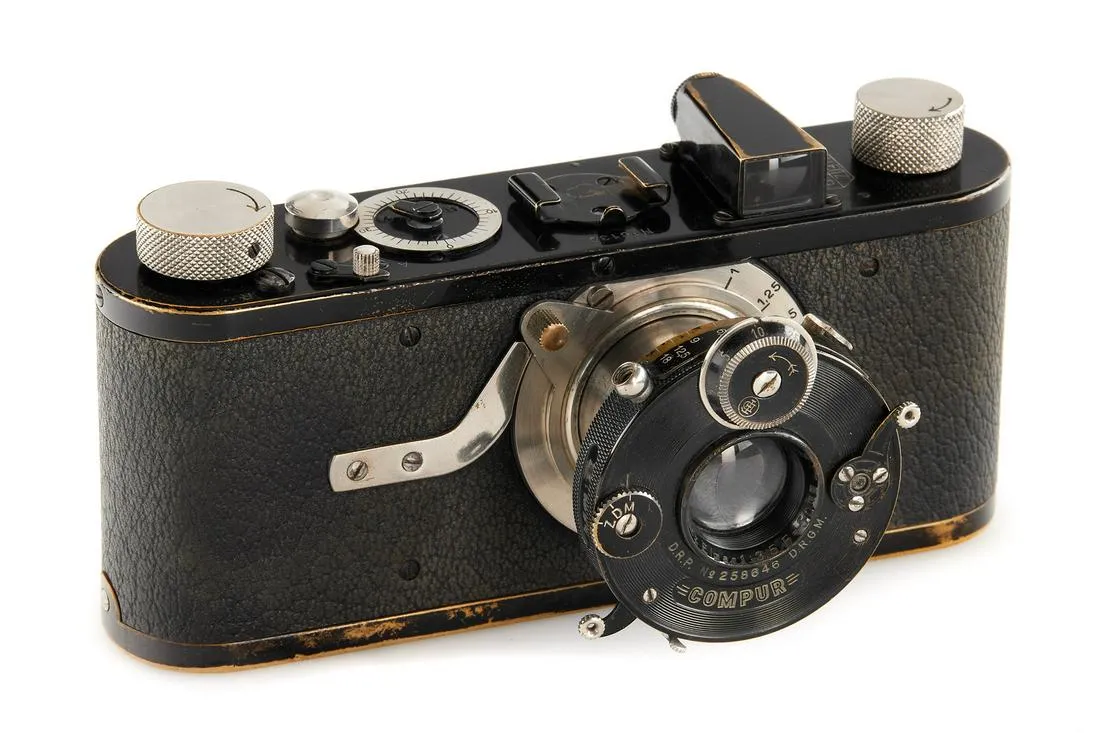
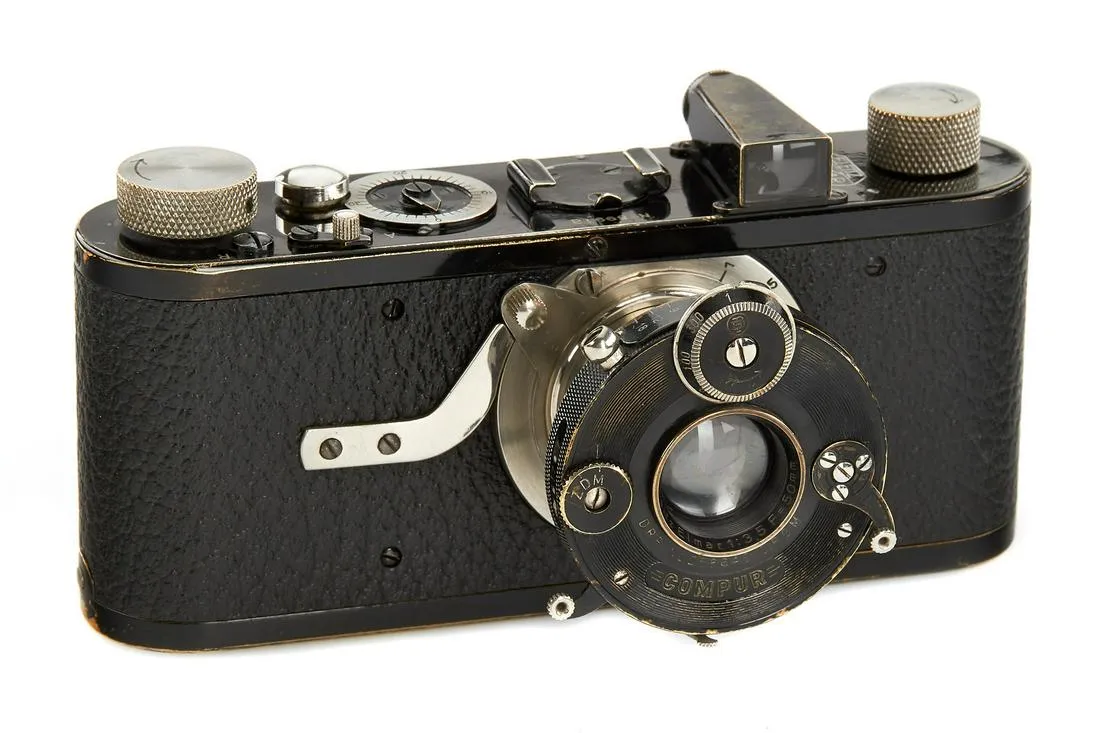
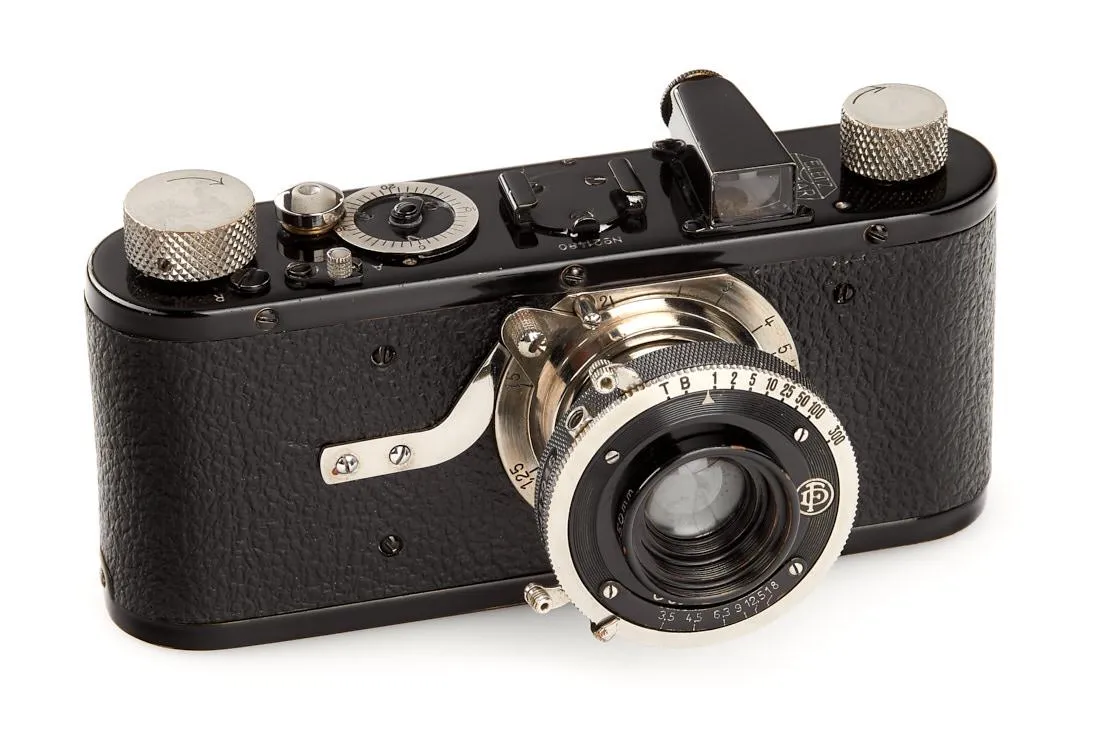
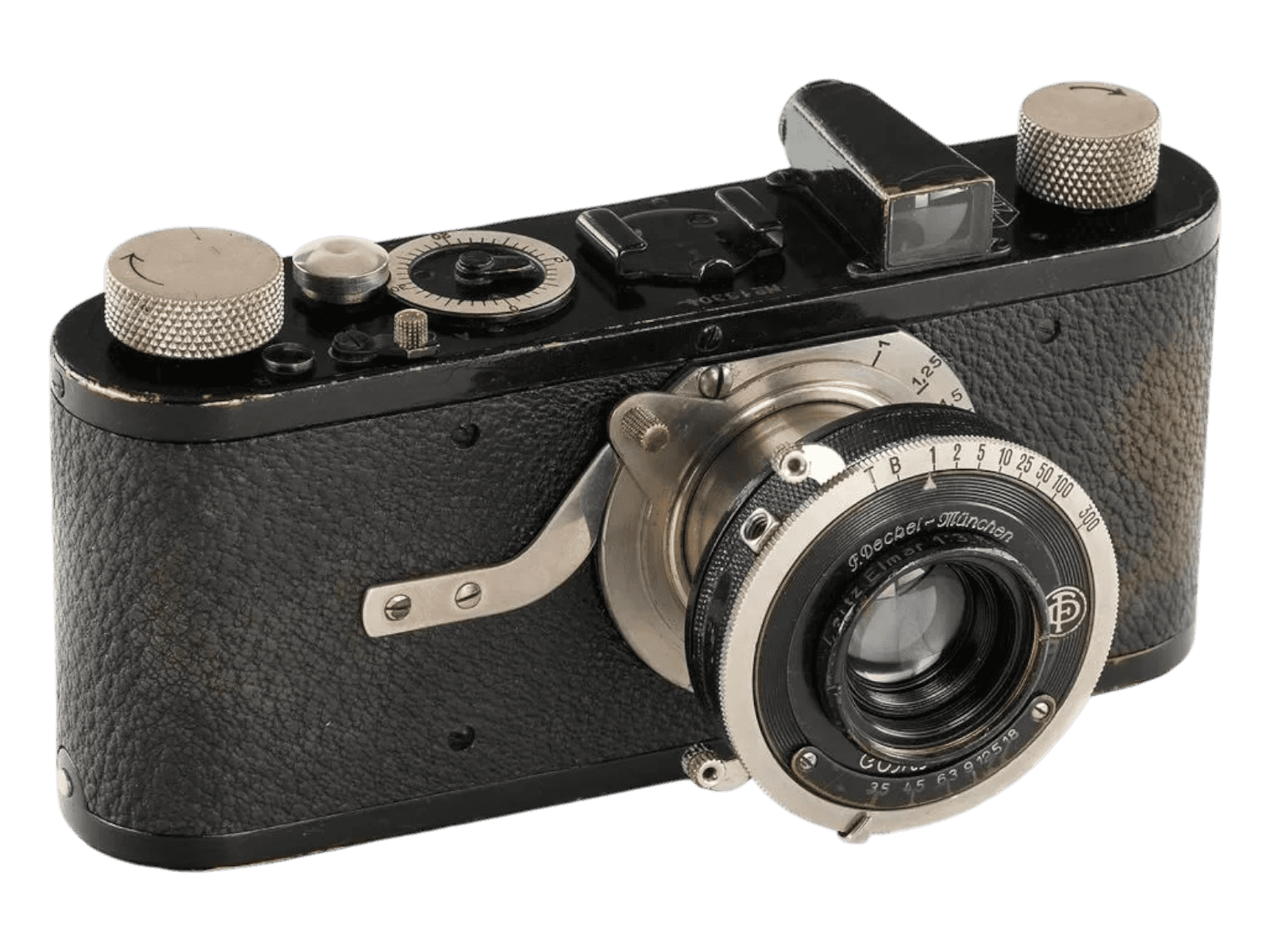
The Compur-Leica, also known as the Leica Model B, was introduced in 1926 as an alternative to the focal-plane-shutter Leica. Its 50mm f/3.5 Elmar was mounted with a Compur leaf shutter providing speeds from approximately one second to 1/300 second. The arrangement supplied the slow timed exposures missing from the earliest Model A. Film advance and shutter cocking were separate operations, and there was no mechanical prevention of double exposure. Dial-set and later rim-set Compur versions were made. The design remained a separate branch of Leica development; subsequent mainstream models continued with the focal-plane shutter.
1926
1926-1941
COMPUR-LEICA
The Compur-Leica, also known as the Leica Model B, was introduced in 1926 as an alternative to the focal-plane-shutter Leica. Its 50mm f/3.5 Elmar was mounted with a Compur leaf shutter providing speeds from approximately one second to 1/300 second. The arrangement supplied the slow timed exposures missing from the earliest Model A. Film advance and shutter cocking were separate operations, and there was no mechanical prevention of double exposure. Dial-set and later rim-set Compur versions were made. The design remained a separate branch of Leica development; subsequent mainstream models continued with the focal-plane shutter.
1930

1930-1939
Leica
I (Model C)
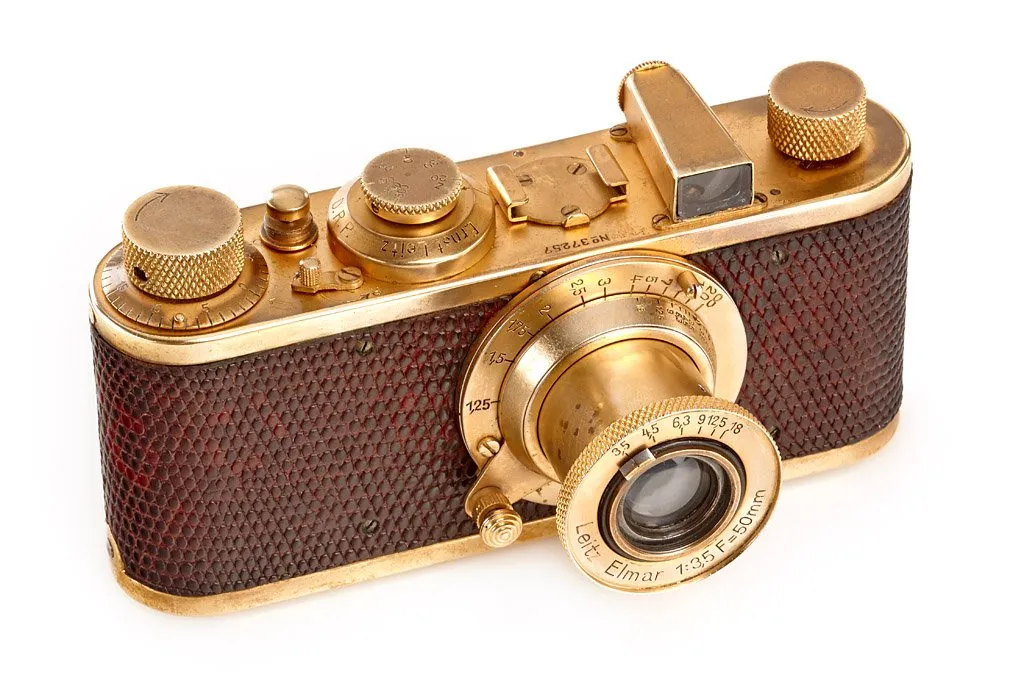

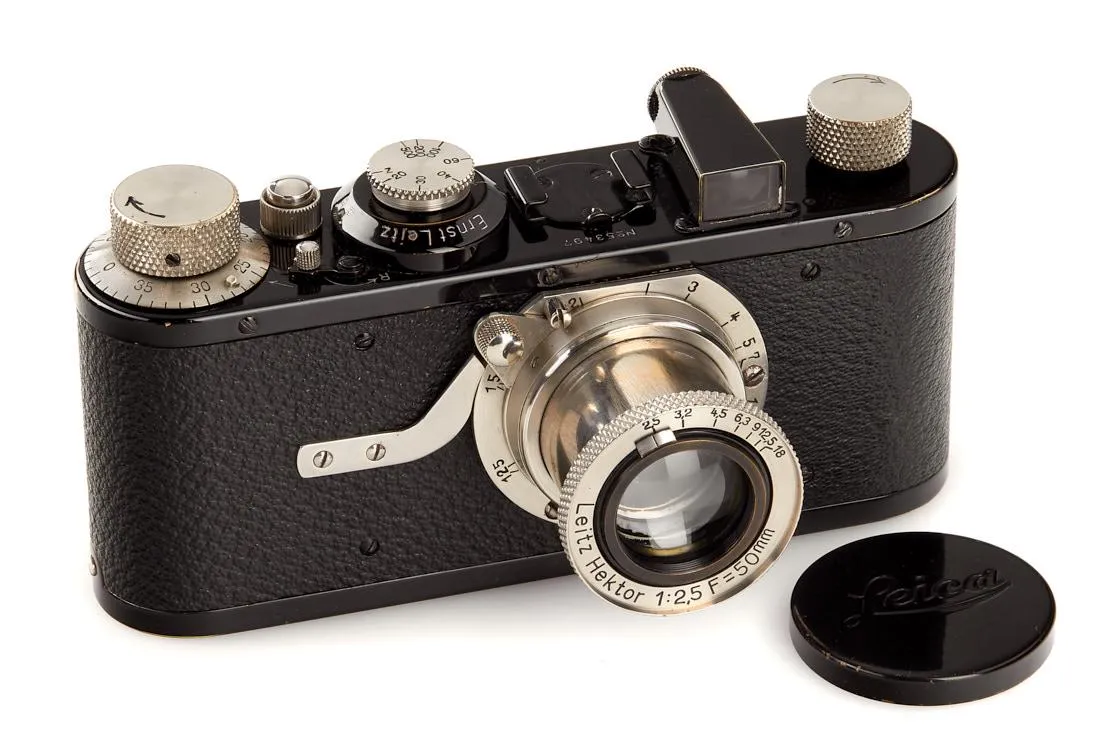
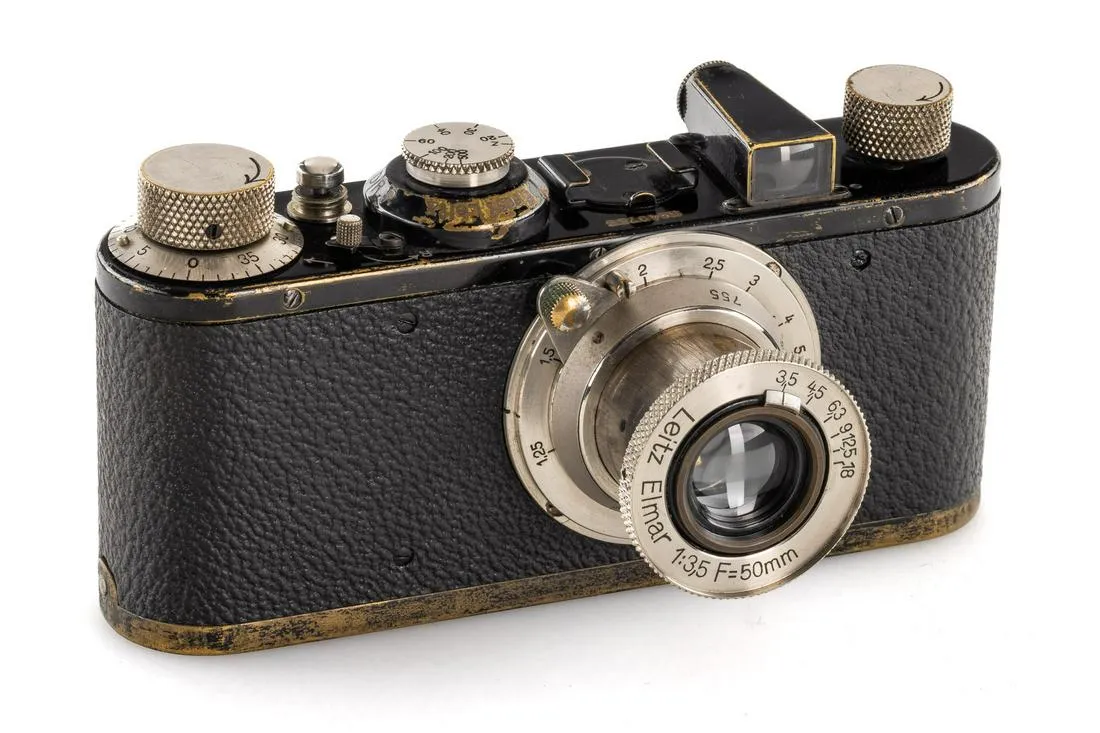
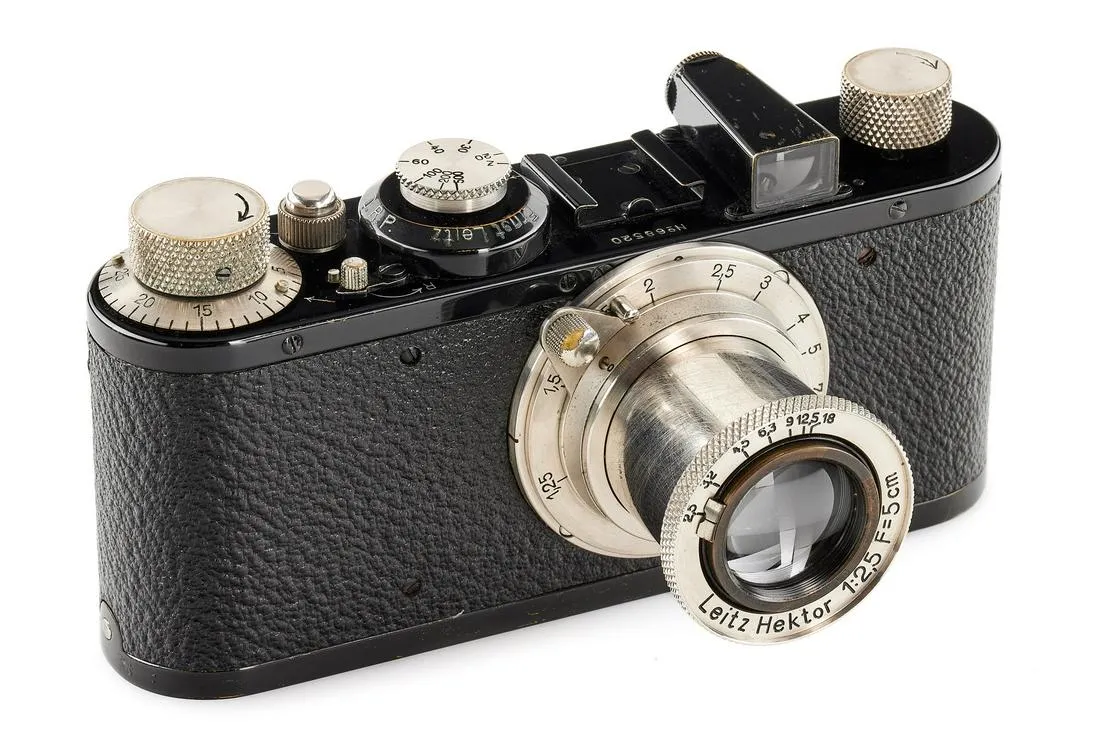
The Leica I Model C introduced interchangeable lenses in 1930. The first examples did not yet have a universally standardized lens-to-film distance, so individual lenses were matched to particular camera bodies. Leitz subsequently standardized the mount, identified on contemporary equipment by a small zero mark. A standardized lens could then be transferred between compatible cameras without individual adjustment. The 39mm screw fitting became the basis of the Leica screw-mount system used on later I, II and III models. The Model C itself had no built-in rangefinder; focusing remained by scale or with an accessory rangefinder.
1930
1930-1939
Leica
I (Model C)
The Leica I Model C introduced interchangeable lenses in 1930. The first examples did not yet have a universally standardized lens-to-film distance, so individual lenses were matched to particular camera bodies. Leitz subsequently standardized the mount, identified on contemporary equipment by a small zero mark. A standardized lens could then be transferred between compatible cameras without individual adjustment. The 39mm screw fitting became the basis of the Leica screw-mount system used on later I, II and III models. The Model C itself had no built-in rangefinder; focusing remained by scale or with an accessory rangefinder.
1932

1932-1948
Leica
Standard
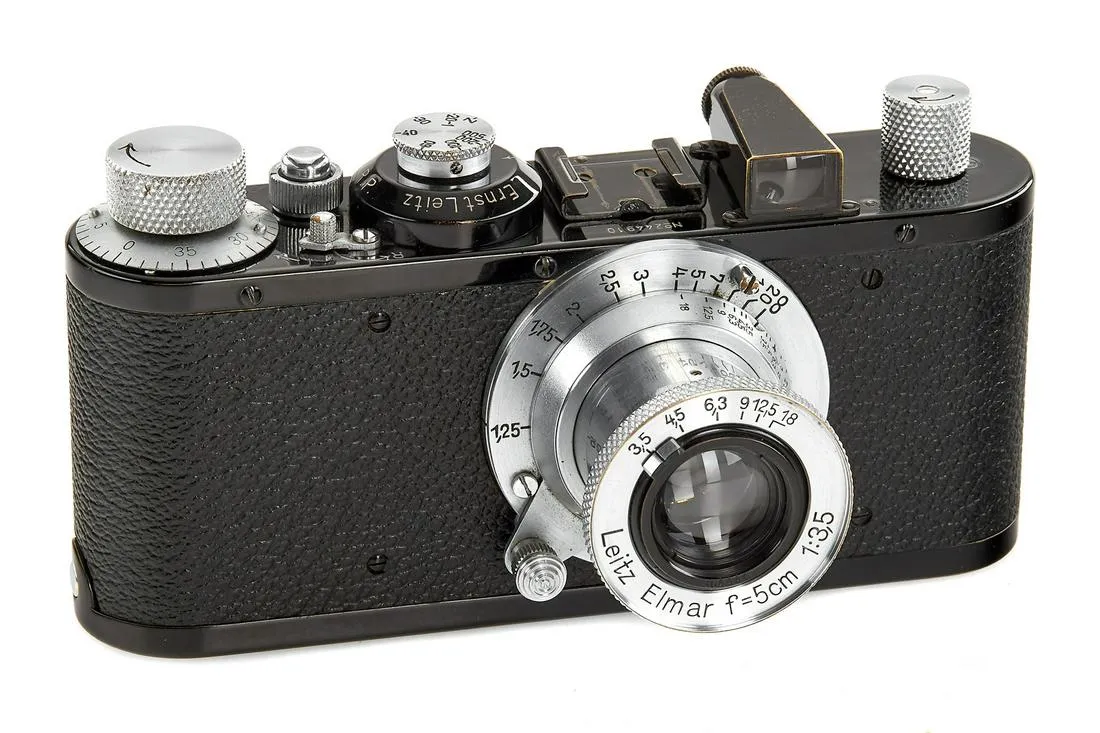
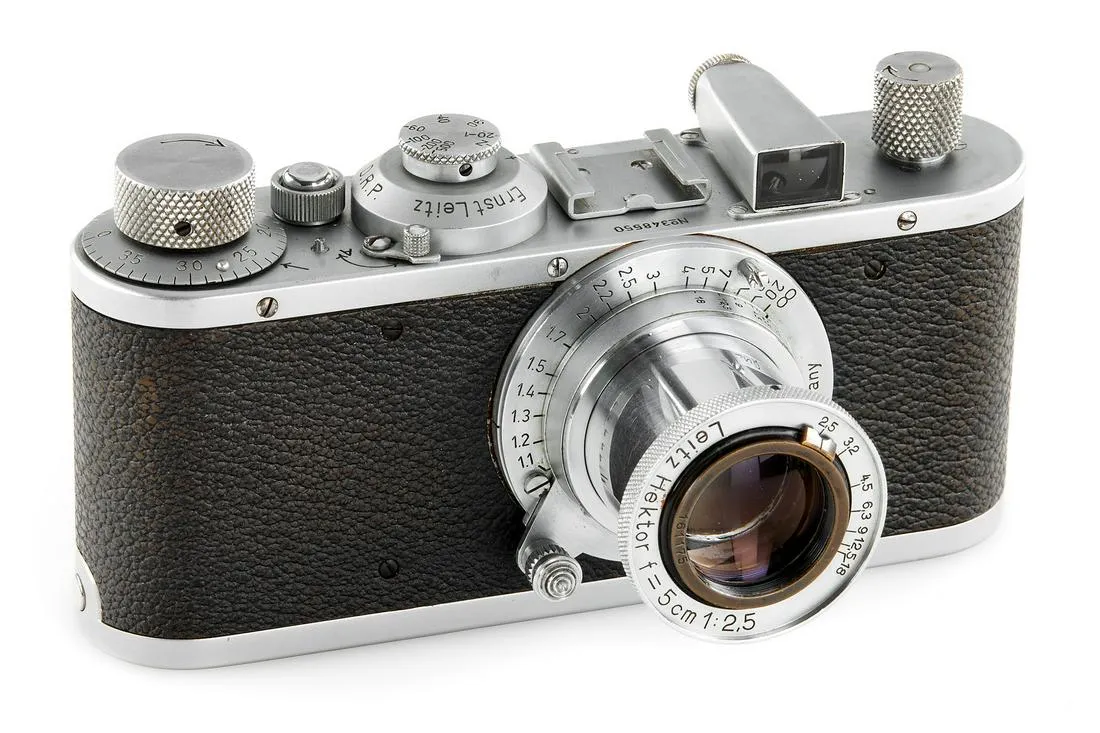

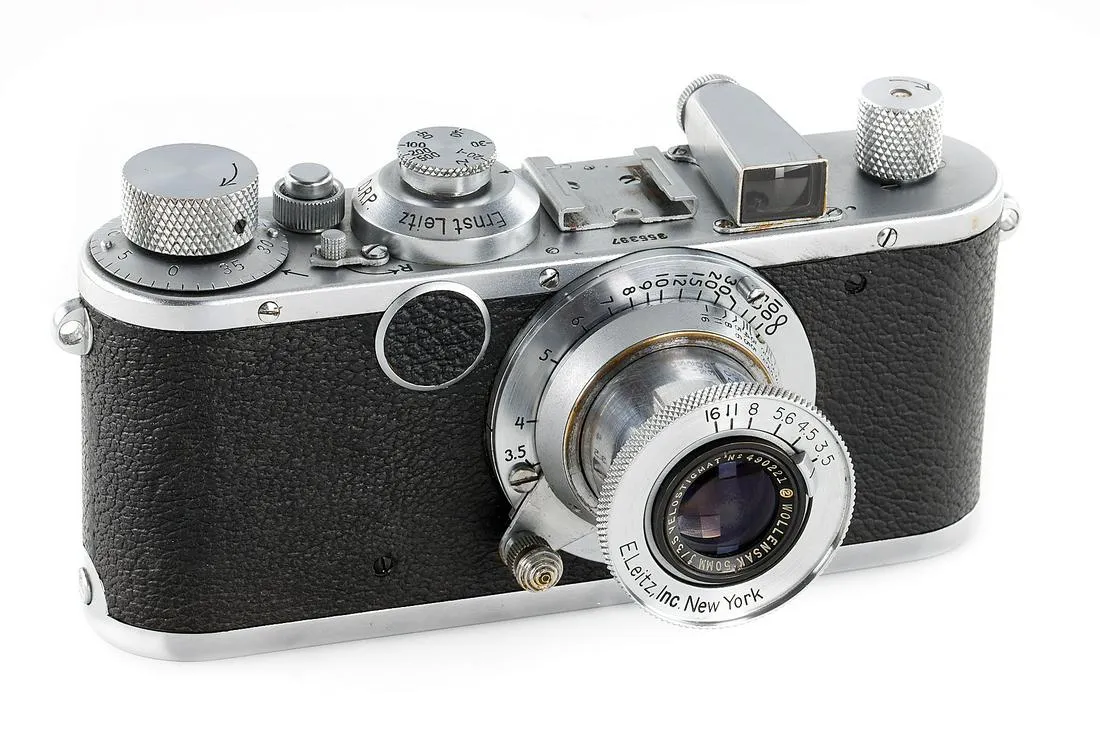


Introduced in 1932, the Leica Standard was a simple interchangeable-lens model without a built-in rangefinder. It used the standardized 39mm screw mount and retained a conventional optical viewfinder. Its accessory shoe was positioned above the lens axis, allowing a separate rangefinder or alternative finder to be mounted conveniently. The camera was therefore usable either by scale focusing or with external focusing equipment. Black enamel with nickel fittings was common on early examples, with chrome finishes appearing later. The Standard continued the basic Leica I arrangement while the Leica II and III added coupled focusing and additional shutter functions.

1932-1948
Leica
II
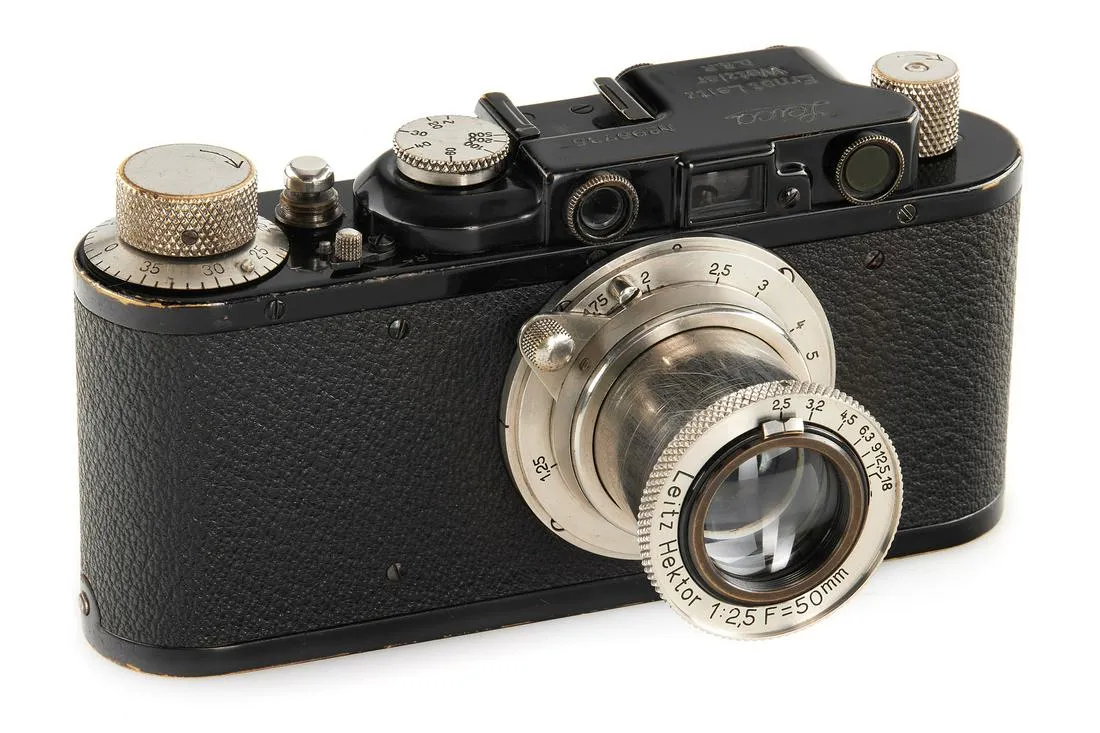

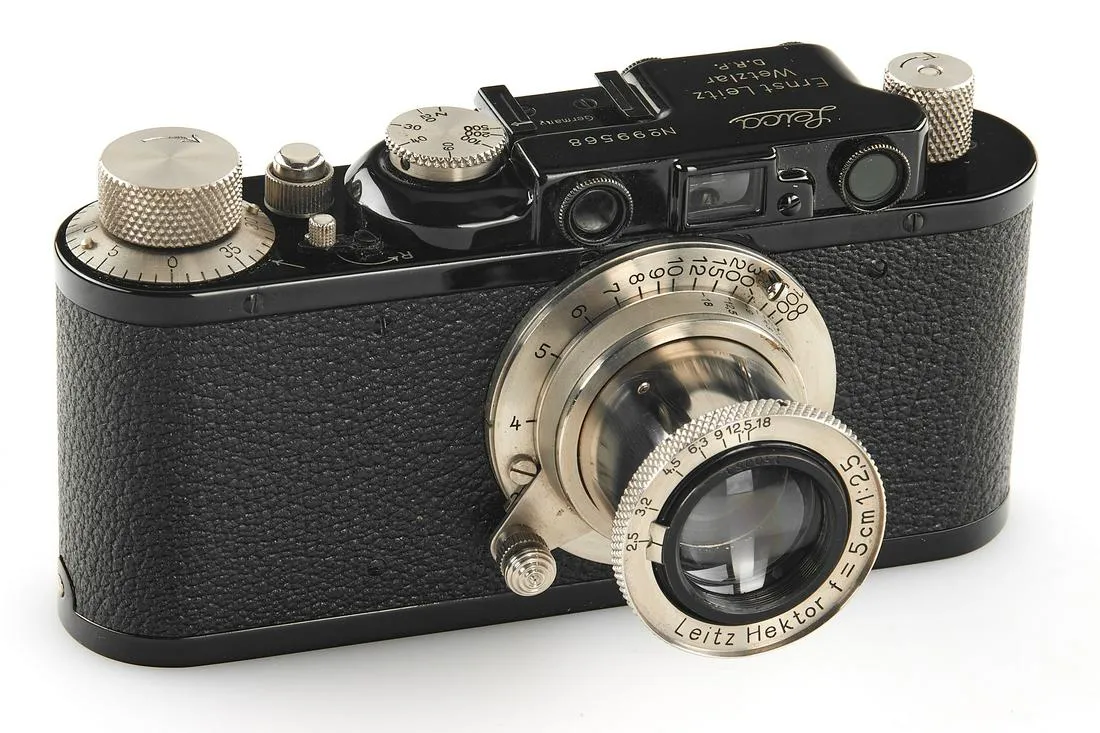
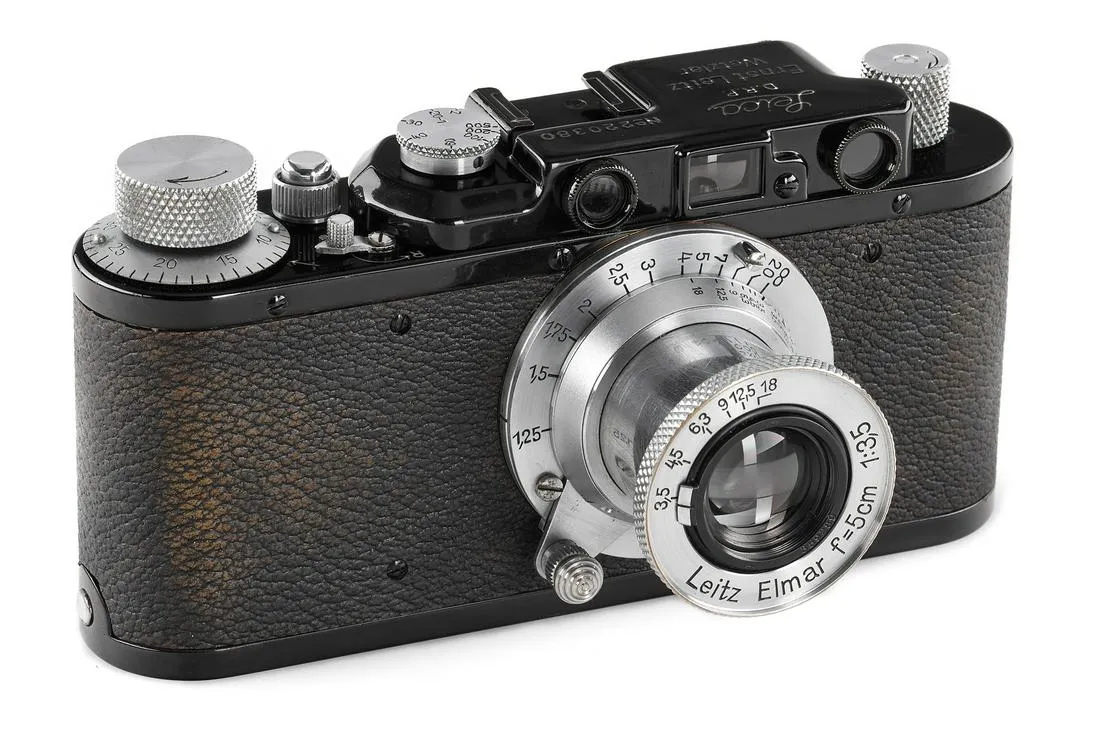
Introduced in 1932, the Leica II was the first production Leica with a rangefinder built into the camera and coupled mechanically to the lens. Turning the lens focusing control moved the rangefinder mechanism, allowing distance to be set without a separate accessory. The rangefinder and viewfinder still had separate optical windows and separate eyepieces. The camera retained the standardized Leica screw mount and cloth focal-plane shutter. This arrangement established the basic form of the Leica screw-mount rangefinder: interchangeable lenses, coupled focusing and a compact 35mm body.
1932
1932-1948
Leica
Standard
Introduced in 1932, the Leica Standard was a simple interchangeable-lens model without a built-in rangefinder. It used the standardized 39mm screw mount and retained a conventional optical viewfinder. Its accessory shoe was positioned above the lens axis, allowing a separate rangefinder or alternative finder to be mounted conveniently. The camera was therefore usable either by scale focusing or with external focusing equipment. Black enamel with nickel fittings was common on early examples, with chrome finishes appearing later. The Standard continued the basic Leica I arrangement while the Leica II and III added coupled focusing and additional shutter functions.
1932-1948
Leica
II
Introduced in 1932, the Leica II was the first production Leica with a rangefinder built into the camera and coupled mechanically to the lens. Turning the lens focusing control moved the rangefinder mechanism, allowing distance to be set without a separate accessory. The rangefinder and viewfinder still had separate optical windows and separate eyepieces. The camera retained the standardized Leica screw mount and cloth focal-plane shutter. This arrangement established the basic form of the Leica screw-mount rangefinder: interchangeable lenses, coupled focusing and a compact 35mm body.
1933

1933-1939
Leica
III
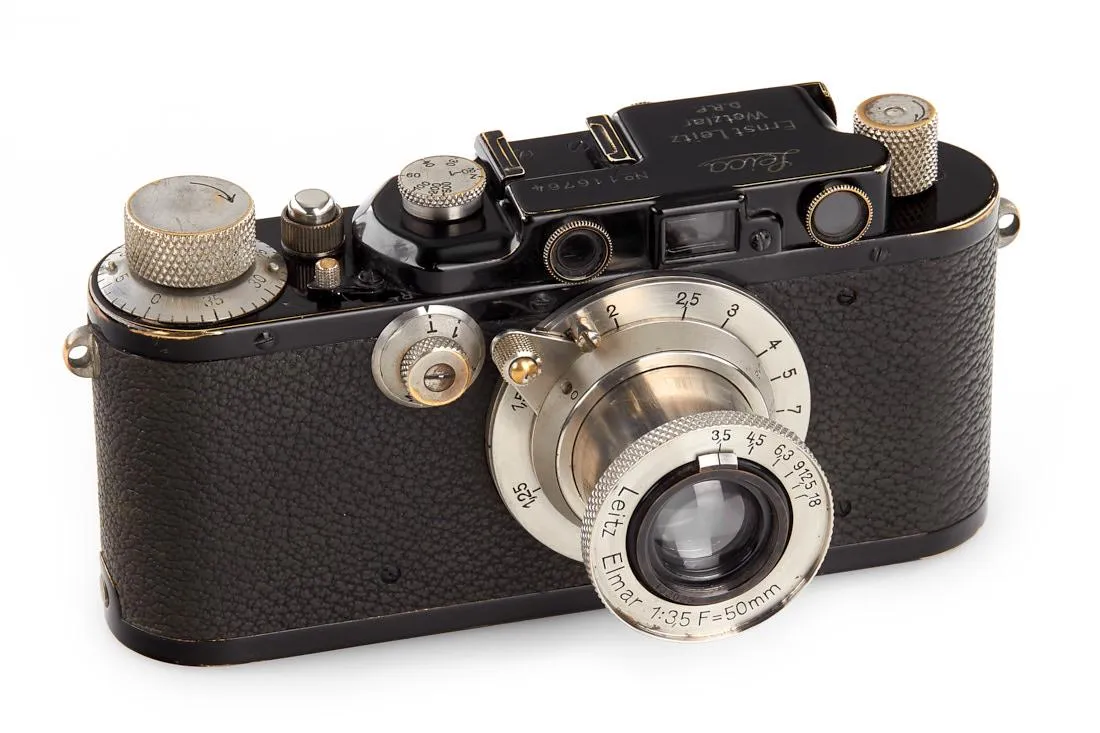


The Leica III followed in 1933 and added a separate slow-speed shutter mechanism. A dial on the front of the body provided longer timed exposures, extending the shutter range to one second, while the normal faster speeds remained on the top dial. The coupled rangefinder and separate optical viewfinder of the Leica II were retained. Strap lugs were also incorporated into the body. The two-dial shutter arrangement became characteristic of the fully equipped III-series cameras and remained in use through most of the later screw-mount range.

1933-1942
Leica
250
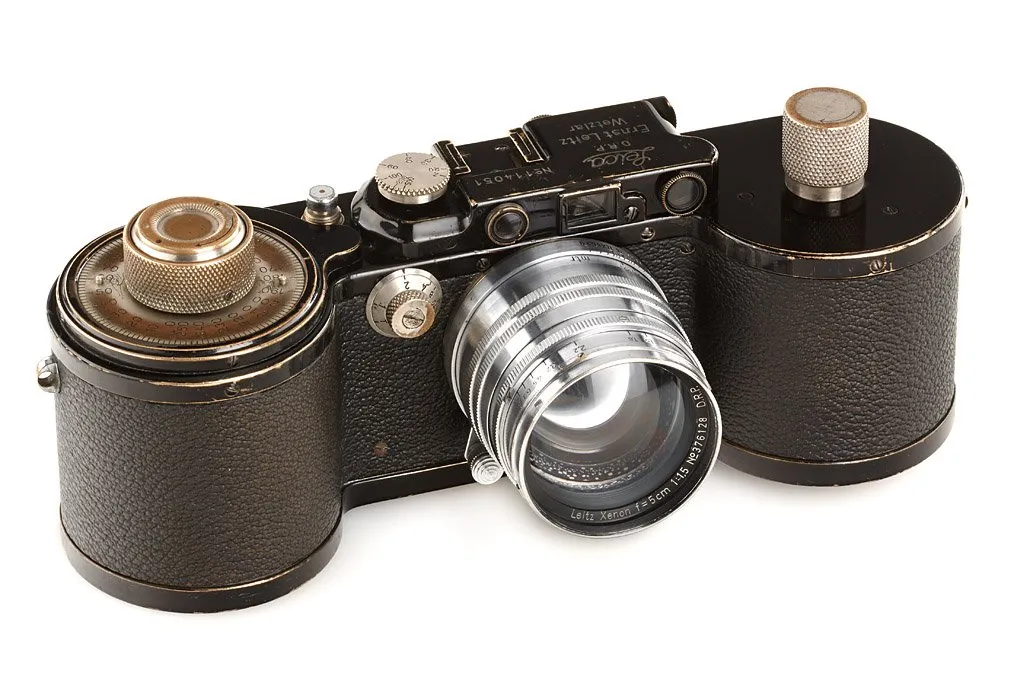

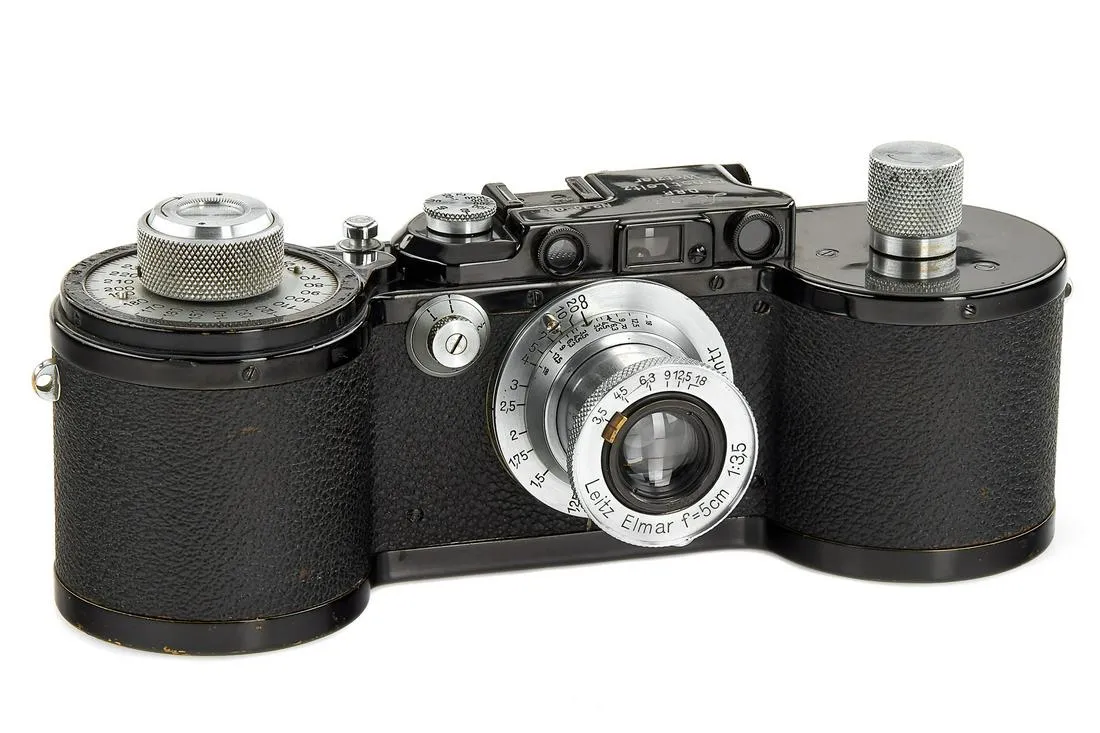
The Leica 250, generally called the Reporter, enlarged the standard screw-mount body to accept approximately ten metres of 35mm film. This permitted about 250 full 24 × 36mm exposures before reloading. The large supply and take-up chambers at either end give the camera its characteristic appearance. The FF version was based on the Leica III and retained a 1/500-second maximum; the later GG followed the IIIa and provided 1/1000 second. Some examples were adapted for motorized operation. Just over 1,050 cameras are represented, reflecting the specialized nature of the design.
1933
1933-1939
Leica
III
The Leica III followed in 1933 and added a separate slow-speed shutter mechanism. A dial on the front of the body provided longer timed exposures, extending the shutter range to one second, while the normal faster speeds remained on the top dial. The coupled rangefinder and separate optical viewfinder of the Leica II were retained. Strap lugs were also incorporated into the body. The two-dial shutter arrangement became characteristic of the fully equipped III-series cameras and remained in use through most of the later screw-mount range.
1933-1942
Leica
250
The Leica 250, generally called the Reporter, enlarged the standard screw-mount body to accept approximately ten metres of 35mm film. This permitted about 250 full 24 × 36mm exposures before reloading. The large supply and take-up chambers at either end give the camera its characteristic appearance. The FF version was based on the Leica III and retained a 1/500-second maximum; the later GG followed the IIIa and provided 1/1000 second. Some examples were adapted for motorized operation. Just over 1,050 cameras are represented, reflecting the specialized nature of the design.
1935

1935-1948
Leica
IIIa
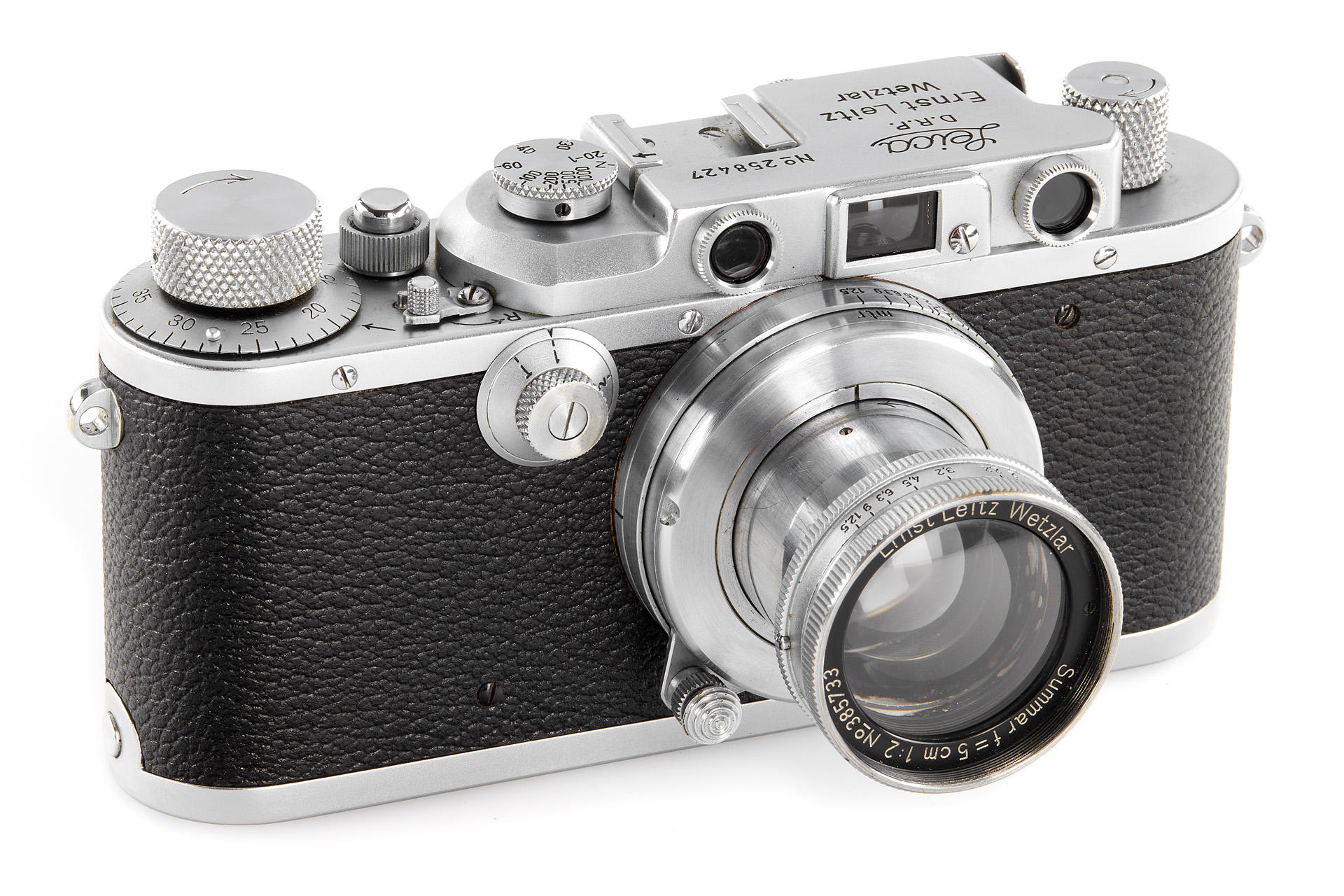
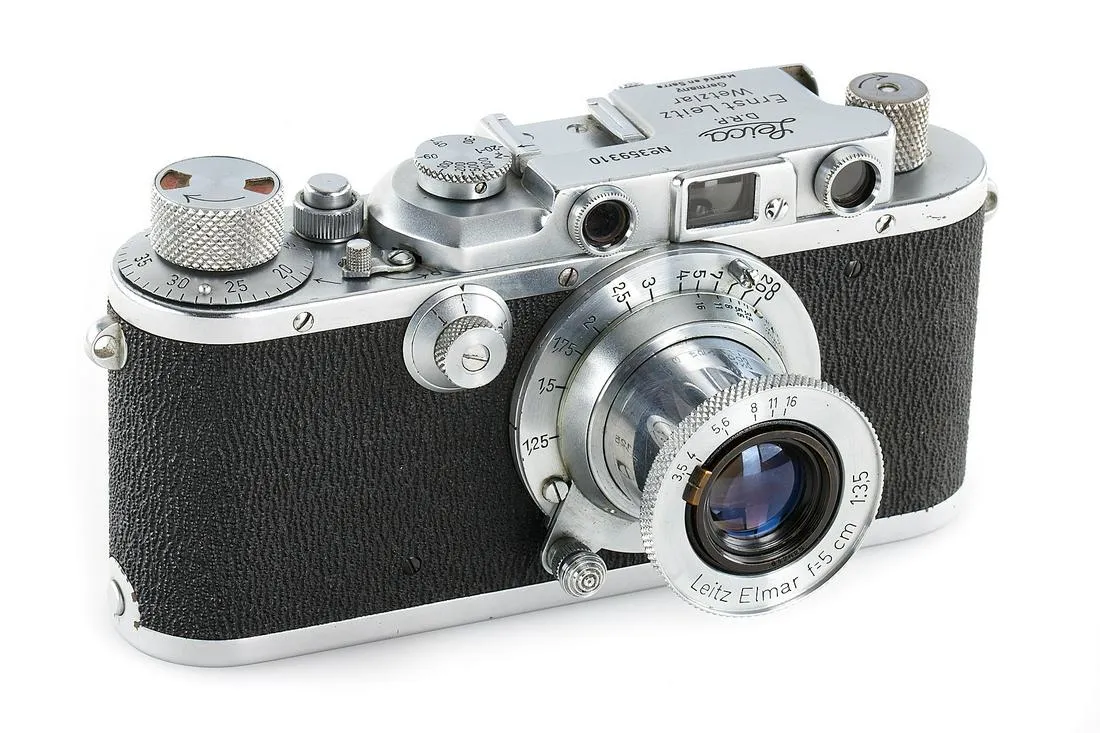
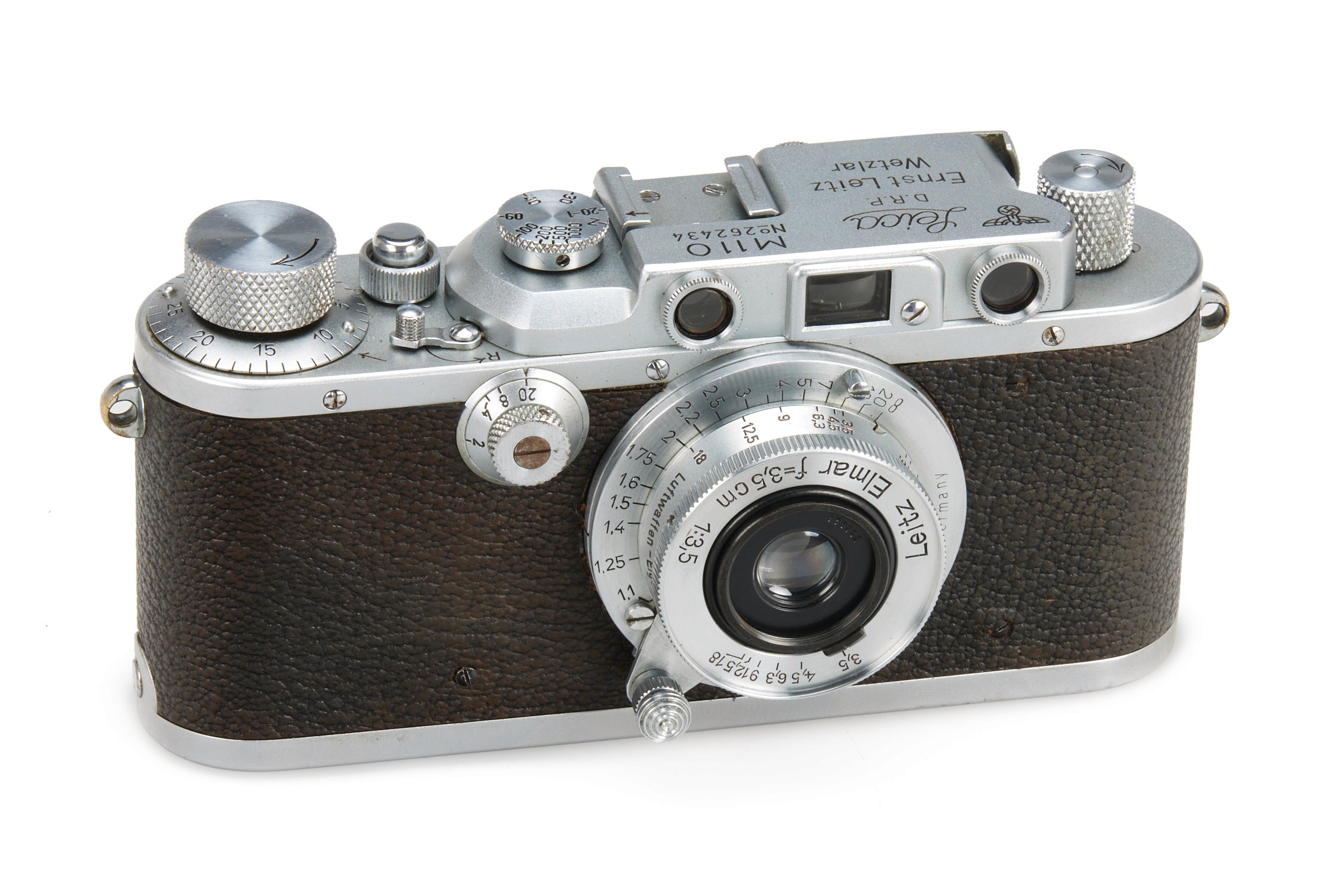

The Leica IIIa added a maximum shutter speed of 1/1000 second to the established III design. The faster setting appeared in 1935 and supplemented the existing range rather than changing the basic shutter arrangement. Fast speeds remained on the top dial, with the separate front control used for longer exposures. The coupled rangefinder and optical finder were also carried over from the III. The 1/1000-second setting was subsequently retained on many of Leica’s mechanical rangefinder cameras and was particularly useful with faster lenses, moving subjects and high light levels.
1935
1935-1948
Leica
IIIa
The Leica IIIa added a maximum shutter speed of 1/1000 second to the established III design. The faster setting appeared in 1935 and supplemented the existing range rather than changing the basic shutter arrangement. Fast speeds remained on the top dial, with the separate front control used for longer exposures. The coupled rangefinder and optical finder were also carried over from the III. The 1/1000-second setting was subsequently retained on many of Leica’s mechanical rangefinder cameras and was particularly useful with faster lenses, moving subjects and high light levels.
1937

1937-1946
Leica
IIIb


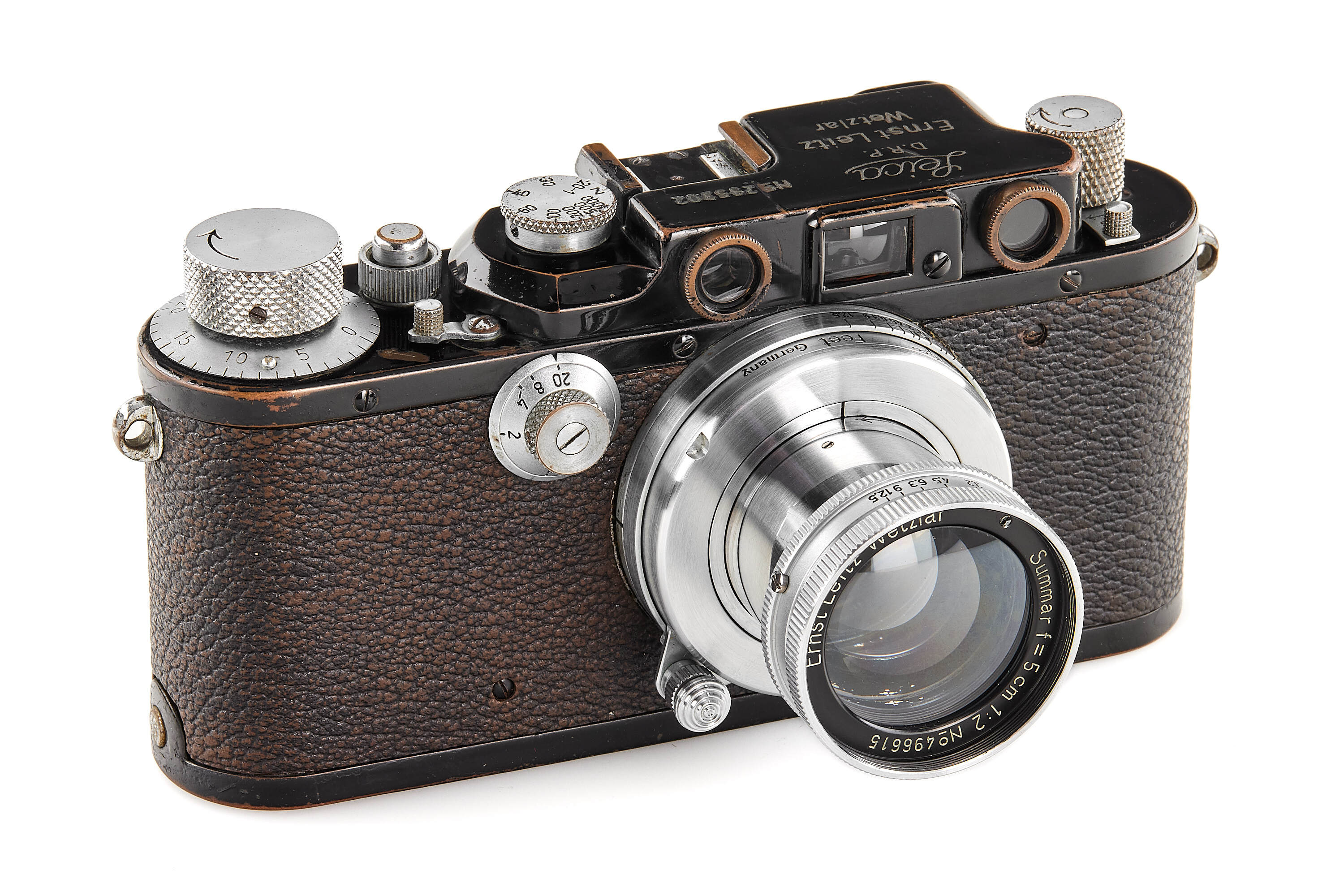
The Leica IIIb altered the arrangement of the rangefinder and viewfinder eyepieces. Although focusing and framing still used separate optical systems, their rear eyepieces were placed immediately beside one another. This reduced the movement required when changing from the rangefinder to the viewfinder. The shutter remained substantially that of the IIIa, including its 1/1000-second maximum and separate slow-speed control. The change was primarily one of handling rather than a new photographic system, but it was another stage in the development that eventually produced the single combined finder of the M3.
1937
1937-1946
Leica
IIIb
The Leica IIIb altered the arrangement of the rangefinder and viewfinder eyepieces. Although focusing and framing still used separate optical systems, their rear eyepieces were placed immediately beside one another. This reduced the movement required when changing from the rangefinder to the viewfinder. The shutter remained substantially that of the IIIa, including its 1/1000-second maximum and separate slow-speed control. The change was primarily one of handling rather than a new photographic system, but it was another stage in the development that eventually produced the single combined finder of the M3.
1939

1939-1947
Leica
IIId
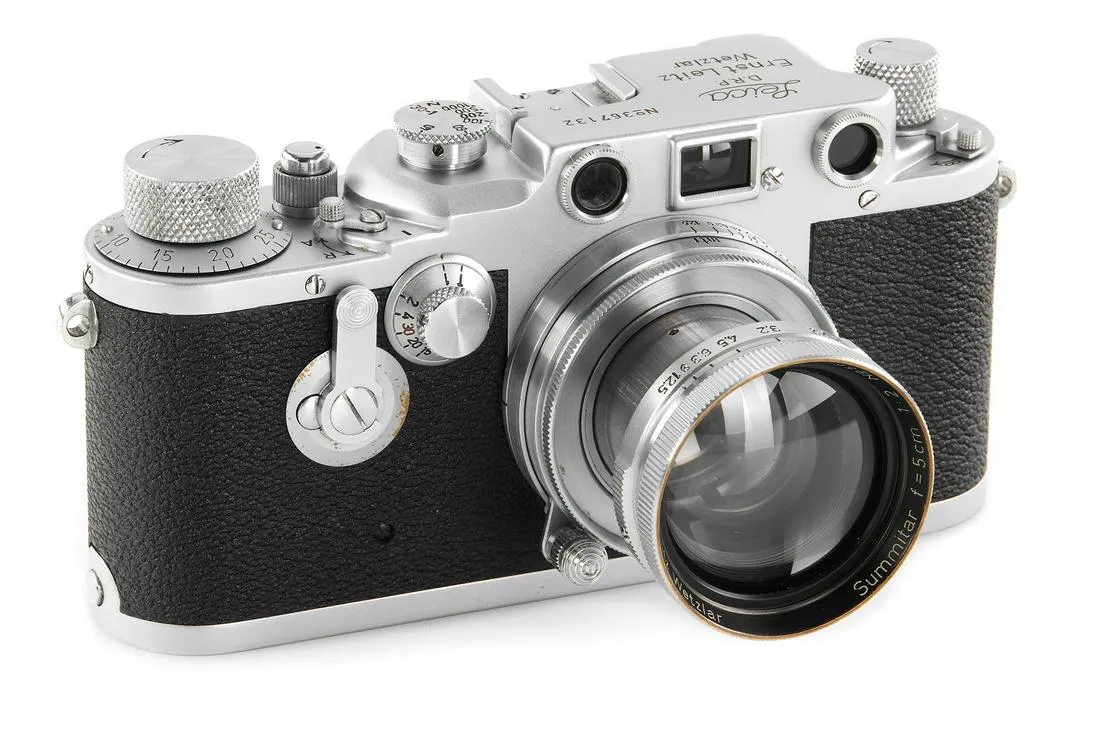
The Leica IIId was essentially a IIIc fitted with a mechanical delayed-action release. It was the first production Leica with a built-in self-timer, operated by the lever on the front of the body. The remaining camera followed the IIIc closely, including its coupled rangefinder, separate viewfinder, slow-speed mechanism and 1/1000-second maximum shutter setting. Only 425 cameras are represented, making the IIId one of the least numerous normal-design screw-mount Leica models. The self-timer later appeared on considerably more common Leica bodies.

1939-1950
Leica
IIIc

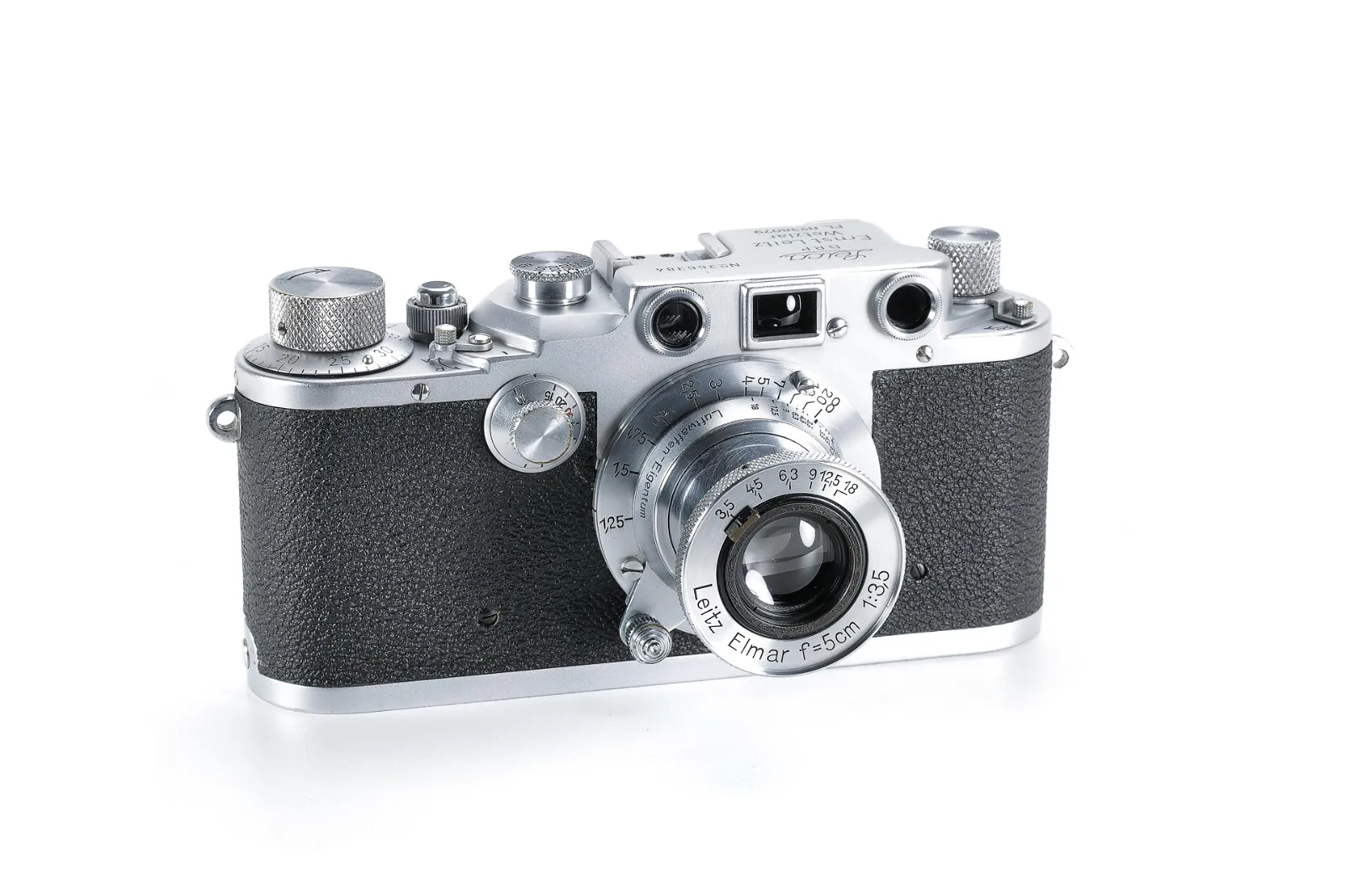

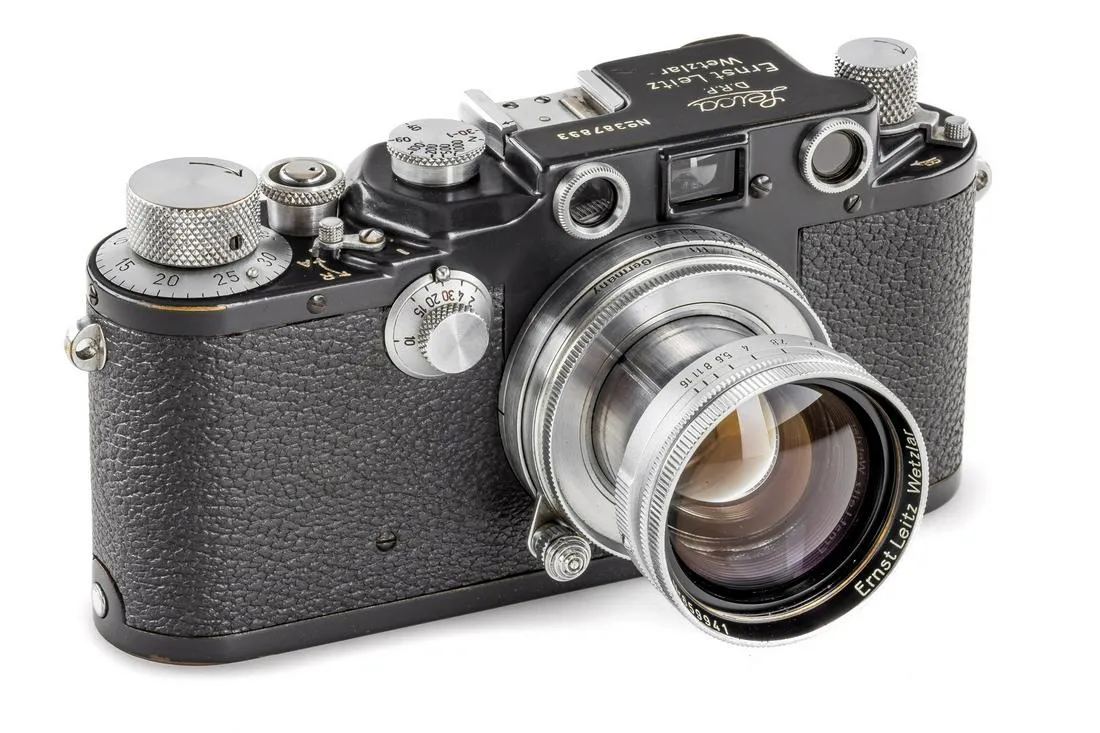

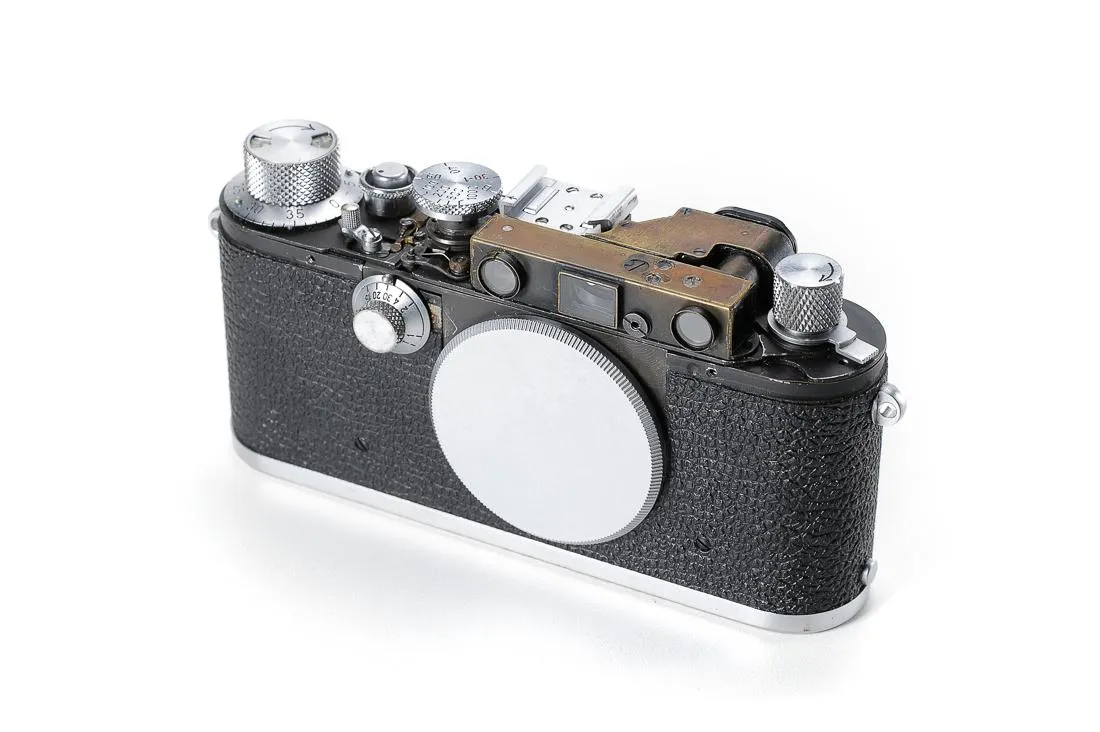
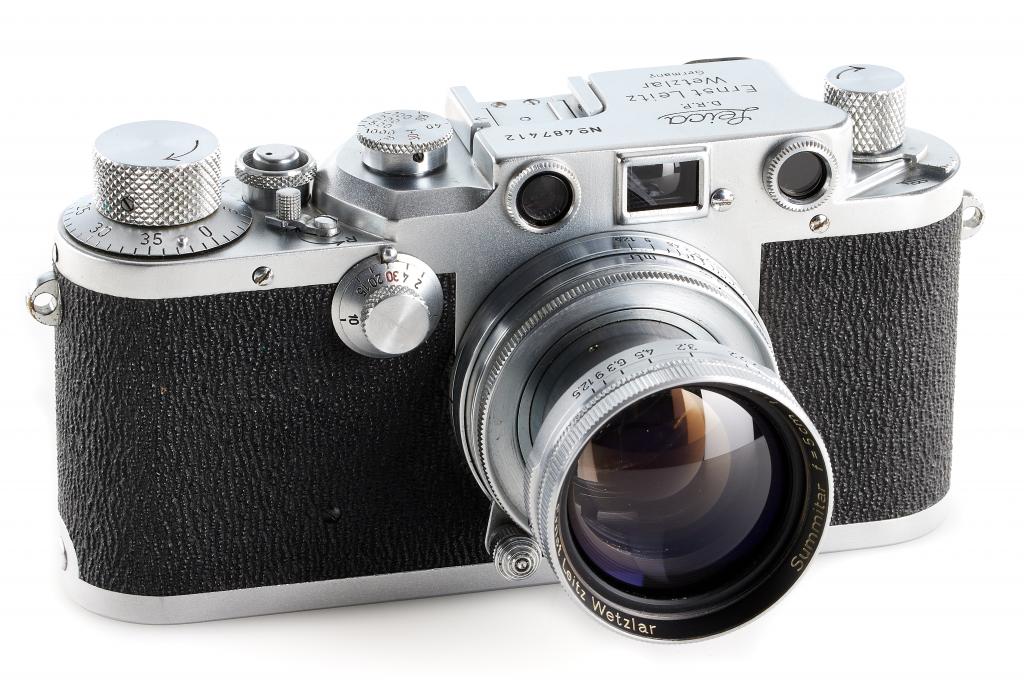
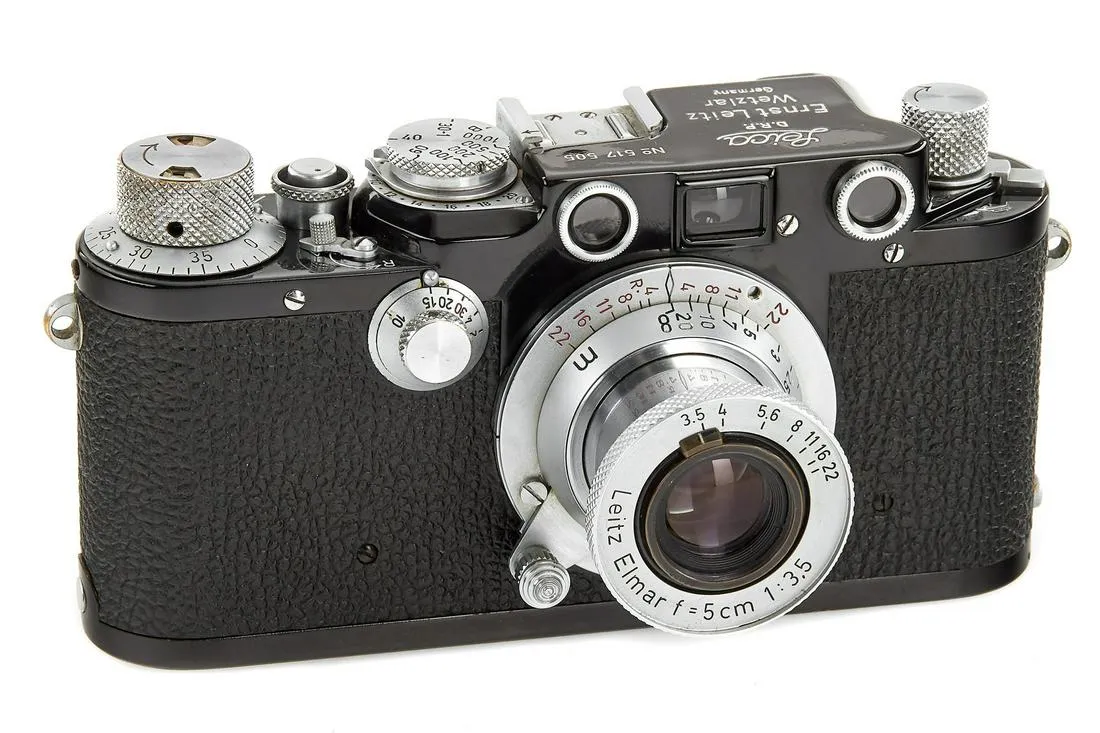


The Leica IIIc introduced a revised internal body structure. Instead of the earlier built-up construction, the shutter and body mechanism were carried in a precision die-cast alloy frame with a stronger front structure. This made the camera slightly larger than the IIIb and altered the construction of the upper housing. The basic controls remained recognizable, with a coupled rangefinder, separate viewfinder and separate fast- and slow-speed shutter dials. The IIIc chassis subsequently formed the basis of several later screw-mount models and numerous wartime, post-war and specialist versions.
1939
1939-1947
Leica
IIId
The Leica IIId was essentially a IIIc fitted with a mechanical delayed-action release. It was the first production Leica with a built-in self-timer, operated by the lever on the front of the body. The remaining camera followed the IIIc closely, including its coupled rangefinder, separate viewfinder, slow-speed mechanism and 1/1000-second maximum shutter setting. Only 425 cameras are represented, making the IIId one of the least numerous normal-design screw-mount Leica models. The self-timer later appeared on considerably more common Leica bodies.
1939-1950
Leica
IIIc
The Leica IIIc introduced a revised internal body structure. Instead of the earlier built-up construction, the shutter and body mechanism were carried in a precision die-cast alloy frame with a stronger front structure. This made the camera slightly larger than the IIIb and altered the construction of the upper housing. The basic controls remained recognizable, with a coupled rangefinder, separate viewfinder and separate fast- and slow-speed shutter dials. The IIIc chassis subsequently formed the basis of several later screw-mount models and numerous wartime, post-war and specialist versions.
1943

1943-1944
Leica
IIIc K
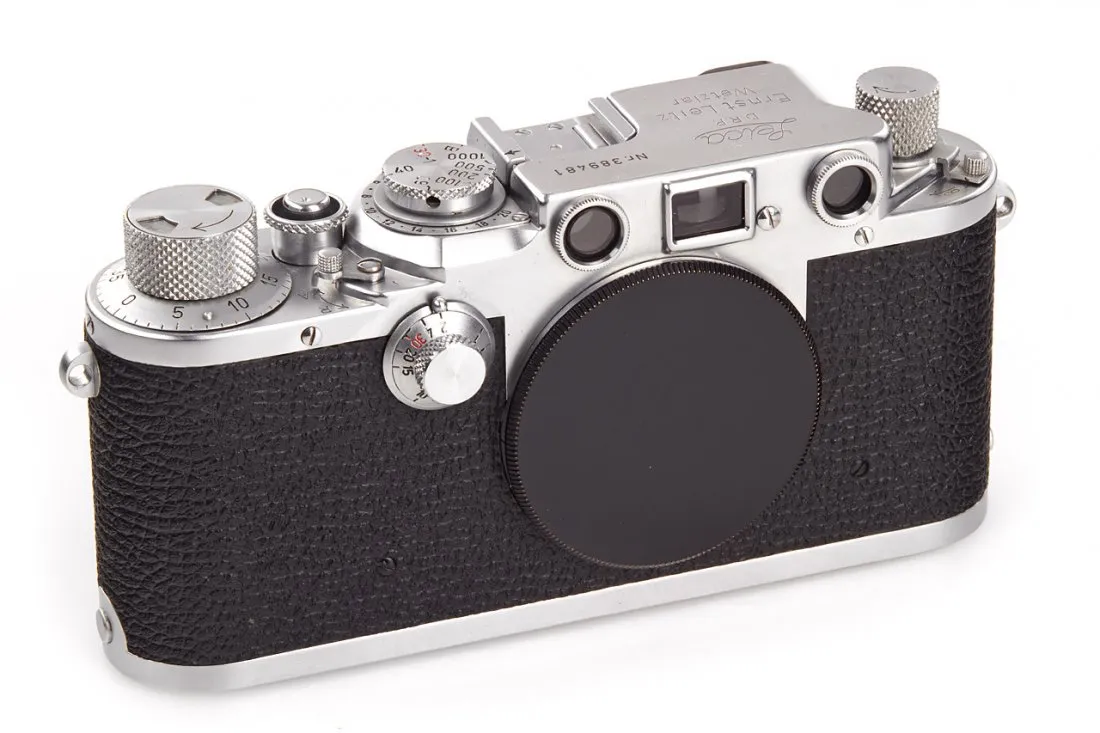
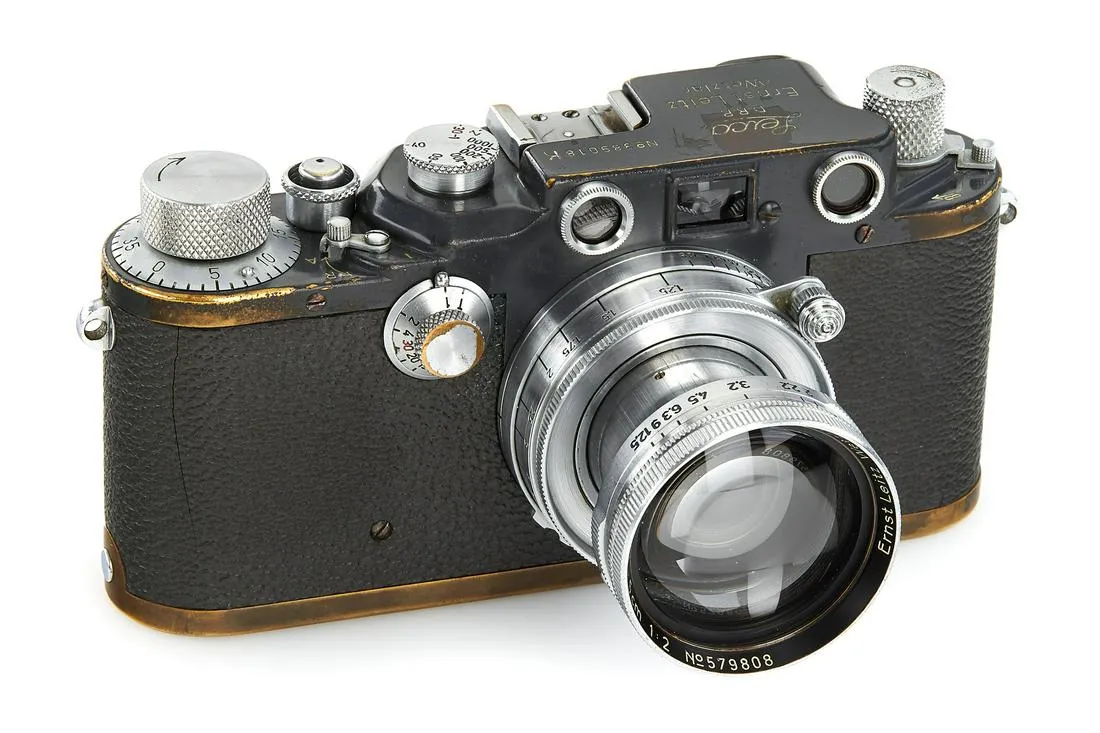
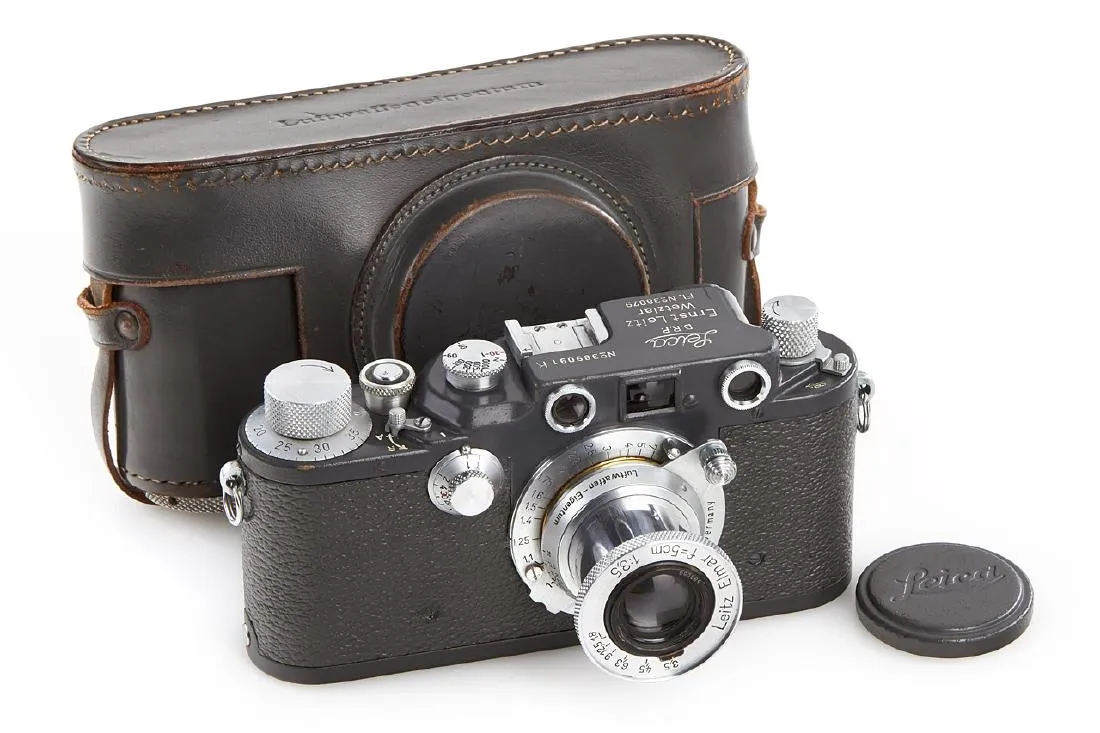

The IIIc K was a special version of the IIIc incorporating ball bearings in parts of the shutter and transport mechanism. The modification was intended to improve operation under severe conditions, including low temperatures where lubrication and ordinary mechanical arrangements could become troublesome. Many examples are associated with wartime military supply, though finish and external markings are not uniform and should not by themselves be taken as proof of a particular contract. The K designation is generally associated with the bearing-equipped mechanism, from the German Kugellager.
1943
1943-1944
Leica
IIIc K
The IIIc K was a special version of the IIIc incorporating ball bearings in parts of the shutter and transport mechanism. The modification was intended to improve operation under severe conditions, including low temperatures where lubrication and ordinary mechanical arrangements could become troublesome. Many examples are associated with wartime military supply, though finish and external markings are not uniform and should not by themselves be taken as proof of a particular contract. The K designation is generally associated with the bearing-equipped mechanism, from the German Kugellager.
1948

1948-1951
Leica
IIc
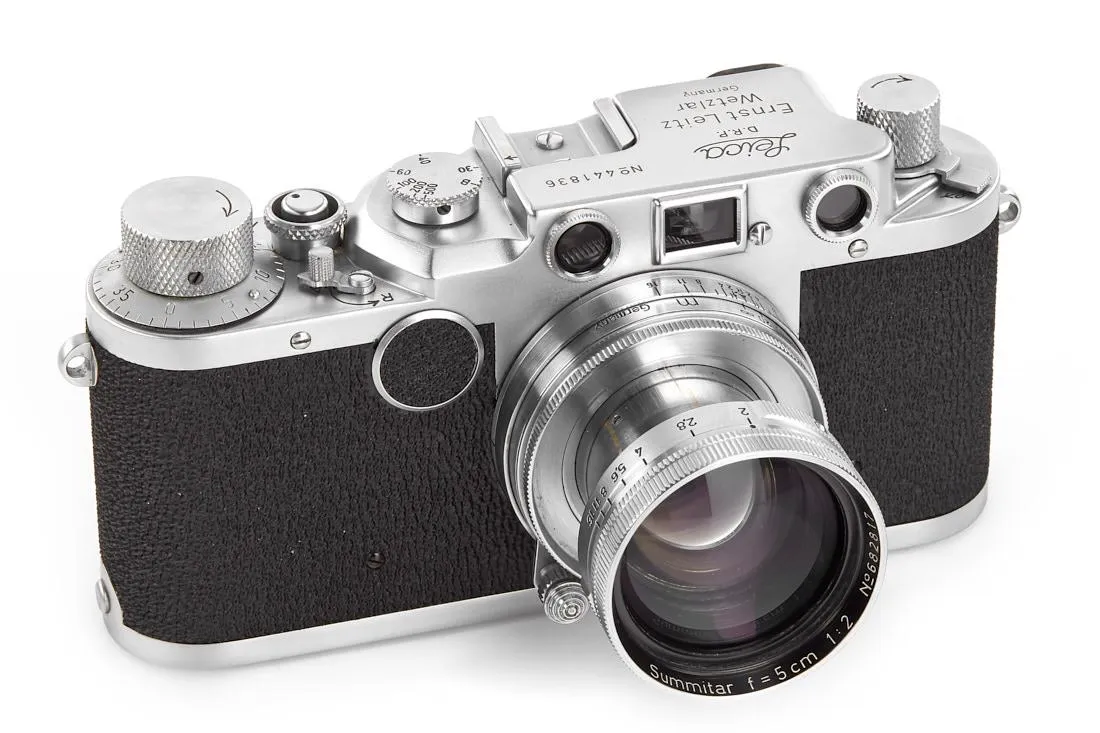
The Leica IIc used the post-war IIIc body construction but omitted the separate slow-speed shutter mechanism. It retained the coupled rangefinder and ordinary optical finder, making it a conventional photographic camera rather than a technical body. The vacant position on the front distinguishes it from the IIIc. Leitz could convert a IIc to fuller IIIc specification, reflecting the considerable amount of common construction between the models. The IIc continued Leica’s practice of offering a less elaborate II-series camera beside the fully equipped III-series model.
1948
1948-1951
Leica
IIc
The Leica IIc used the post-war IIIc body construction but omitted the separate slow-speed shutter mechanism. It retained the coupled rangefinder and ordinary optical finder, making it a conventional photographic camera rather than a technical body. The vacant position on the front distinguishes it from the IIIc. Leitz could convert a IIc to fuller IIIc specification, reflecting the considerable amount of common construction between the models. The IIc continued Leica’s practice of offering a less elaborate II-series camera beside the fully equipped III-series model.
1949

1949-1952
Leica
Ic
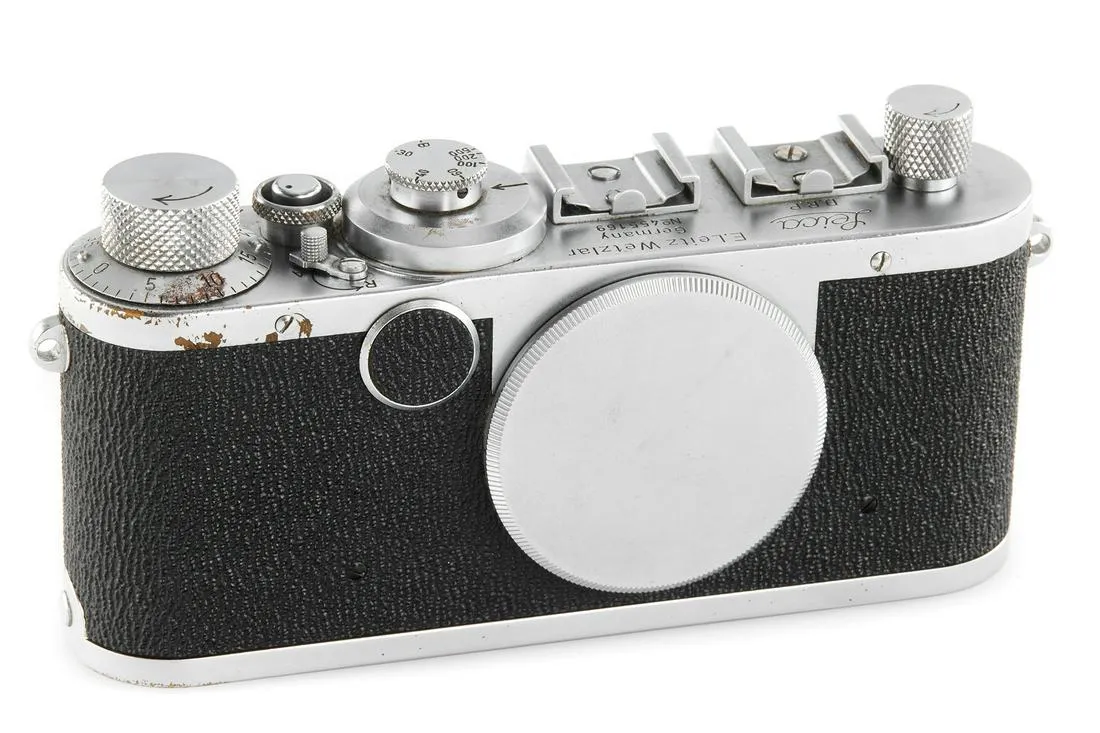

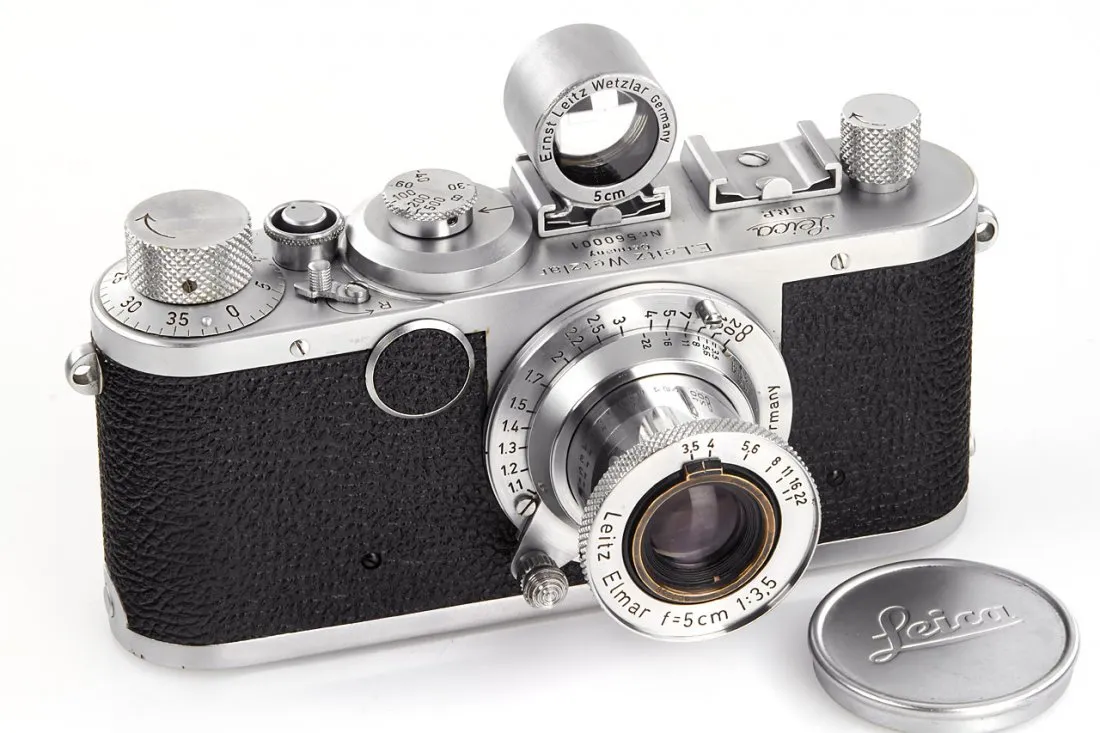
The Leica Ic was a technical version of the IIIc without a built-in viewfinder or rangefinder. The body supplied the Leica screw mount, shutter and film transport for equipment that provided its own method of viewing or focusing. Typical uses included microscopy, copying apparatus and the Visoflex reflex system. Two accessory shoes permitted external finders or other equipment to be mounted when required. The same principle had appeared in earlier specialist Leica equipment and continued afterward in the If and Ig, followed later by the finderless MD-series M bodies.
1949
1949-1952
Leica
Ic
The Leica Ic was a technical version of the IIIc without a built-in viewfinder or rangefinder. The body supplied the Leica screw mount, shutter and film transport for equipment that provided its own method of viewing or focusing. Typical uses included microscopy, copying apparatus and the Visoflex reflex system. Two accessory shoes permitted external finders or other equipment to be mounted when required. The same principle had appeared in earlier specialist Leica equipment and continued afterward in the If and Ig, followed later by the finderless MD-series M bodies.
1950

1950-1957
Leica
IIIf

Chrome, Ernst Leitz Canada Limited Midland Ontario 'Engraving'
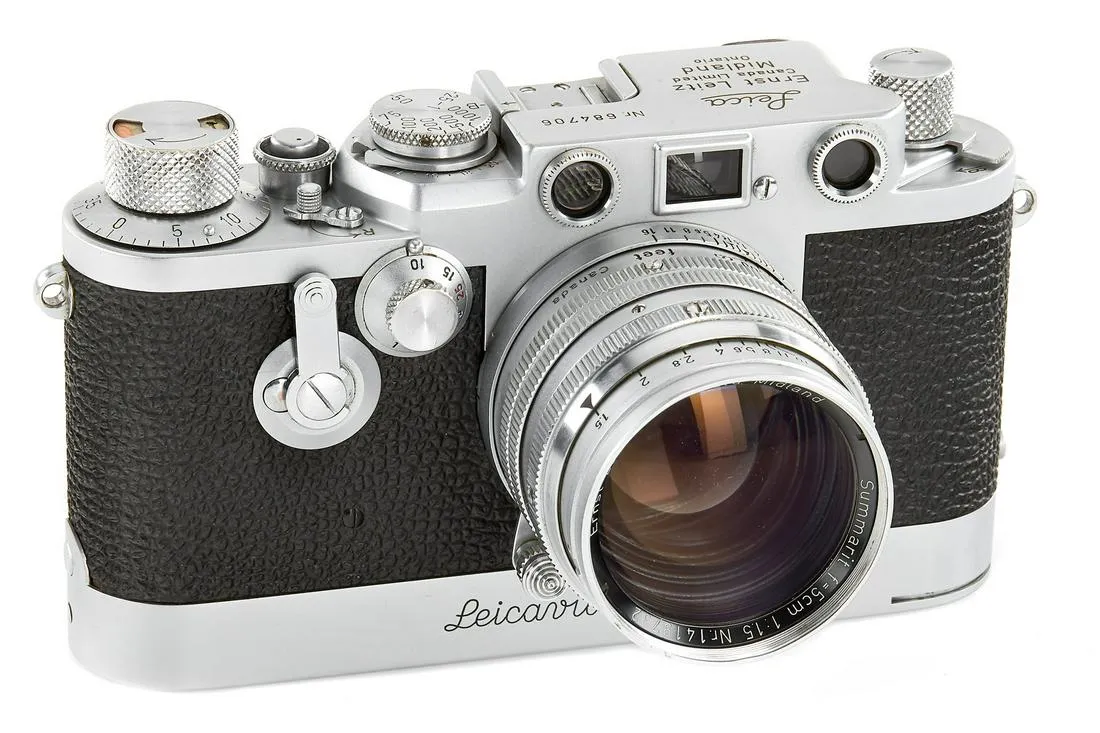
Chrome, Ernst Leitz Canada Limited Midland Ontario 'Engraving' Self Timer
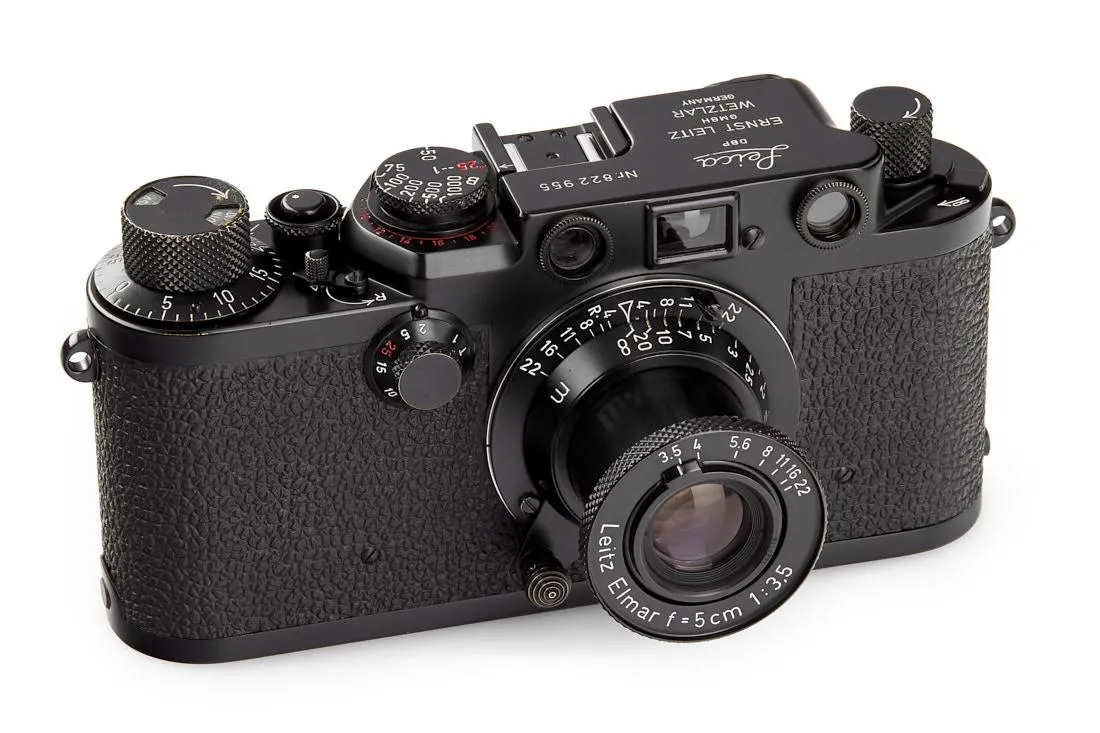
Black Paint, Swedish Military
Chrome, Ernst Leitz Canada Limited Midland Ontario, Self Timer
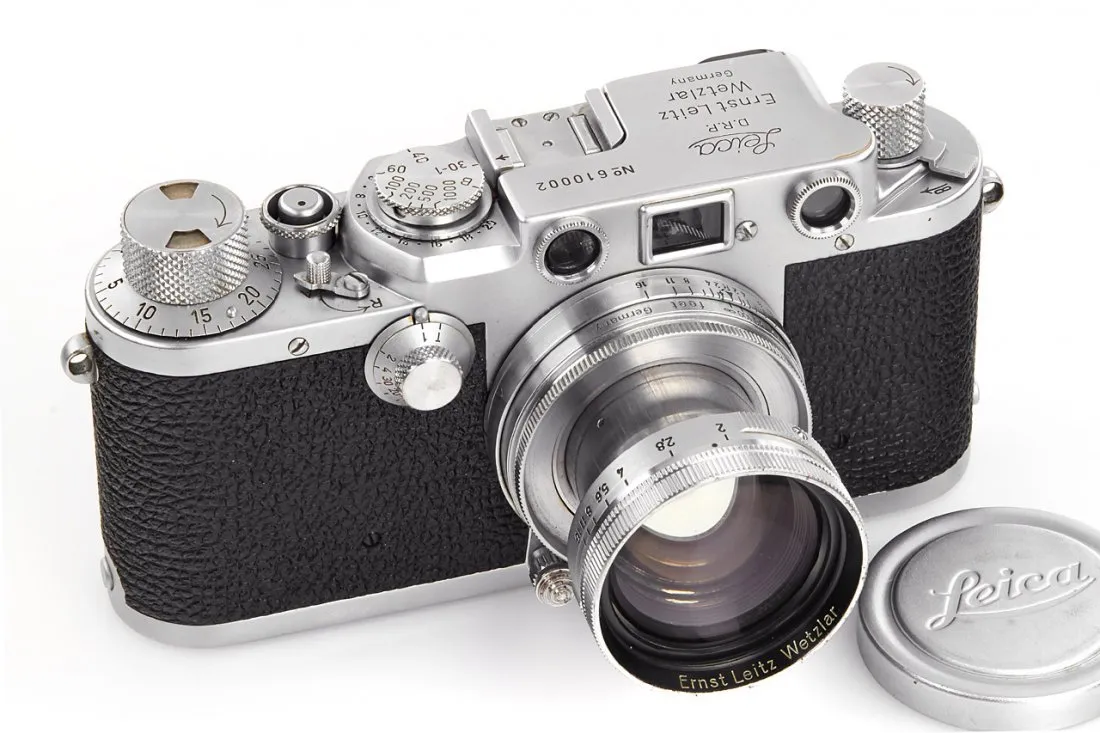
Chrome, Ernst Leitz Canada Limited Midland Ontario

Chrome, Red Dial, Self Timer
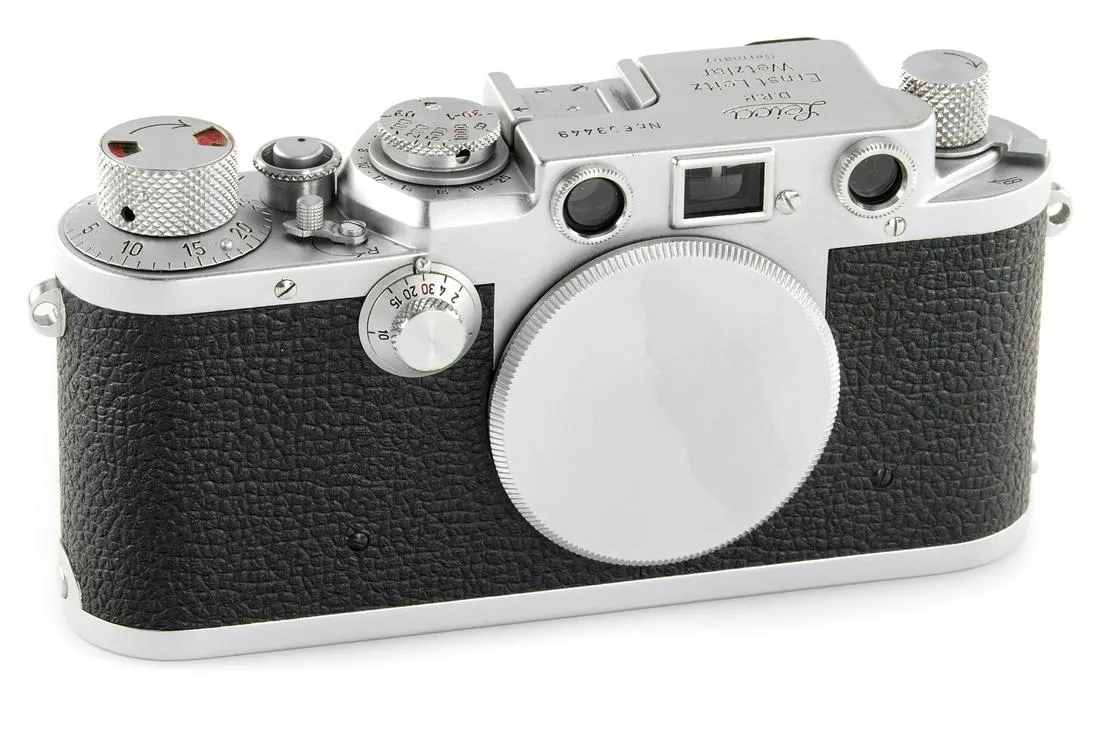
Chrome, Black Dial
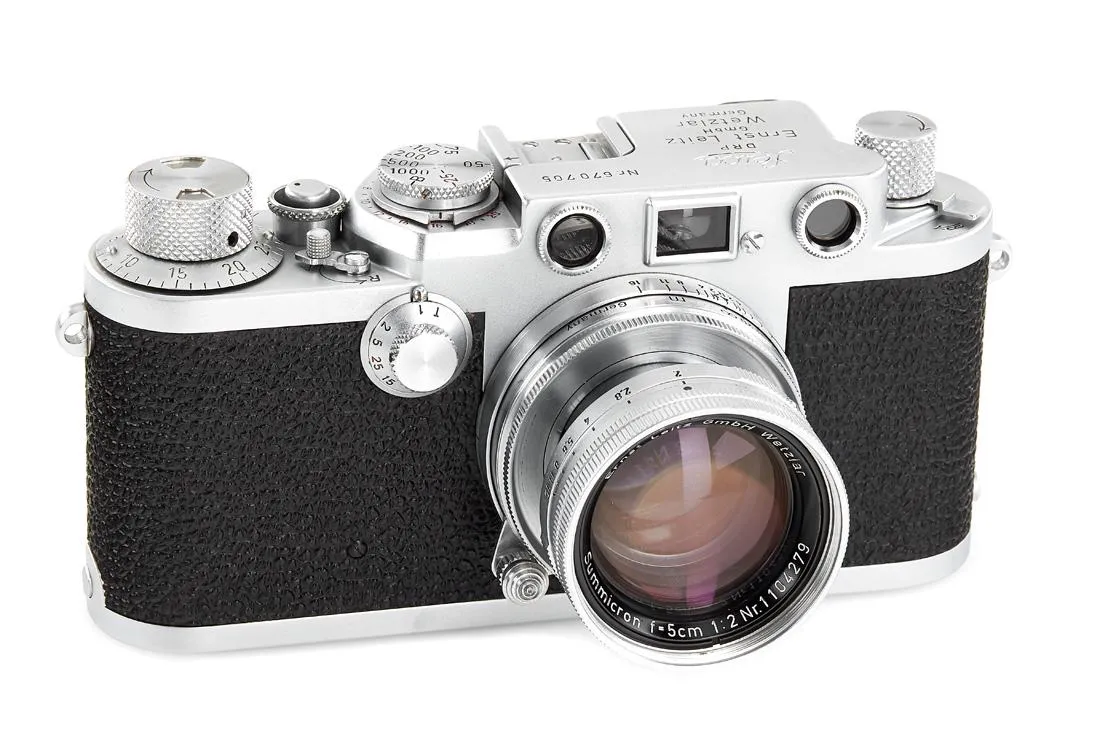
Chrome, Red Dial
The Leica IIIf added built-in adjustable flash synchronization to the mature screw-mount rangefinder. Early cameras are commonly described as Black Dial models from the colour of the synchronization markings; revised Red Dial versions followed. Later variants could also be supplied with a self-timer. The camera otherwise retained the familiar separate rangefinder and viewfinder, the 39mm screw mount and the separate fast- and slow-speed shutter controls. Approximately 184,800 cameras are represented, making the IIIf one of the largest production groups among the classic Leica screw-mount rangefinders.

1950-1970
Leica
18x24
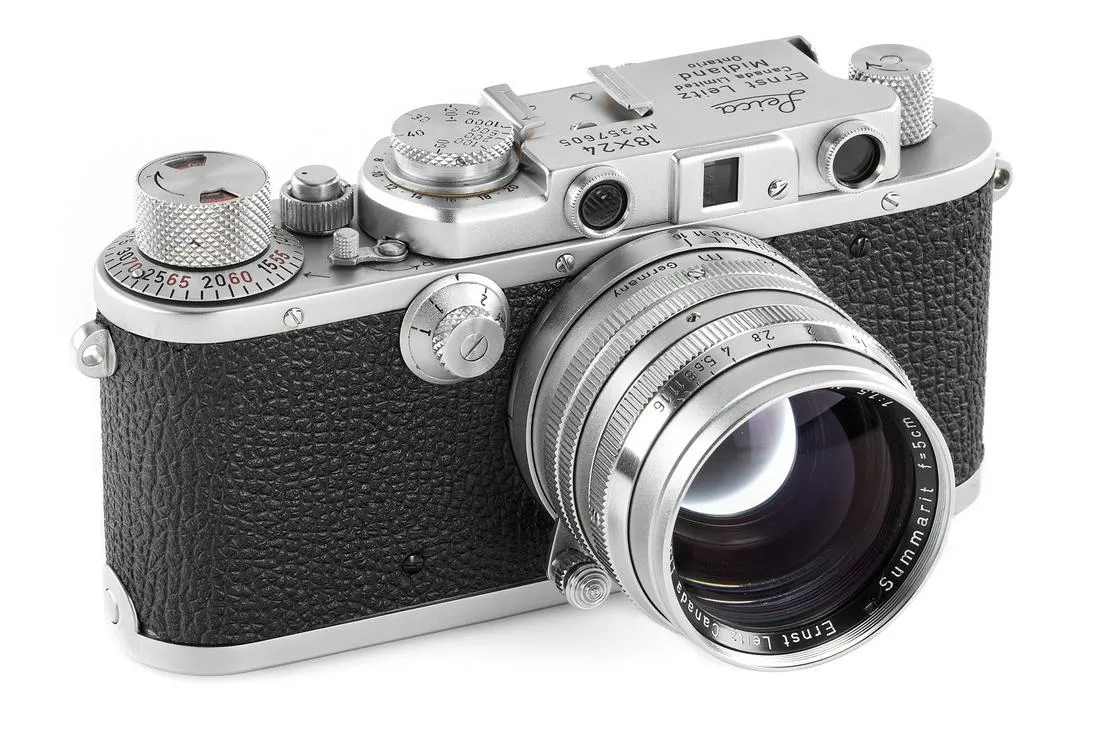

The 18 × 24 Leica cameras used approximately half the negative area of the normal 24 × 36mm Leica frame. Two exposures could therefore occupy the film length normally required for one standard Leica photograph. The best-known production form was the Leica 72, named for the approximately 72 photographs obtainable from a normal 36-exposure roll. Earlier experimental 18 × 24 cameras and later specialist versions account for the widely separated dates in the records and should not be read as continuous manufacture. Only 53 cameras are represented across the two recorded variants.
1950
1950-1957
Leica
IIIf
Chrome, Ernst Leitz Canada Limited Midland Ontario 'Engraving'
Chrome, Ernst Leitz Canada Limited Midland Ontario 'Engraving' Self Timer
Black Paint, Swedish Military
Chrome, Ernst Leitz Canada Limited Midland Ontario, Self Timer
Chrome, Ernst Leitz Canada Limited Midland Ontario
Chrome, Red Dial, Self Timer
Chrome, Black Dial
Chrome, Red Dial
The Leica IIIf added built-in adjustable flash synchronization to the mature screw-mount rangefinder. Early cameras are commonly described as Black Dial models from the colour of the synchronization markings; revised Red Dial versions followed. Later variants could also be supplied with a self-timer. The camera otherwise retained the familiar separate rangefinder and viewfinder, the 39mm screw mount and the separate fast- and slow-speed shutter controls. Approximately 184,800 cameras are represented, making the IIIf one of the largest production groups among the classic Leica screw-mount rangefinders.
1950-1970
Leica
18x24
The 18 × 24 Leica cameras used approximately half the negative area of the normal 24 × 36mm Leica frame. Two exposures could therefore occupy the film length normally required for one standard Leica photograph. The best-known production form was the Leica 72, named for the approximately 72 photographs obtainable from a normal 36-exposure roll. Earlier experimental 18 × 24 cameras and later specialist versions account for the widely separated dates in the records and should not be read as continuous manufacture. Only 53 cameras are represented across the two recorded variants.
1951

1951-1956
Leica
IIf
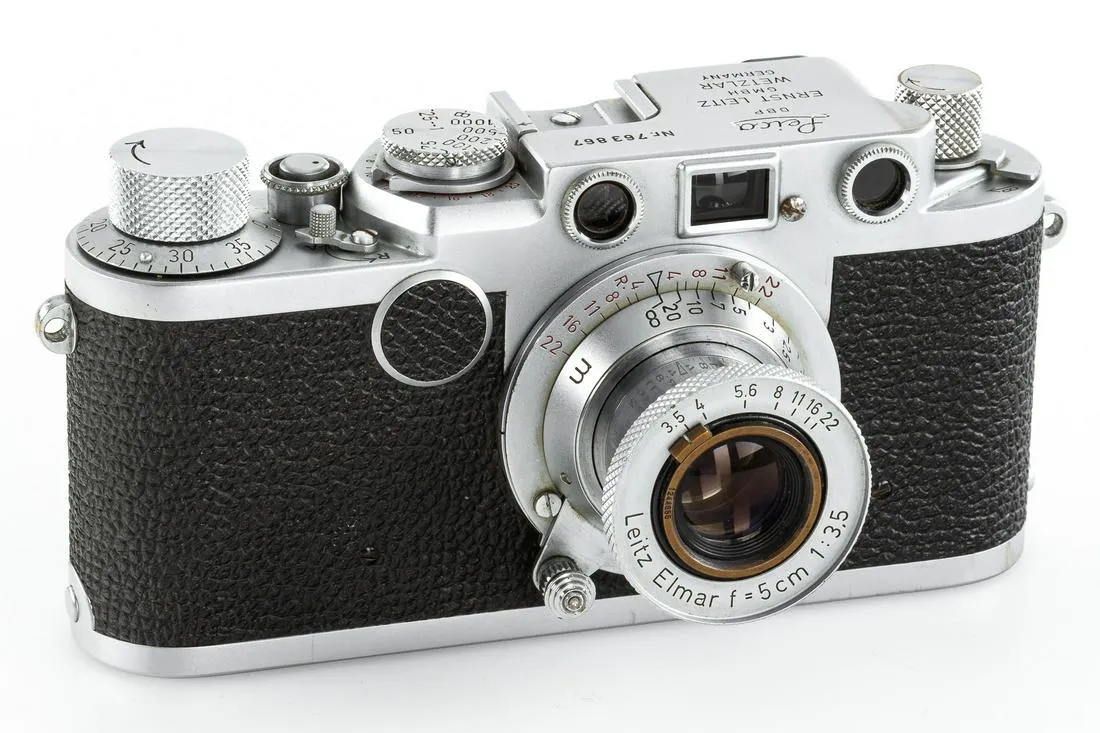

The Leica IIf was the simplified companion to the IIIf. It retained the coupled rangefinder, optical viewfinder and flash synchronization but omitted the separate slow-speed mechanism normally identified by the front shutter dial. Black Dial and Red Dial forms followed the synchronization changes made to the IIIf, and later versions were available with a 1/1000-second maximum shutter setting. The IIf therefore provided the normal rangefinder functions of the IIIf while dispensing with the long timed exposures of the III-series shutter.
1951
1951-1956
Leica
IIf
The Leica IIf was the simplified companion to the IIIf. It retained the coupled rangefinder, optical viewfinder and flash synchronization but omitted the separate slow-speed mechanism normally identified by the front shutter dial. Black Dial and Red Dial forms followed the synchronization changes made to the IIIf, and later versions were available with a 1/1000-second maximum shutter setting. The IIf therefore provided the normal rangefinder functions of the IIIf while dispensing with the long timed exposures of the III-series shutter.
1952

1952-1957
Leica
If
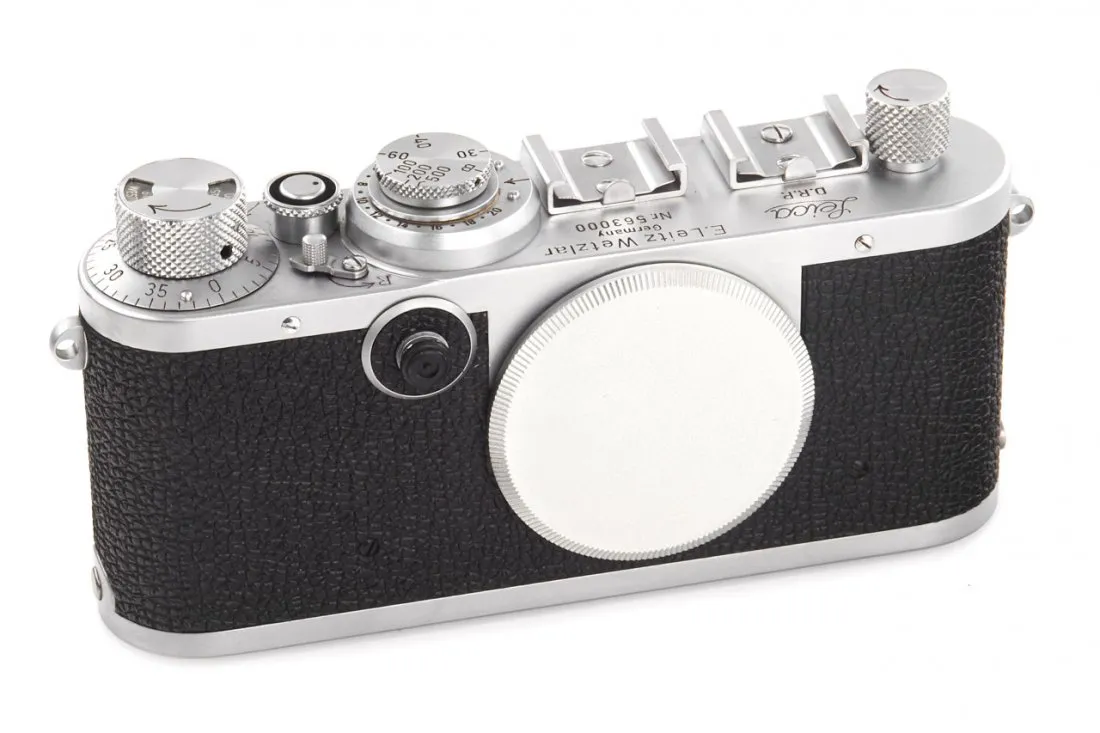
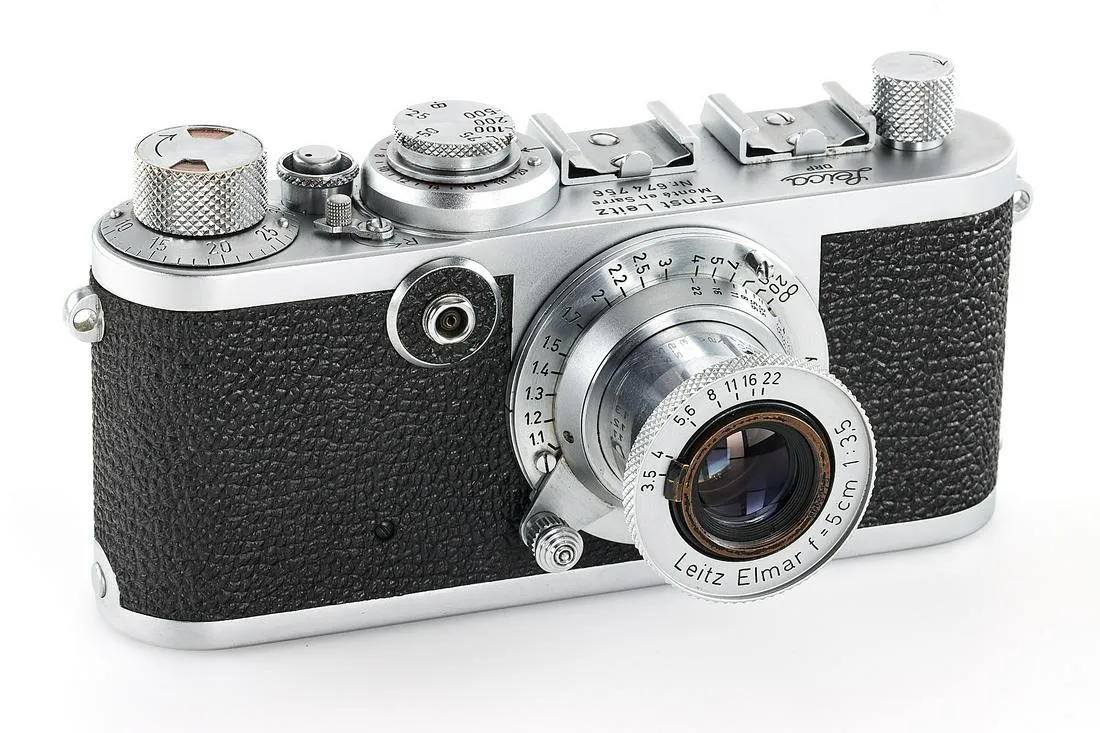
The Leica If was the technical counterpart to the IIf and IIIf. It omitted both the built-in rangefinder and viewfinder but retained the screw mount, shutter, film transport and flash synchronization. The body was intended for microscopes, Visoflex reflex housings, copying equipment and other apparatus in which the ordinary Leica viewing systems served no purpose. Two accessory shoes allowed external optical equipment to be fitted. Black Dial and later Red Dial forms followed the same general flash-synchronization development as the contemporary photographic models.
1952
1952-1957
Leica
If
The Leica If was the technical counterpart to the IIf and IIIf. It omitted both the built-in rangefinder and viewfinder but retained the screw mount, shutter, film transport and flash synchronization. The body was intended for microscopes, Visoflex reflex housings, copying equipment and other apparatus in which the ordinary Leica viewing systems served no purpose. Two accessory shoes allowed external optical equipment to be fitted. Black Dial and later Red Dial forms followed the same general flash-synchronization development as the contemporary photographic models.
1953

1953-1970
Leica
IIIg


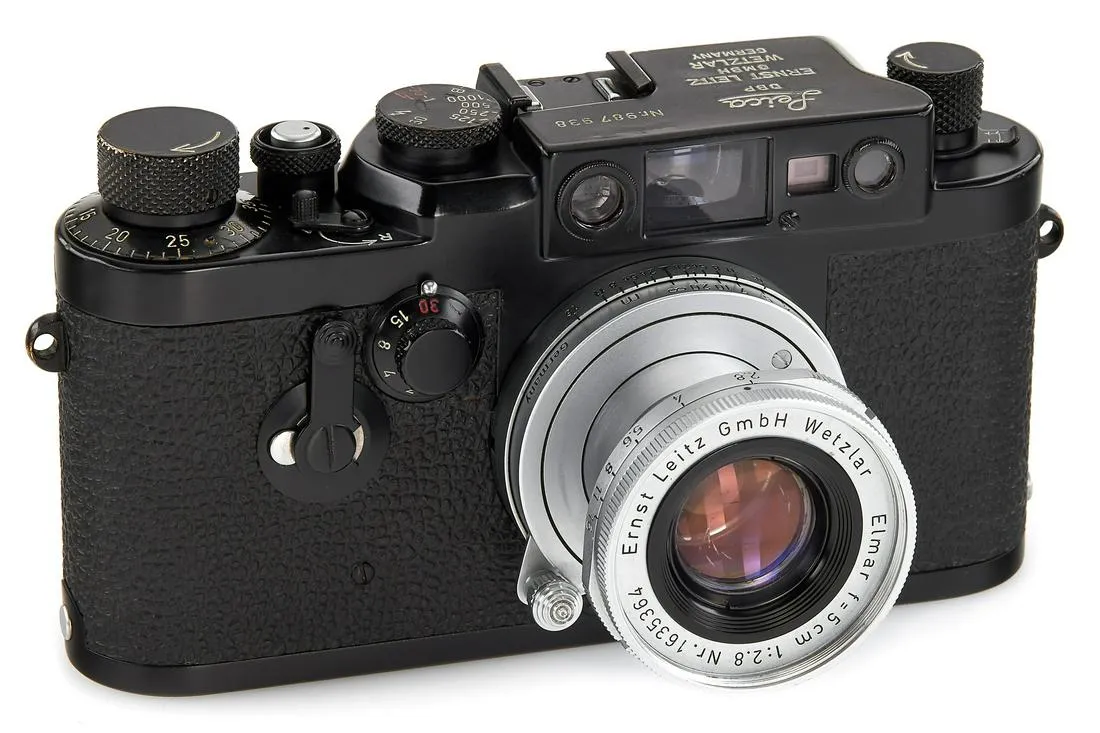

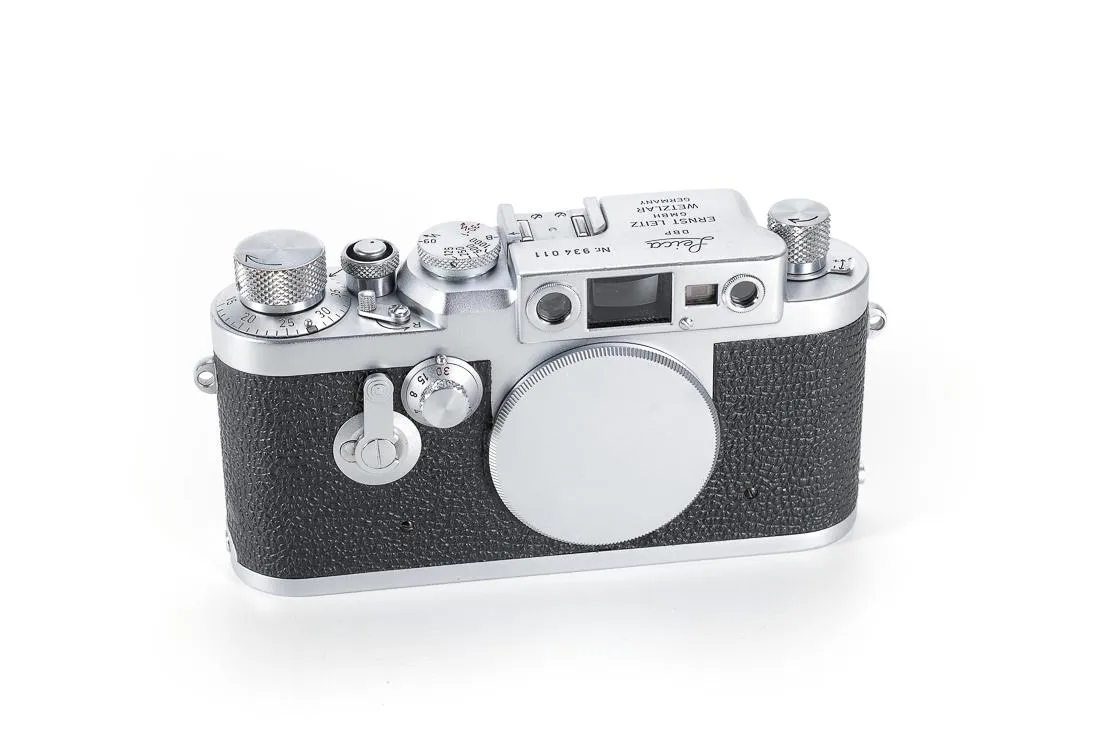

The Leica IIIg was the final major development of the screw-mount rangefinder. Its principal change was a considerably larger bright-line viewfinder containing markings for 50mm and 90mm lenses. The framing system compensated for parallax as the lens was focused. The rangefinder itself remained a separate optical system, so focusing and framing still required different eyepieces. Mechanically, the camera retained the 39mm screw mount, 1/1000-second maximum shutter and separate slow-speed control inherited from earlier III models. Later specialist variants account for the unusually broad recorded date range and do not indicate uninterrupted production throughout it.

1953-1968
Leica
M3
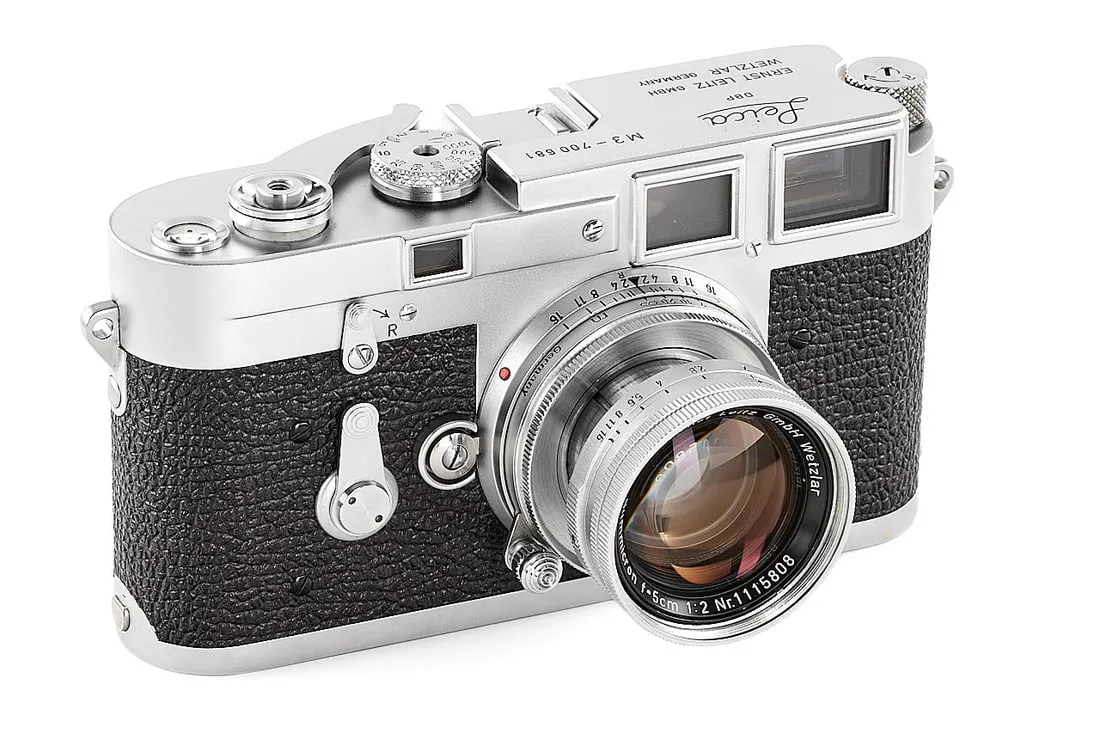
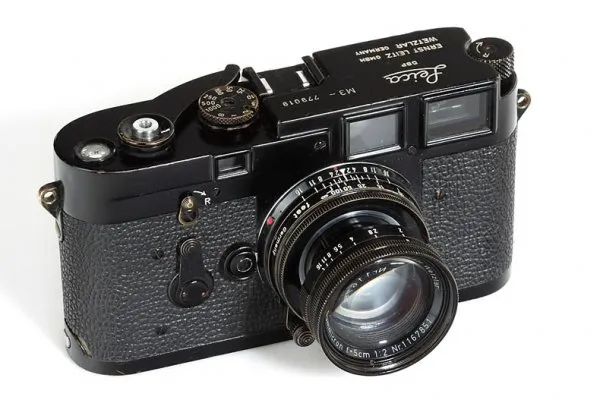

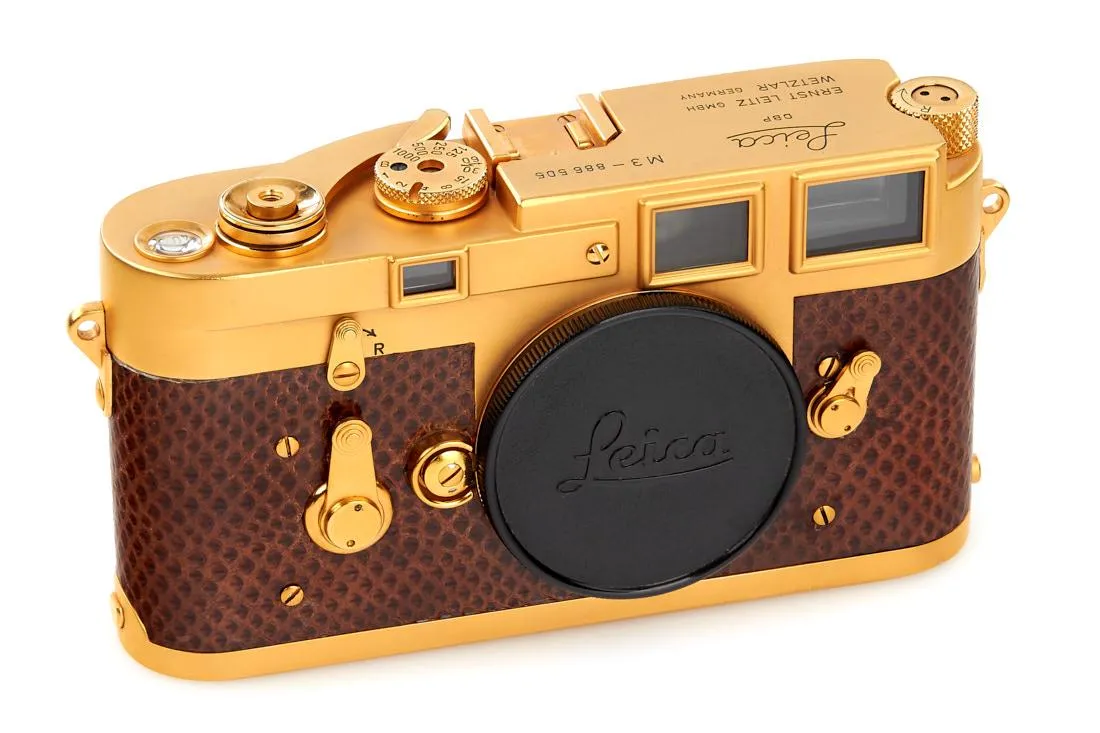

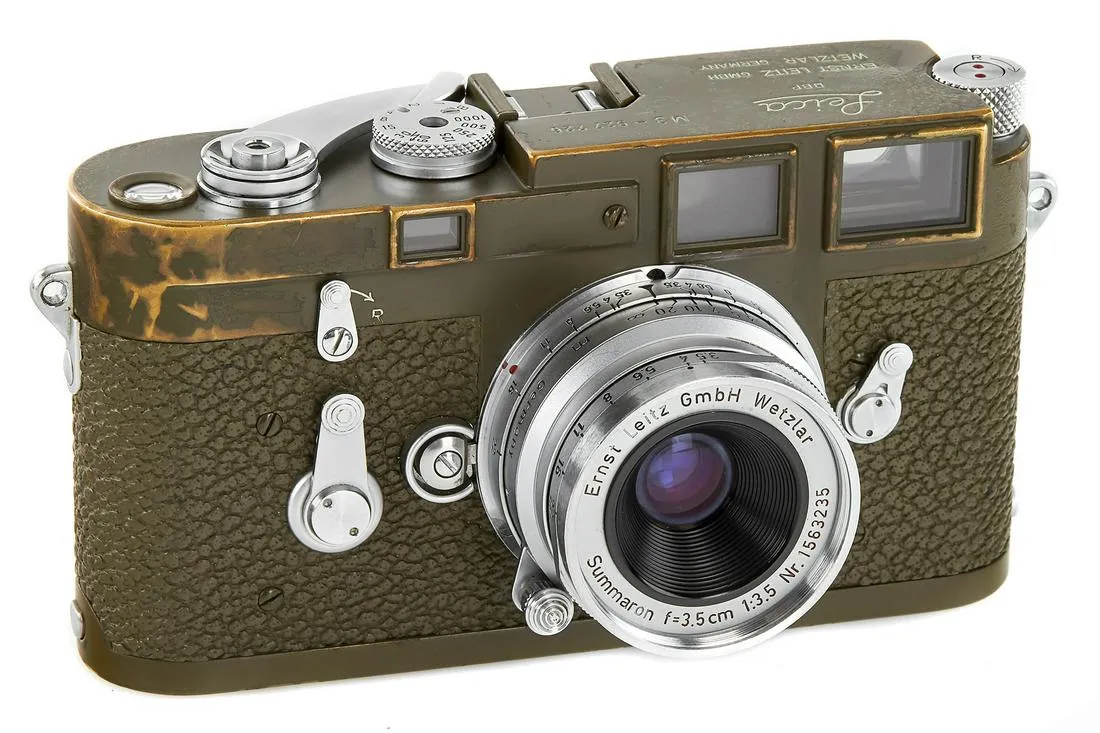
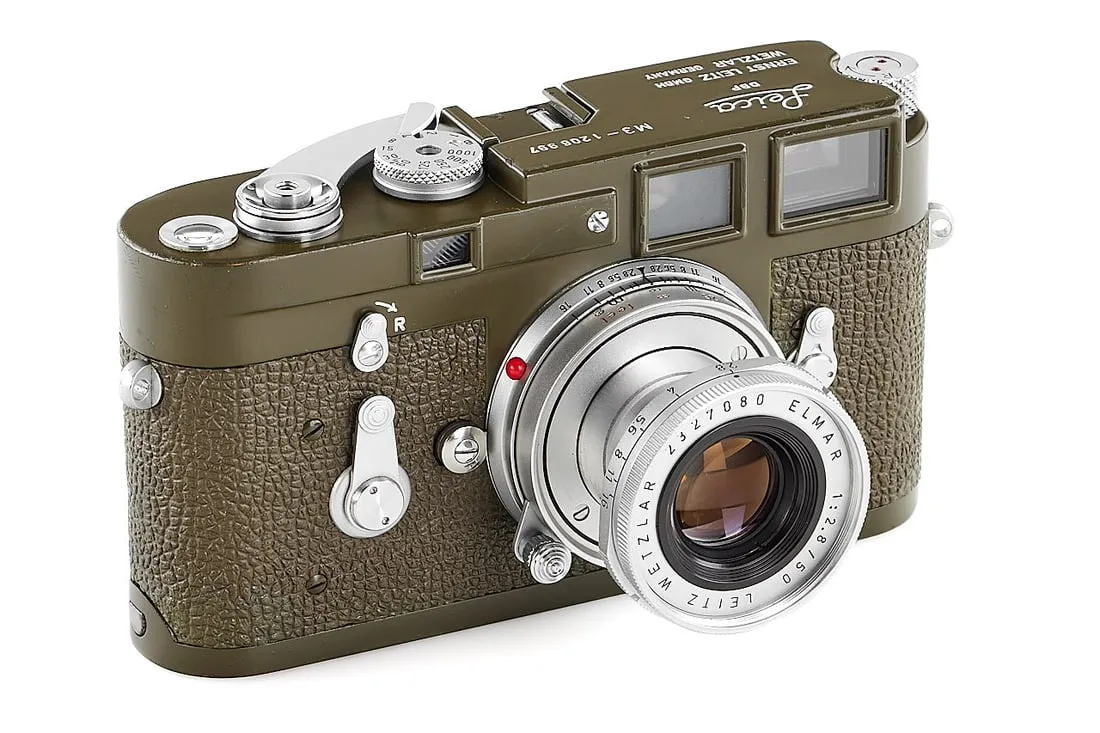

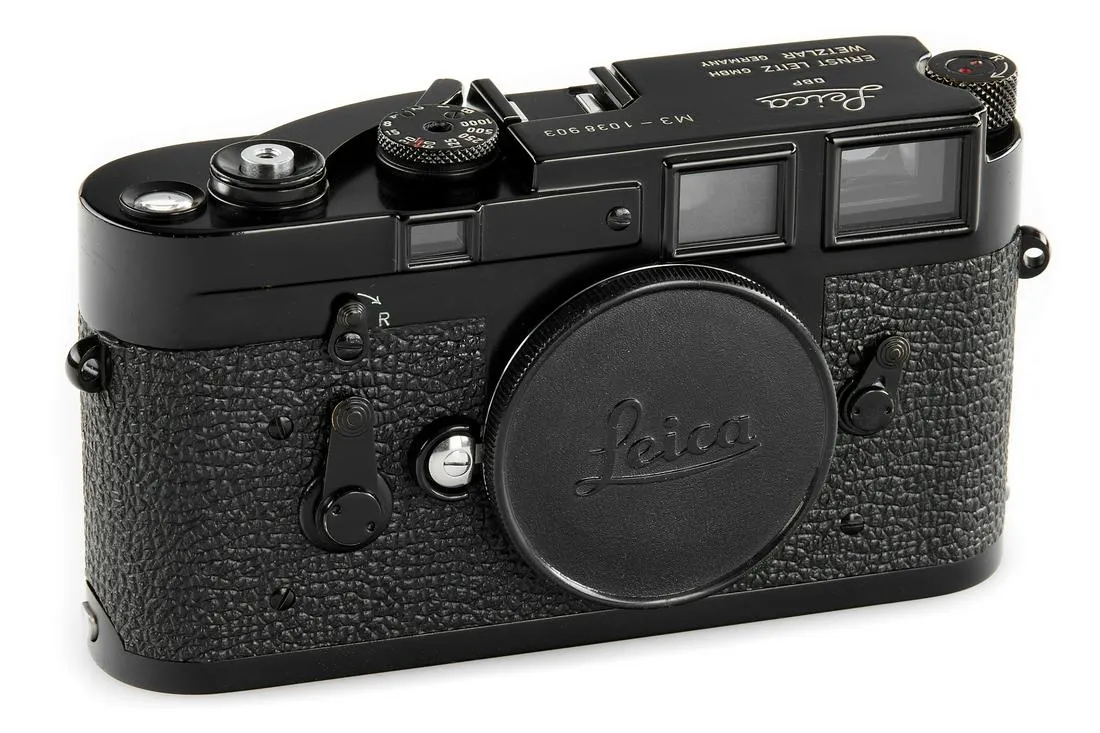
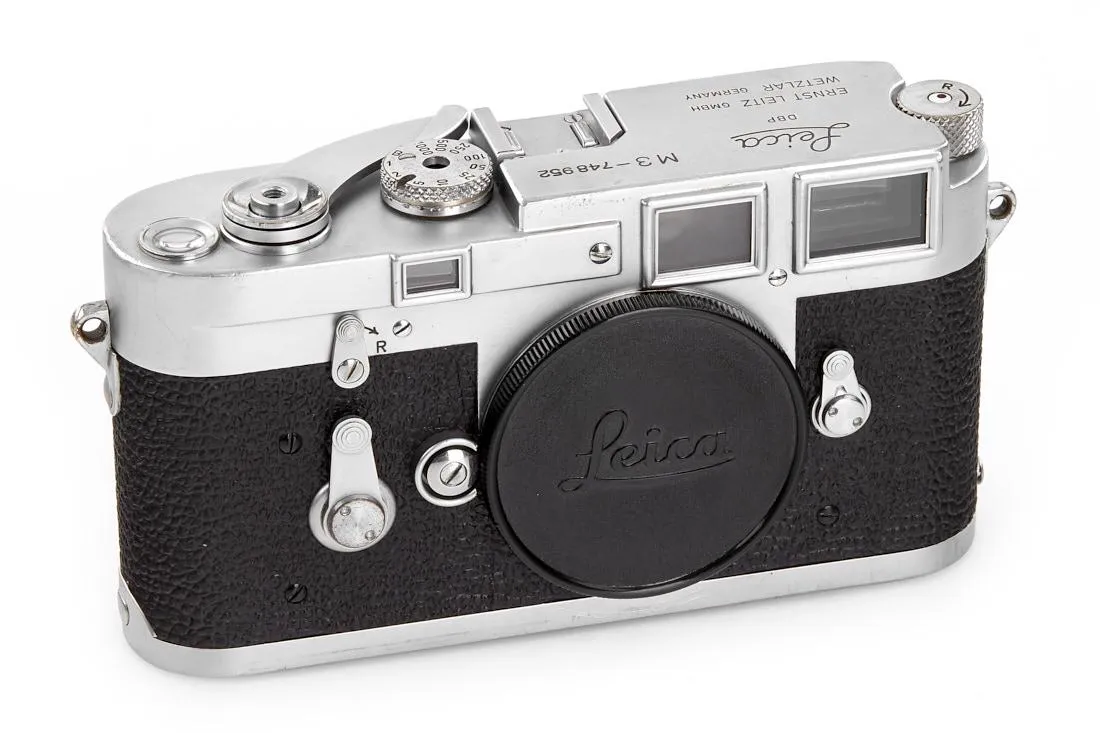
Introduced at Photokina in 1954, the Leica M3 established the M-system camera. The 39mm screw mount was replaced by the M bayonet, and the previously separate viewing and focusing systems were combined in one large rangefinder/viewfinder. Its approximately 0.91× finder provided bright-line frames for 50mm, 90mm and 135mm lenses with parallax compensation. Early cameras used a double-stroke film advance before a single-stroke arrangement became standard. More than 225,000 cameras are represented across the recorded variants. The M bayonet and combined rangefinder principle introduced here remain fundamental features of later Leica M cameras.
1953
1953-1970
Leica
IIIg
The Leica IIIg was the final major development of the screw-mount rangefinder. Its principal change was a considerably larger bright-line viewfinder containing markings for 50mm and 90mm lenses. The framing system compensated for parallax as the lens was focused. The rangefinder itself remained a separate optical system, so focusing and framing still required different eyepieces. Mechanically, the camera retained the 39mm screw mount, 1/1000-second maximum shutter and separate slow-speed control inherited from earlier III models. Later specialist variants account for the unusually broad recorded date range and do not indicate uninterrupted production throughout it.
1953-1968
Leica
M3
Introduced at Photokina in 1954, the Leica M3 established the M-system camera. The 39mm screw mount was replaced by the M bayonet, and the previously separate viewing and focusing systems were combined in one large rangefinder/viewfinder. Its approximately 0.91× finder provided bright-line frames for 50mm, 90mm and 135mm lenses with parallax compensation. Early cameras used a double-stroke film advance before a single-stroke arrangement became standard. More than 225,000 cameras are represented across the recorded variants. The M bayonet and combined rangefinder principle introduced here remain fundamental features of later Leica M cameras.
1955

1955-2016
Leica
M3D


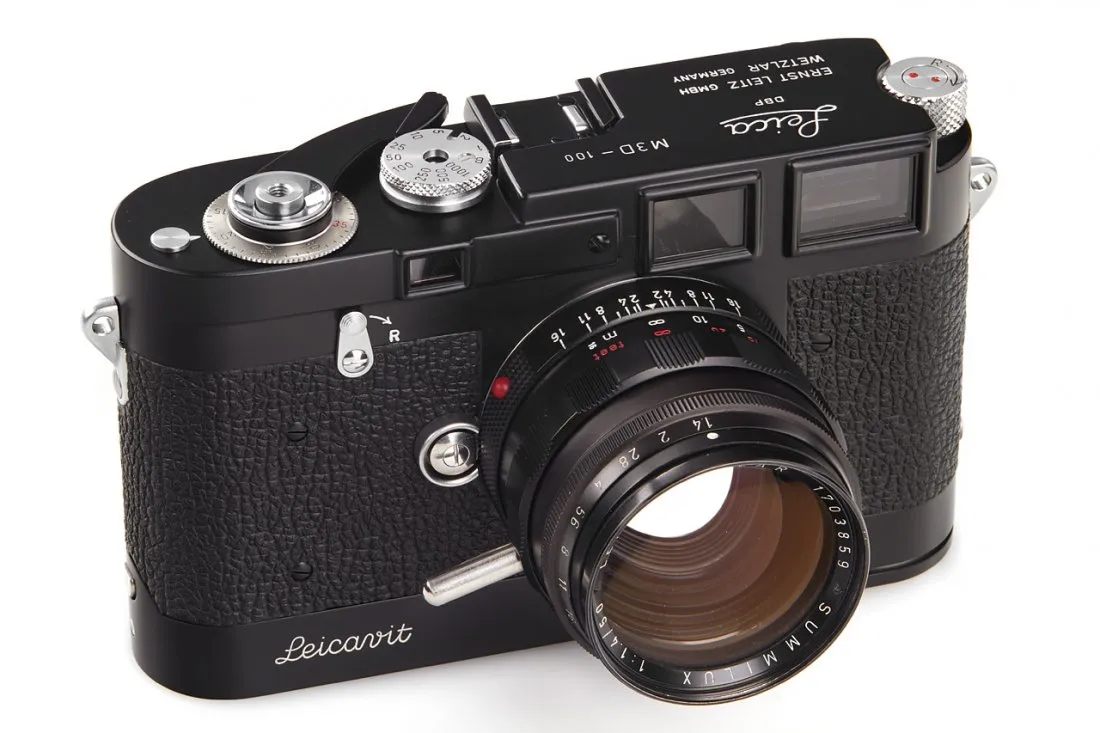
The M3D was a specially prepared version of the M3 associated with LIFE photographer David Douglas Duncan. Four black-painted cameras were made for Duncan in the 1950s and equipped for rapid film advance with a Leicavit. Sixteen later commemorative cameras were produced in the same spirit, followed by the unique M3D-100 in 2016, assembled using surviving period components. In total, 21 cameras are recorded under the M3D name. The original M3Ds were working professional cameras rather than collector editions and helped inform Leica’s development of the first MP.
1955
1955-2016
Leica
M3D
The M3D was a specially prepared version of the M3 associated with LIFE photographer David Douglas Duncan. Four black-painted cameras were made for Duncan in the 1950s and equipped for rapid film advance with a Leicavit. Sixteen later commemorative cameras were produced in the same spirit, followed by the unique M3D-100 in 2016, assembled using surviving period components. In total, 21 cameras are recorded under the M3D name. The original M3Ds were working professional cameras rather than collector editions and helped inform Leica’s development of the first MP.
1956
1956-1957
Leica
IIg

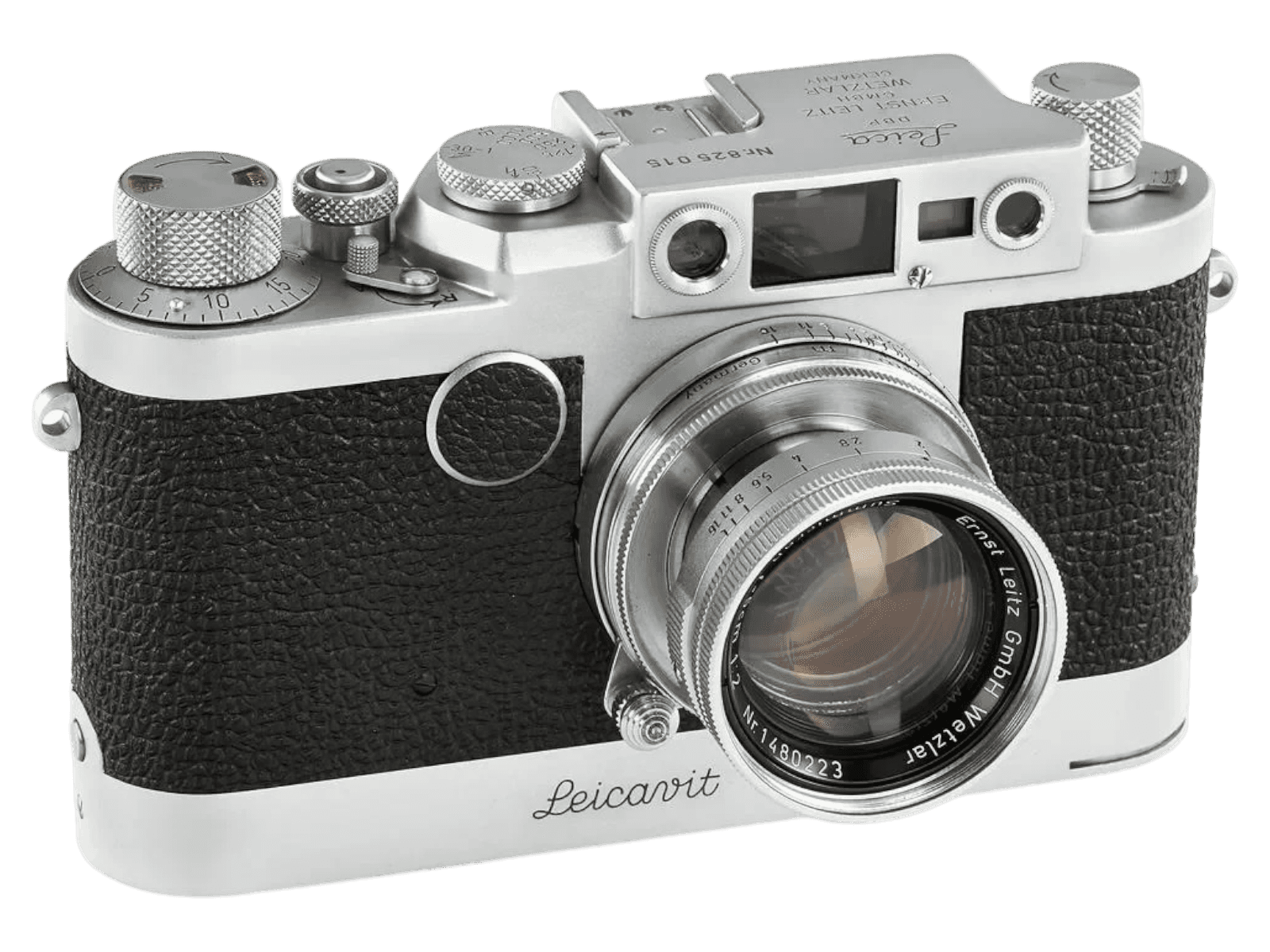
The Leica IIg was intended as the II-series counterpart to the IIIg: a coupled-rangefinder body using the improved later finder but without the IIIg’s slow-speed mechanism. It never became a normal production model. Only 19 cameras are represented in the records, consistent with its status as a very small experimental or pre-production group. By this stage the M3 and M2 had already established the M bayonet system, leaving little reason to expand the older screw-mount range with another simplified model.

1956-1965
Leica
MP (Professional)
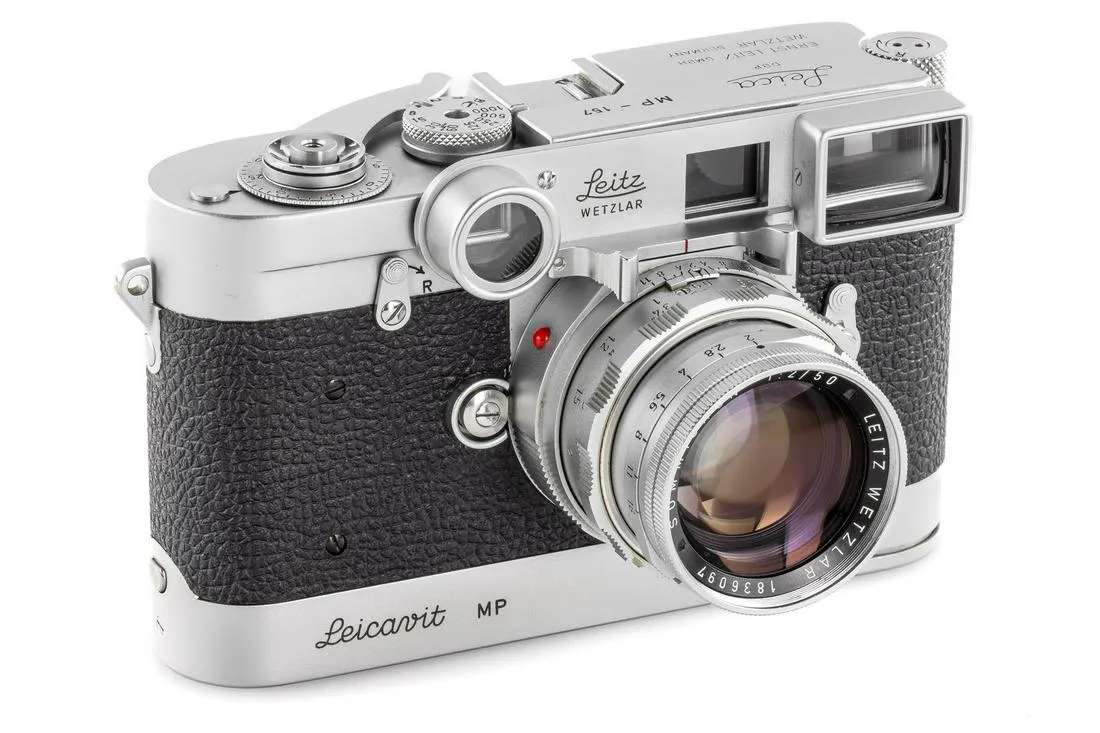
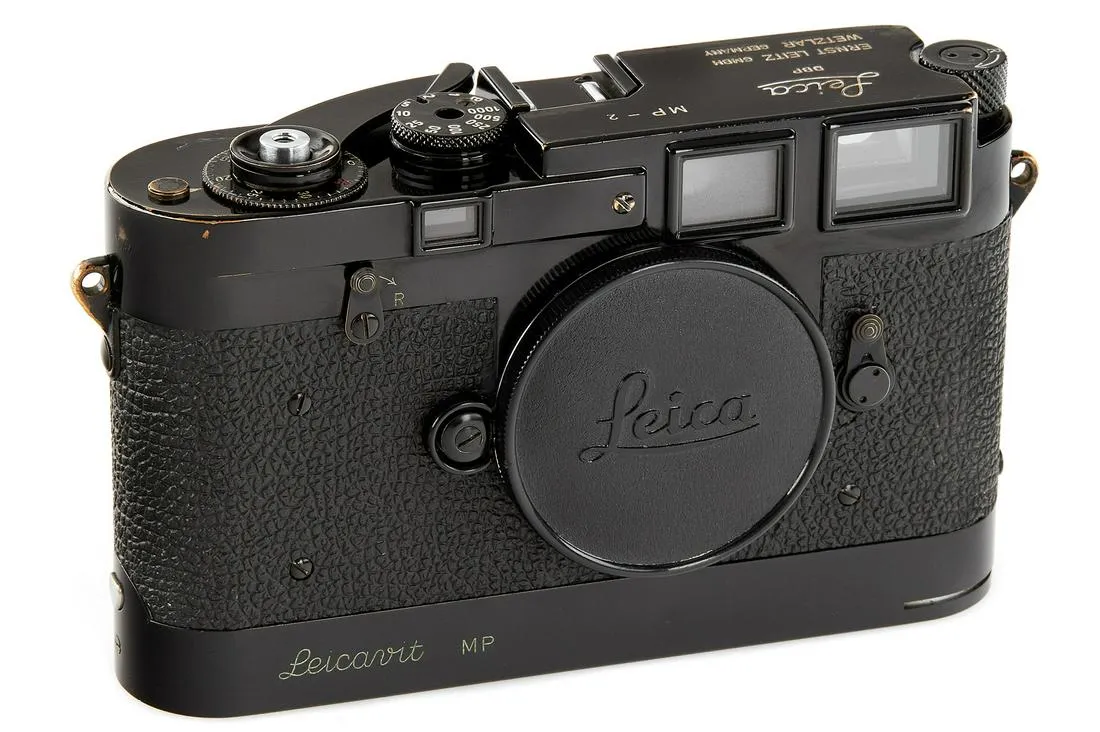

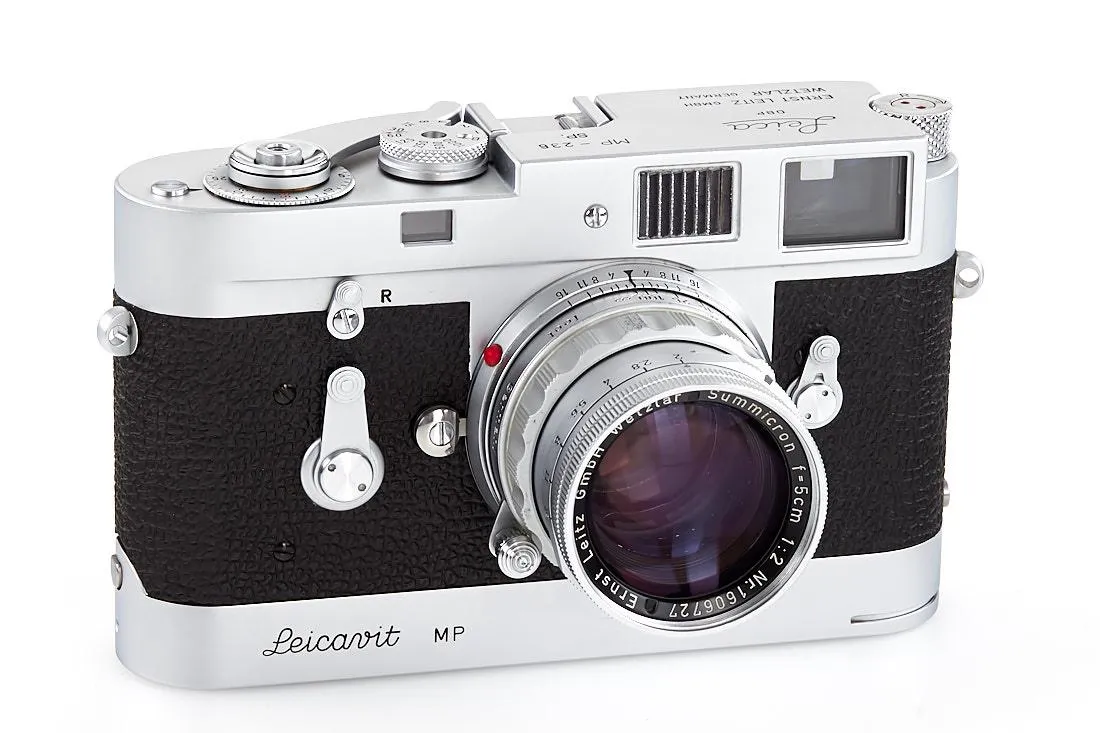
The first Leica MP was developed from the M3 for professional press photography and introduced in 1956. It was equipped for the Leicavit rapid winder, allowing film to be advanced from beneath the camera. Differences from the ordinary M3 included a manually reset external frame counter and omission of the self-timer. Distribution was directed principally toward working professional photographers rather than the general consumer market. The recorded group contains only about 400 cameras. This model is unrelated in production history to the modern MP introduced in 2003, despite the repeated designation.
1956
1956-1957
Leica
IIg
The Leica IIg was intended as the II-series counterpart to the IIIg: a coupled-rangefinder body using the improved later finder but without the IIIg’s slow-speed mechanism. It never became a normal production model. Only 19 cameras are represented in the records, consistent with its status as a very small experimental or pre-production group. By this stage the M3 and M2 had already established the M bayonet system, leaving little reason to expand the older screw-mount range with another simplified model.
1956-1965
Leica
MP (Professional)
The first Leica MP was developed from the M3 for professional press photography and introduced in 1956. It was equipped for the Leicavit rapid winder, allowing film to be advanced from beneath the camera. Differences from the ordinary M3 included a manually reset external frame counter and omission of the self-timer. Distribution was directed principally toward working professional photographers rather than the general consumer market. The recorded group contains only about 400 cameras. This model is unrelated in production history to the modern MP introduced in 2003, despite the repeated designation.
1957

1957-1963
Leica
Ig
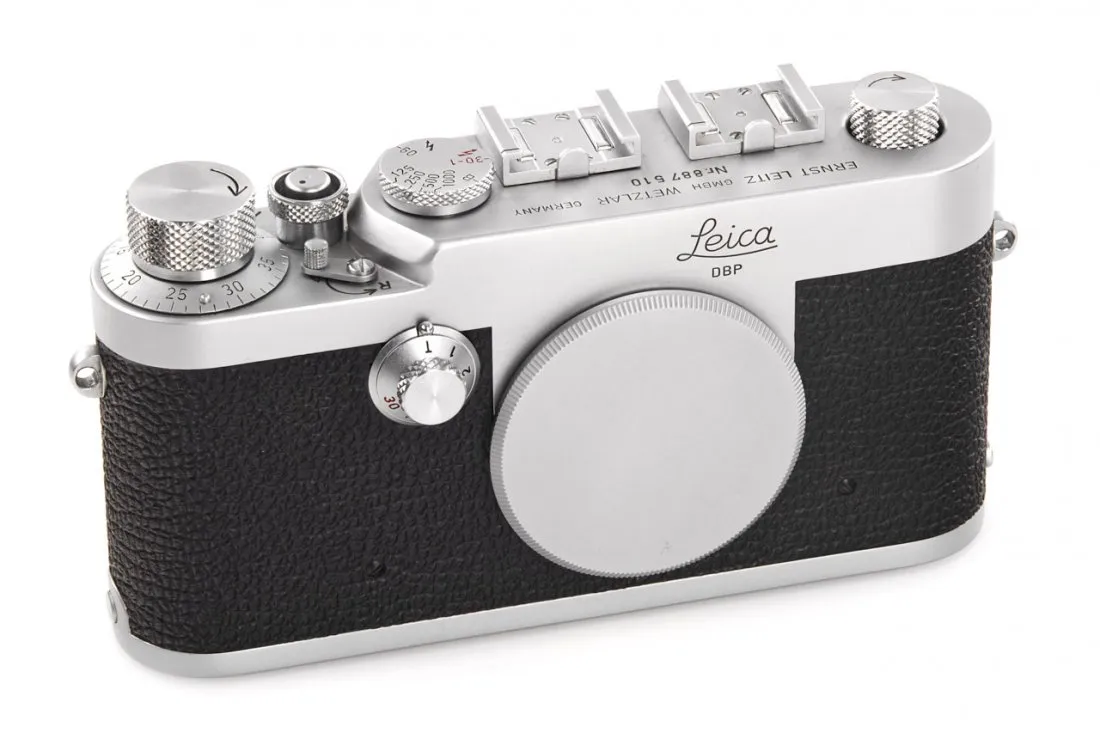
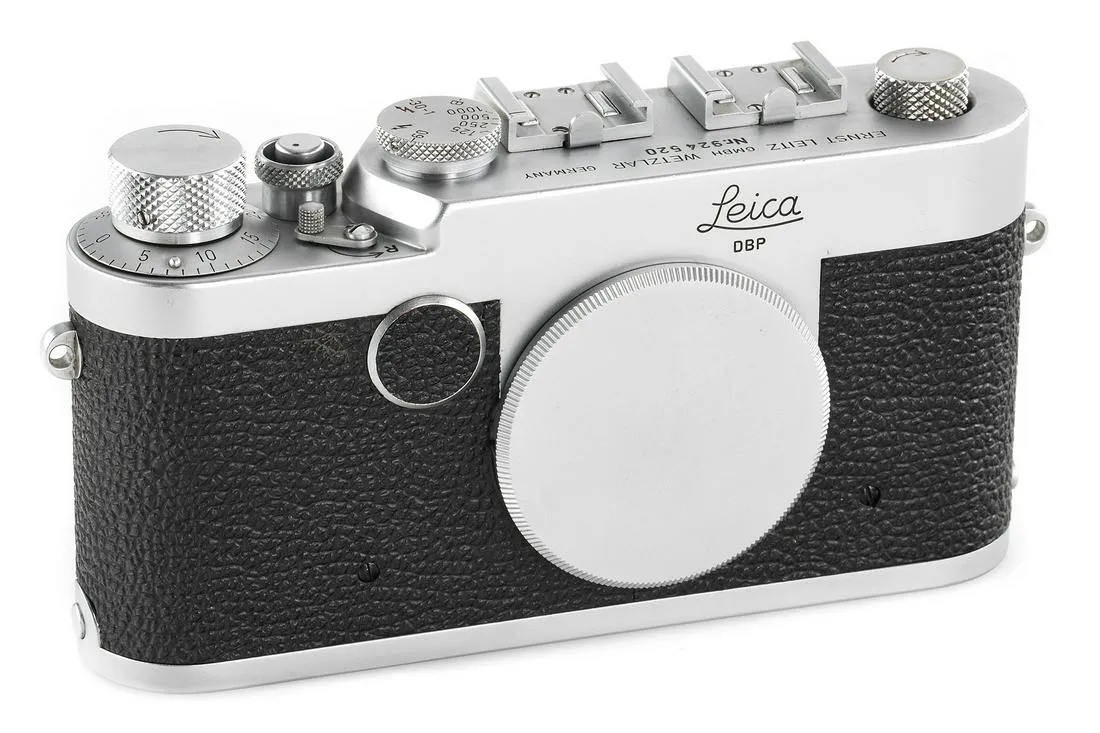

The Leica Ig was the corresponding finderless technical body of the final screw-mount generation. It omitted both the coupled rangefinder and normal viewfinder and was intended for use with microscopes, reproduction equipment, Visoflex housings and other apparatus supplying its own viewing system. Two accessory shoes permitted additional equipment to be mounted. Mechanically it belonged to the same late screw-mount generation as the IIIg. The Ig was the final regular Leica technical body using the 39mm screw mount before this type of work was transferred to M-bayonet cameras such as the M1, MD and MDa.

1957-1969
Leica
M2
Chrome

Chrome, Button Rewind
Chrome, Ernst Leitz Canada Limited Midland 'Engraving'

Chrome, Ernst Leitz Canada Limited Midland Ontario 'Engraving'
Chrome, Ernst Leitz Canada Limited Midland Ontario 'Engraving' Button Rewind
Black Paint, Button Rewind
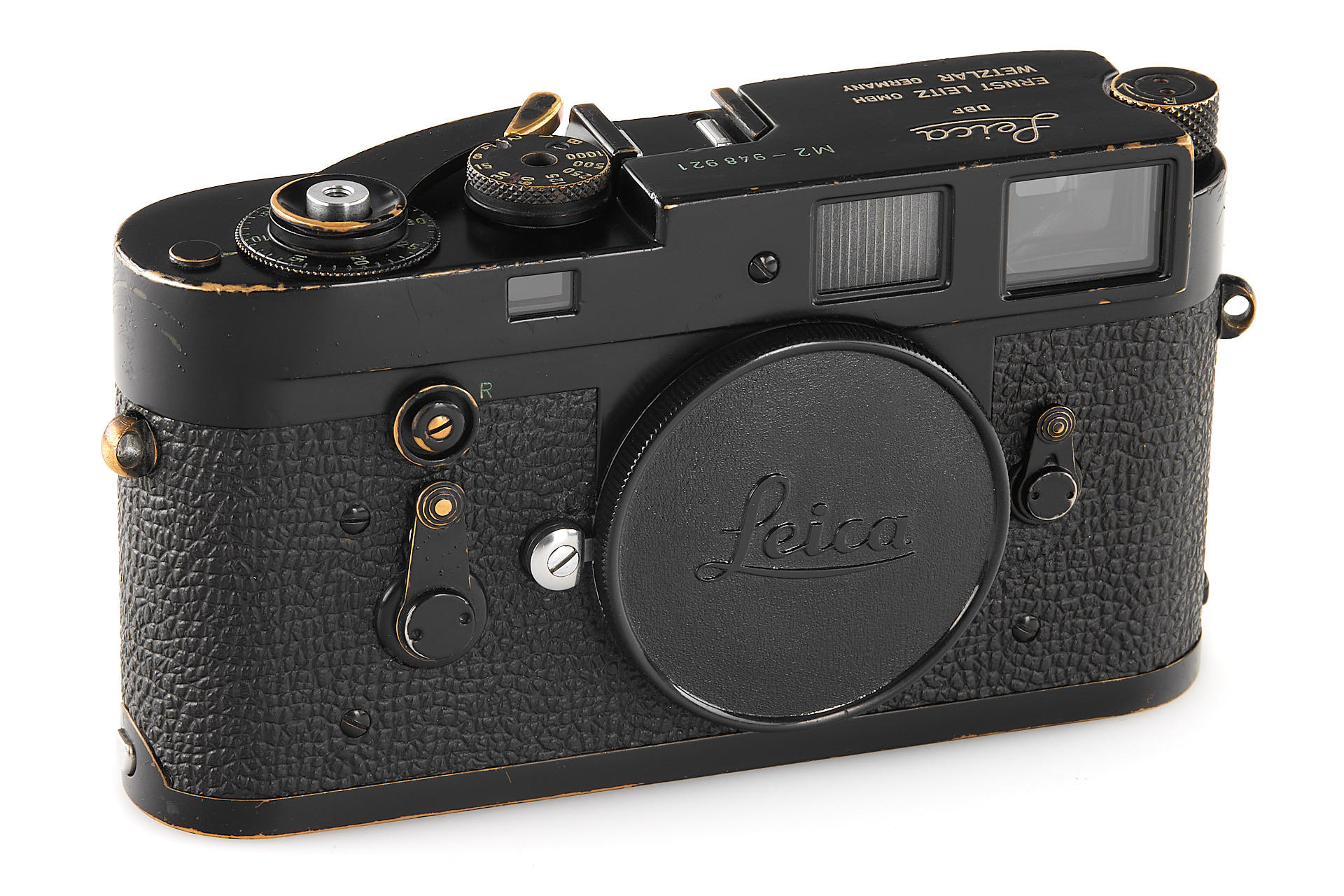
Black Paint, Button Rewind, Self Timer

Black Paint
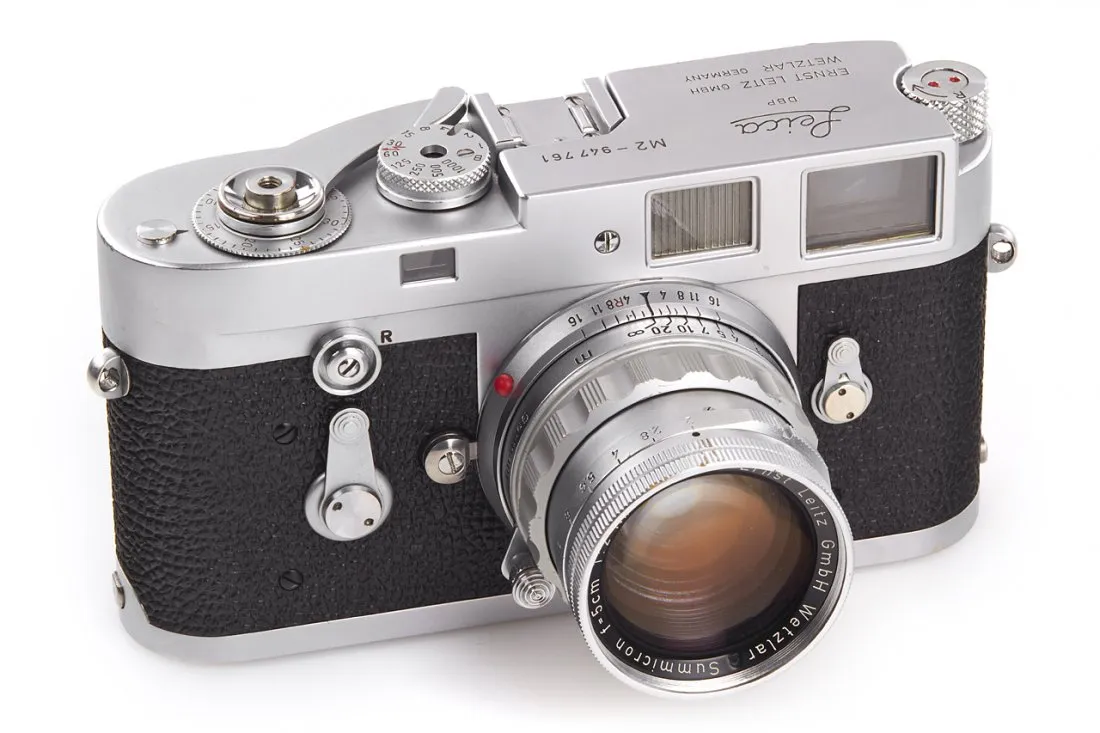
Chrome, Button Rewind, Self Timer

Chrome, Self Timer
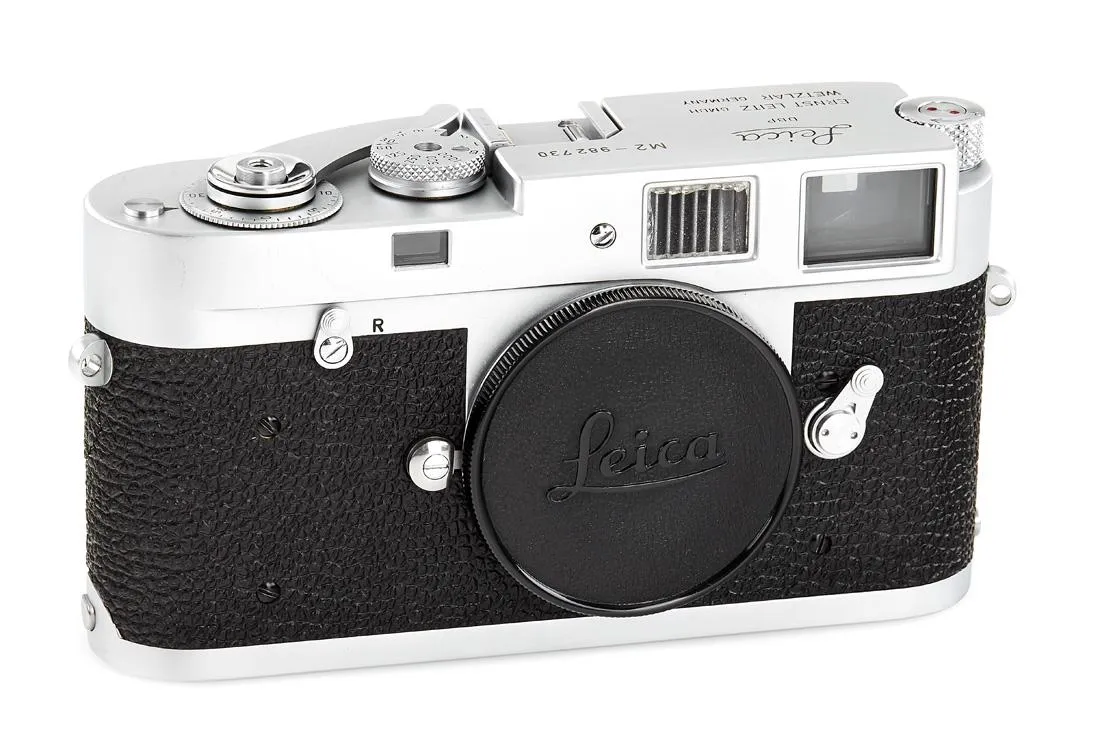
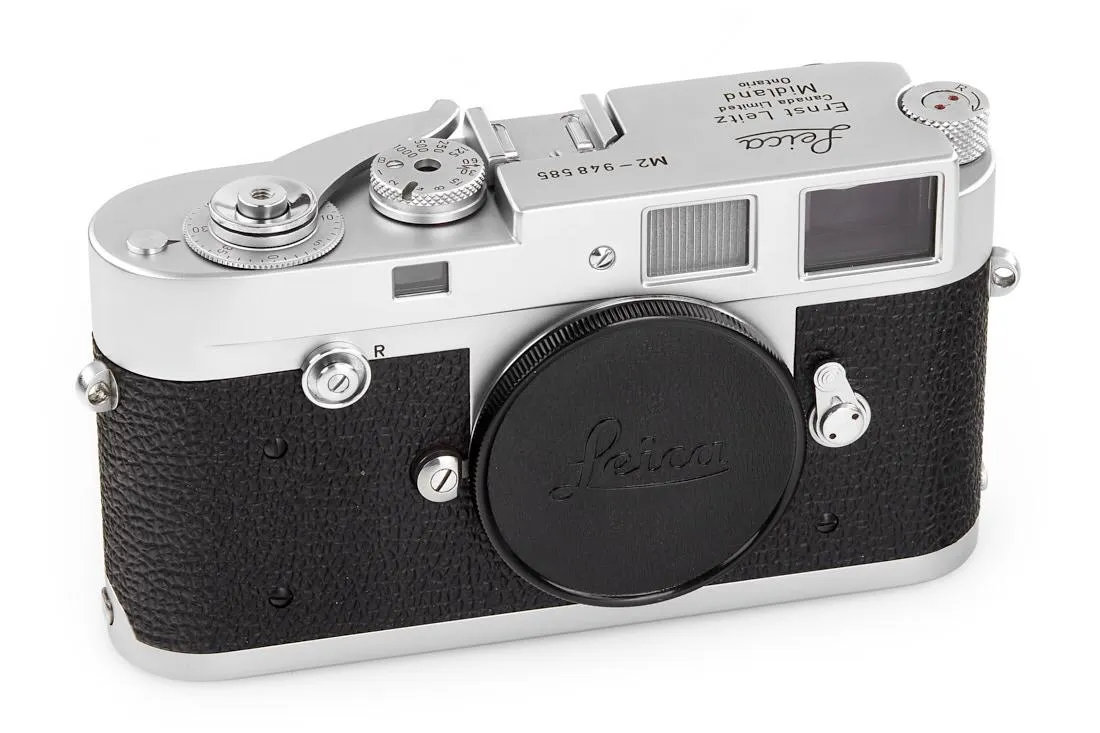
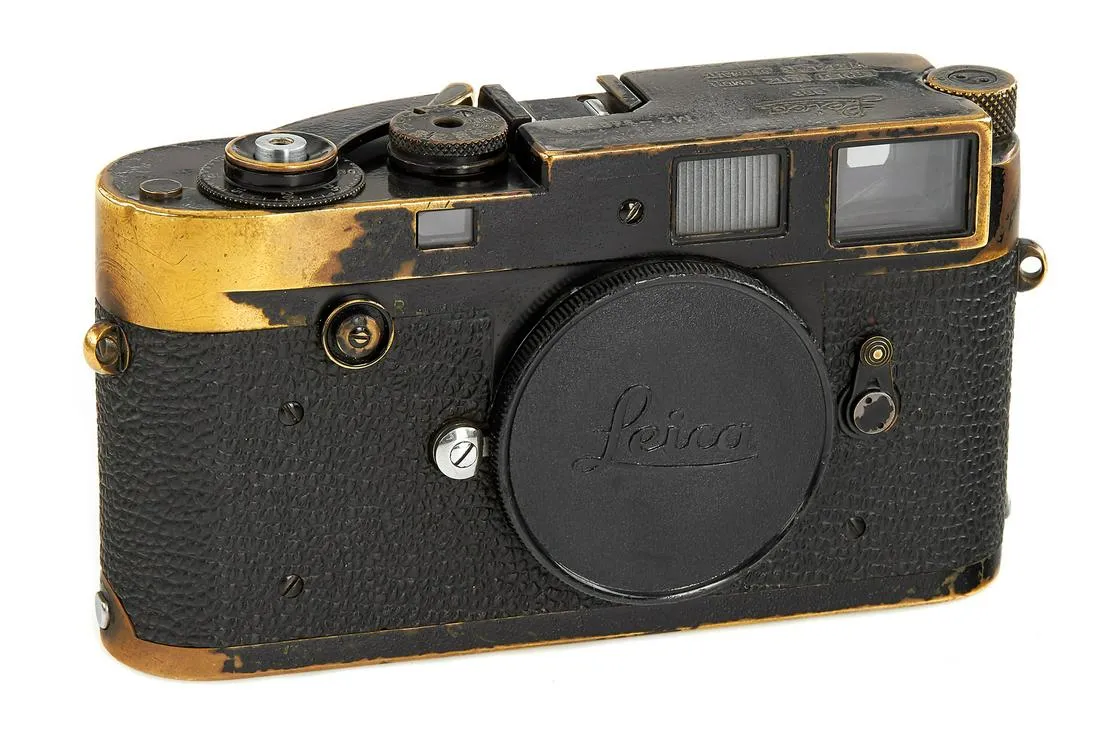
The Leica M2 adapted the M system to wider lenses. Its approximately 0.72× finder carried bright-line frames for 35mm, 50mm and 90mm lenses, allowing a 35mm lens to be framed directly without the accessory finder normally required on an M3. Construction was simplified in several respects, including the use of an external manually reset frame counter. The lower finder magnification and 35mm frame made the M2 particularly suitable for the focal lengths commonly used in reportage. The 0.72× arrangement subsequently became the standard basis for many later Leica M finders.
1957
1957-1963
Leica
Ig
The Leica Ig was the corresponding finderless technical body of the final screw-mount generation. It omitted both the coupled rangefinder and normal viewfinder and was intended for use with microscopes, reproduction equipment, Visoflex housings and other apparatus supplying its own viewing system. Two accessory shoes permitted additional equipment to be mounted. Mechanically it belonged to the same late screw-mount generation as the IIIg. The Ig was the final regular Leica technical body using the 39mm screw mount before this type of work was transferred to M-bayonet cameras such as the M1, MD and MDa.
1957-1969
Leica
M2
Chrome
Chrome, Button Rewind
Chrome, Ernst Leitz Canada Limited Midland 'Engraving'
Chrome, Ernst Leitz Canada Limited Midland Ontario 'Engraving'
Chrome, Ernst Leitz Canada Limited Midland Ontario 'Engraving' Button Rewind
Black Paint, Button Rewind
Black Paint, Button Rewind, Self Timer
Black Paint
Chrome, Button Rewind, Self Timer
Chrome, Self Timer
The Leica M2 adapted the M system to wider lenses. Its approximately 0.72× finder carried bright-line frames for 35mm, 50mm and 90mm lenses, allowing a 35mm lens to be framed directly without the accessory finder normally required on an M3. Construction was simplified in several respects, including the use of an external manually reset frame counter. The lower finder magnification and 35mm frame made the M2 particularly suitable for the focal lengths commonly used in reportage. The 0.72× arrangement subsequently became the standard basis for many later Leica M finders.
1958

1958-1959
Leica
MP2
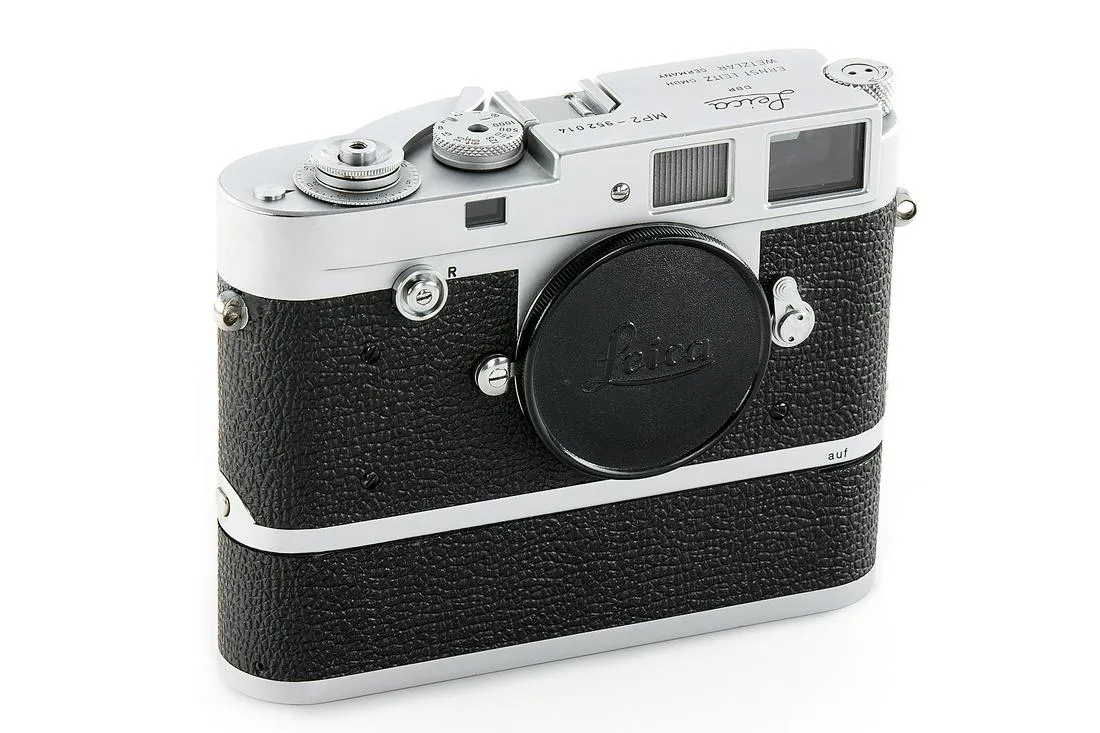
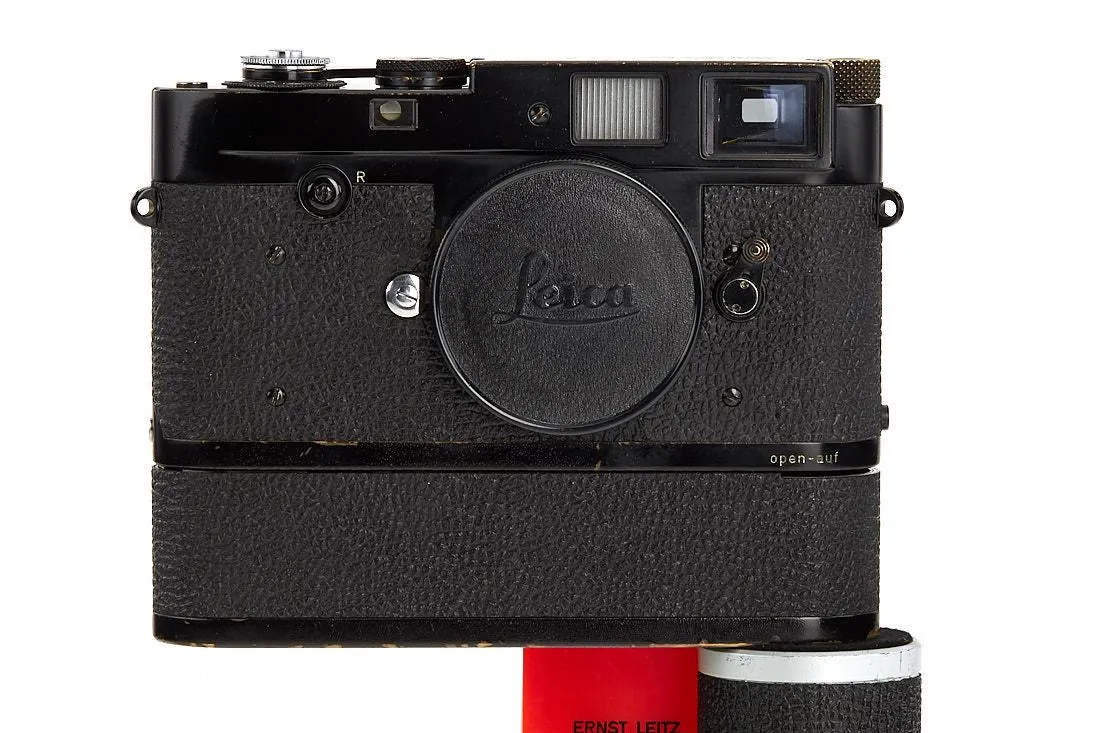
The Leica MP2 was a motorized development of the M2 rather than a version of the earlier MP. Only 27 cameras are represented. The body was modified to work with an electric motor drive capable of advancing the film at approximately 3.5 frames per second. Motor connections and the altered winding mechanism were incorporated into the camera, with power supplied externally. The MP2 remained a very small experimental production but established practical work that continued in the M2-M and the later motorized M4 variants.
1958
1958-1959
Leica
MP2
The Leica MP2 was a motorized development of the M2 rather than a version of the earlier MP. Only 27 cameras are represented. The body was modified to work with an electric motor drive capable of advancing the film at approximately 3.5 frames per second. Motor connections and the altered winding mechanism were incorporated into the camera, with power supplied externally. The MP2 remained a very small experimental production but established practical work that continued in the M2-M and the later motorized M4 variants.
1959

1959-1967
Leica
Post Camera
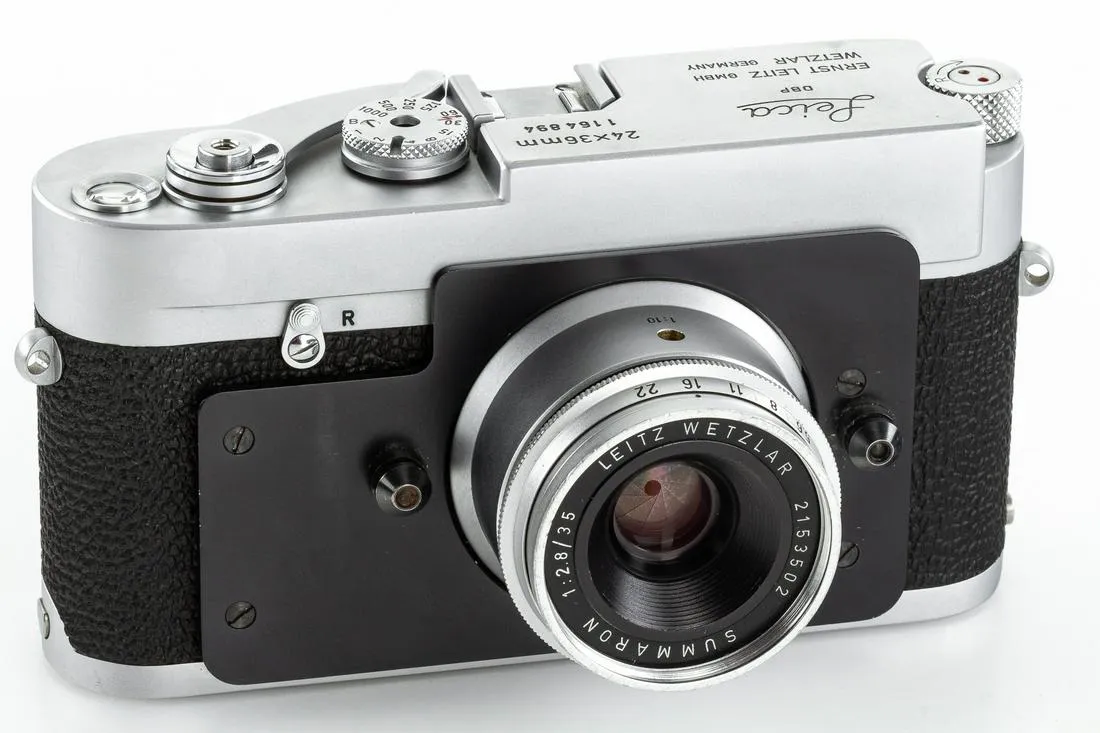

The Leica Postkamera was made for fixed institutional recording apparatus rather than ordinary handheld photography. Versions were used by postal and telecommunications organizations for tasks including the photographic recording of telephone-meter readings. Depending on the application, bodies could omit normal viewing equipment and use a fixed-focus lens because framing and distance were determined by the installation itself. Both 24 × 36mm and narrower 24 × 27mm recording versions are documented. The Postkamera belongs to Leica’s technical-camera line rather than to the normal sequence of general-purpose M rangefinders.

1959-1964
Leica
M1

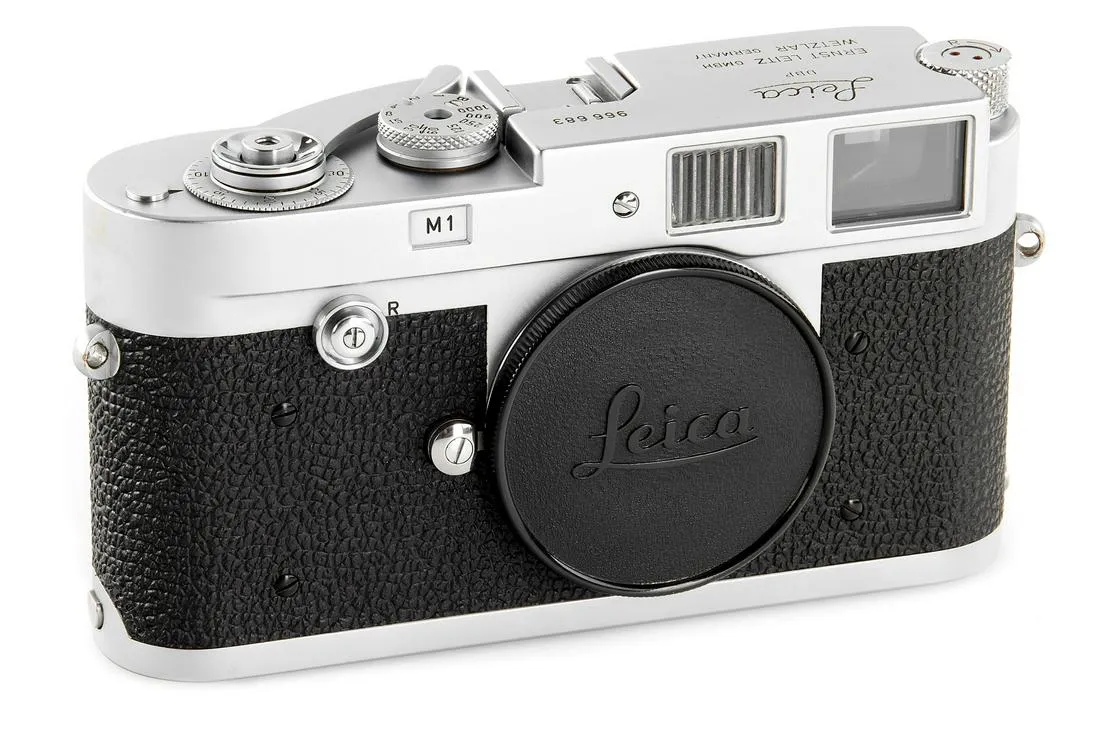
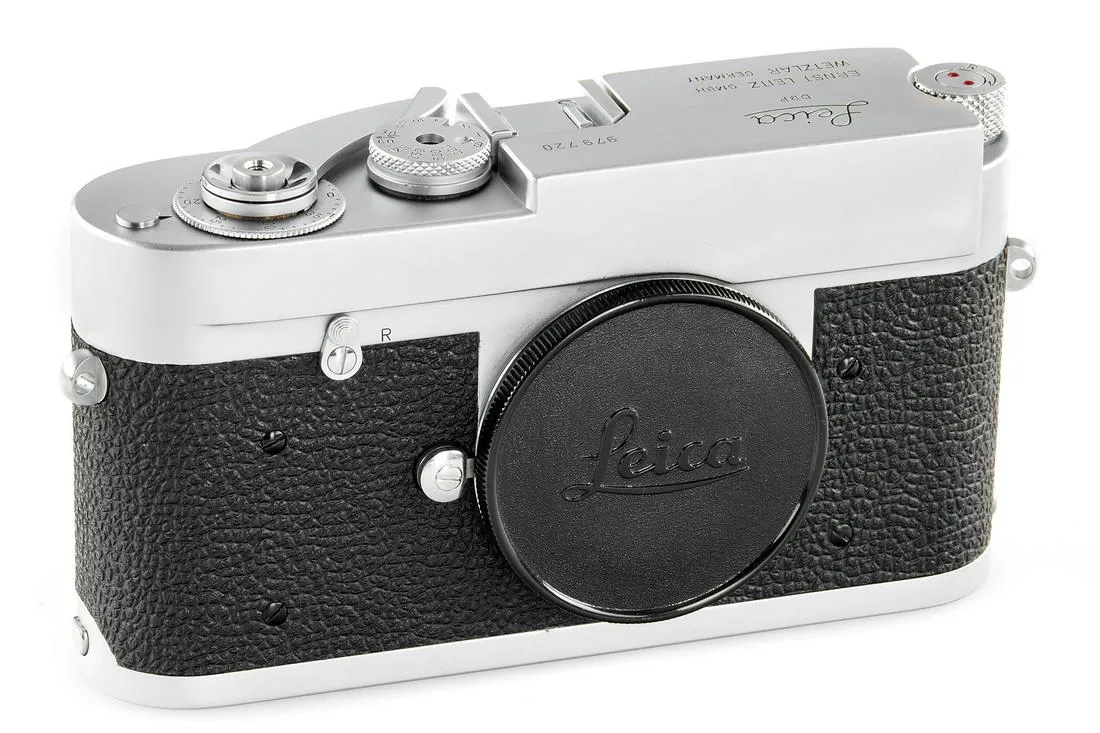
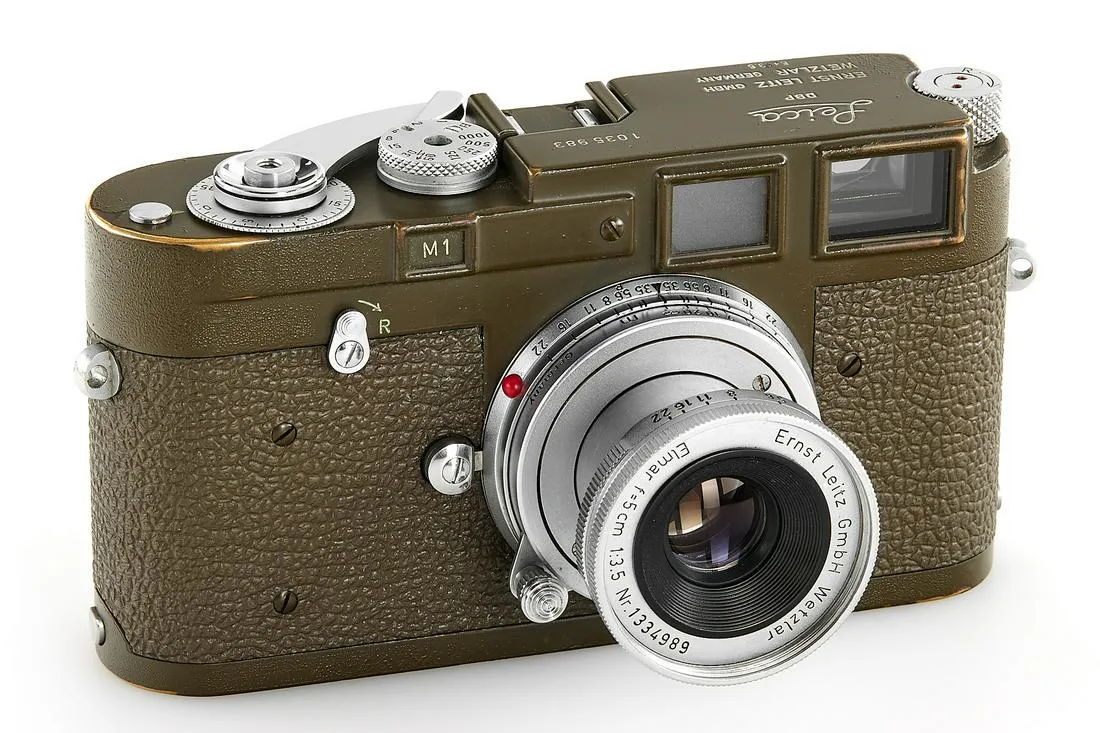
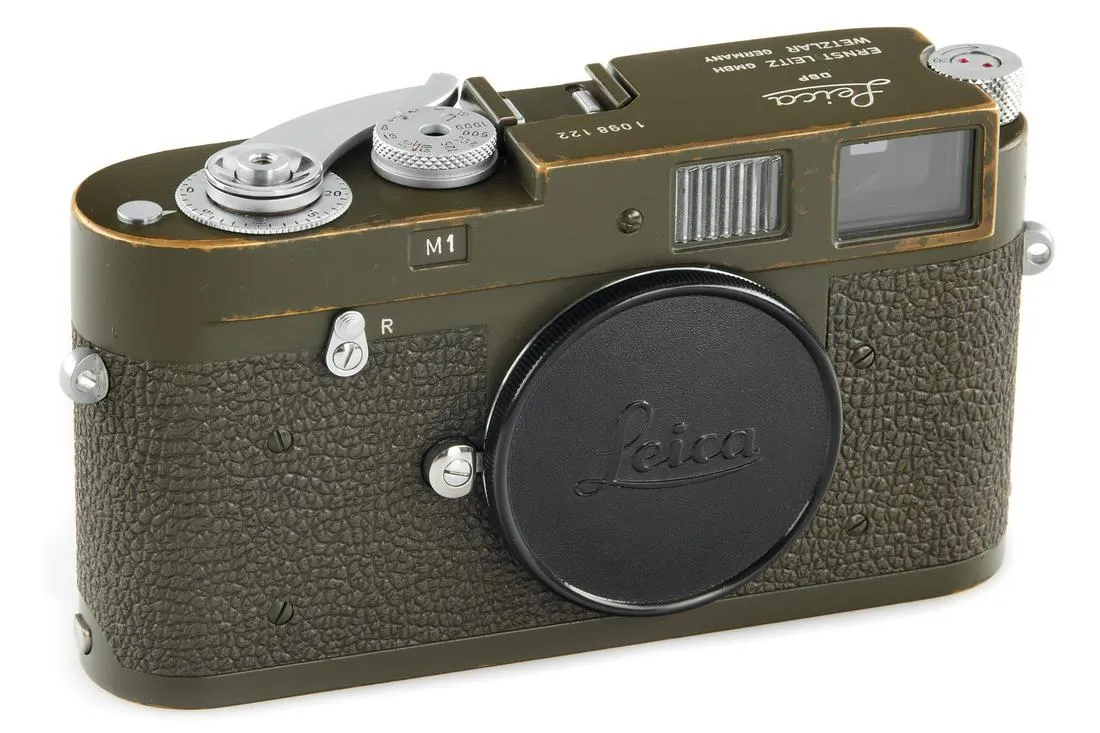

The Leica M1 was a technical M camera with an optical viewfinder but no coupled rangefinder. Its 0.72× finder provided framing for 35mm and 50mm lenses, while focusing had to be determined by scale or through auxiliary equipment such as the Visoflex. The arrangement suited copying, close-range, scientific and other work where the ordinary rangefinder mechanism was unnecessary. The M1 used the M bayonet and much of the M2 body architecture. It occupied an intermediate position between the complete M rangefinder cameras and the later MD, which omitted the finder as well.
1959
1959-1967
Leica
Post Camera
The Leica Postkamera was made for fixed institutional recording apparatus rather than ordinary handheld photography. Versions were used by postal and telecommunications organizations for tasks including the photographic recording of telephone-meter readings. Depending on the application, bodies could omit normal viewing equipment and use a fixed-focus lens because framing and distance were determined by the installation itself. Both 24 × 36mm and narrower 24 × 27mm recording versions are documented. The Postkamera belongs to Leica’s technical-camera line rather than to the normal sequence of general-purpose M rangefinders.
1959-1964
Leica
M1
The Leica M1 was a technical M camera with an optical viewfinder but no coupled rangefinder. Its 0.72× finder provided framing for 35mm and 50mm lenses, while focusing had to be determined by scale or through auxiliary equipment such as the Visoflex. The arrangement suited copying, close-range, scientific and other work where the ordinary rangefinder mechanism was unnecessary. The M1 used the M bayonet and much of the M2 body architecture. It occupied an intermediate position between the complete M rangefinder cameras and the later MD, which omitted the finder as well.
1964

1964-1966
Leica
MD
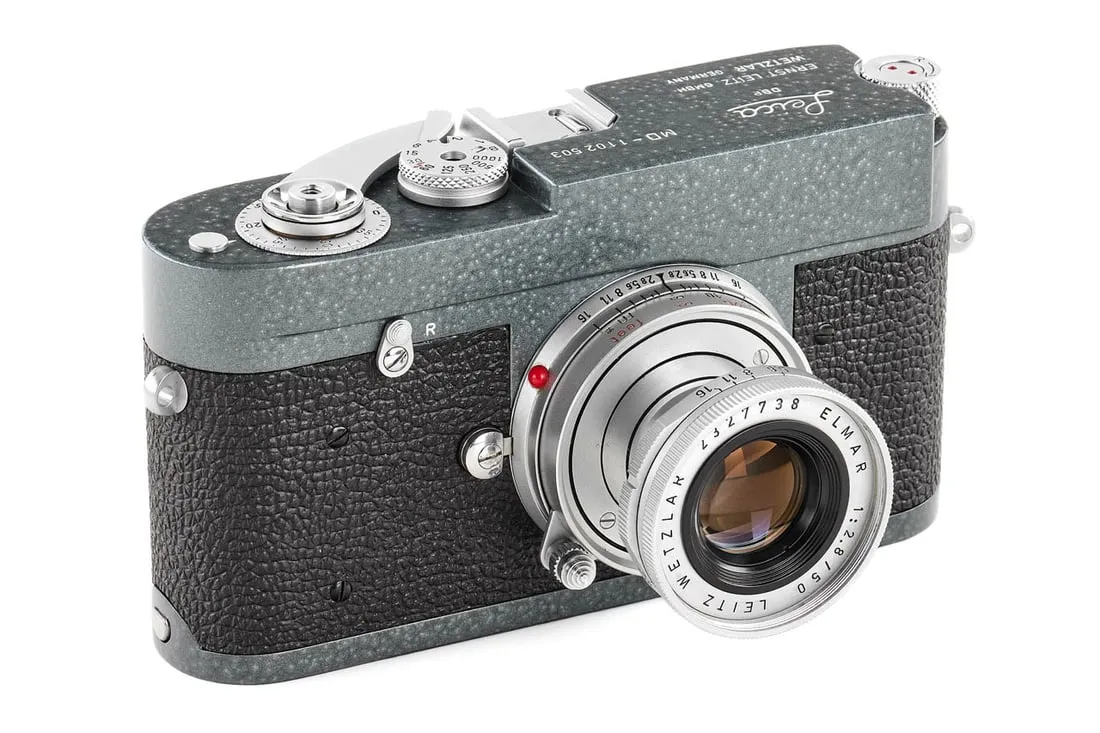
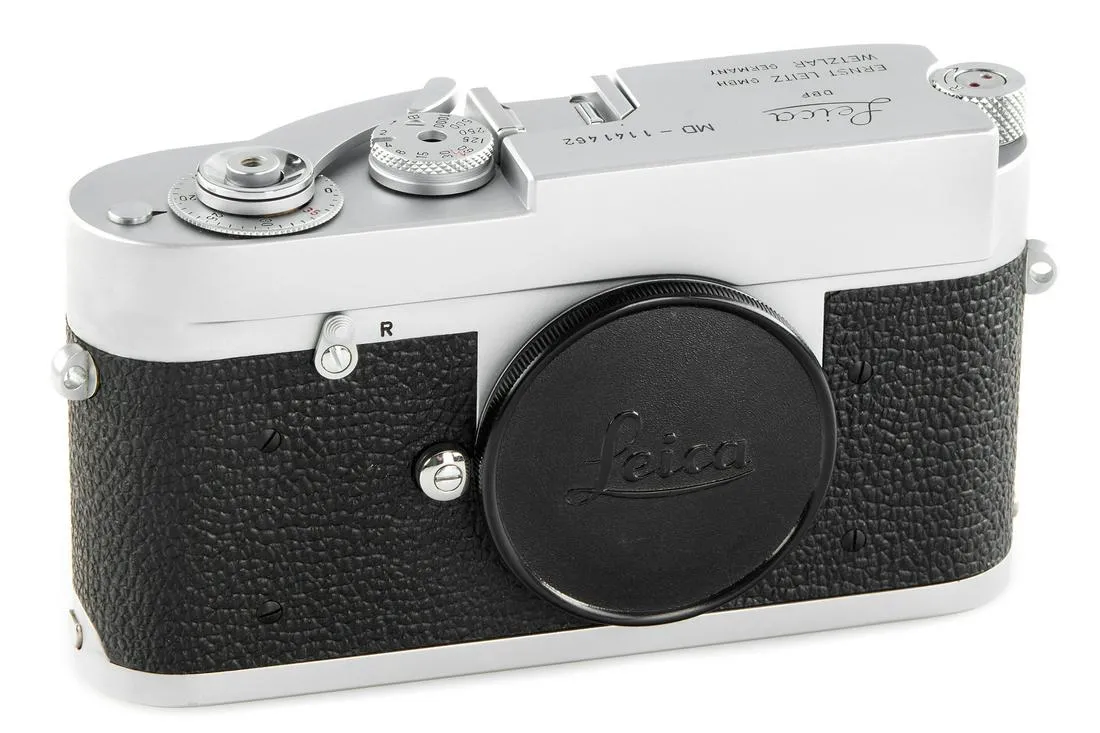
The Leica MD removed both the rangefinder and viewfinder from the M body. It was intended to work as a photographic component in microscopes, reproduction equipment, Visoflex systems and other apparatus with an independent method of composing and focusing. The body retained the M bayonet, shutter and film transport but had a plain upper housing in place of the normal optical system. Special technical arrangements could also be used for recording identifying information. The MD continued the function previously served by finderless screw-mount cameras such as the Ic, If and Ig.
1964
1964-1966
Leica
MD
The Leica MD removed both the rangefinder and viewfinder from the M body. It was intended to work as a photographic component in microscopes, reproduction equipment, Visoflex systems and other apparatus with an independent method of composing and focusing. The body retained the M bayonet, shutter and film transport but had a plain upper housing in place of the normal optical system. Special technical arrangements could also be used for recording identifying information. The MD continued the function previously served by finderless screw-mount cameras such as the Ic, If and Ig.
1966

1966
Leica
M2-M

The Leica M2-M was the first factory production M body specifically prepared for an electric motor. Its development followed work by the New York engineer Norman Goldberg, whose motor design was taken up by E. Leitz New York. 275 M2-M cameras were made in the recorded factory group. The motor attached beneath the body and drove the film transport through a modified mechanism. The camera could also operate manually with the motor removed. The M2-M provided the immediate technical basis for the M4-M and subsequent M4 motor cameras.

1966-1975
Leica
MDa
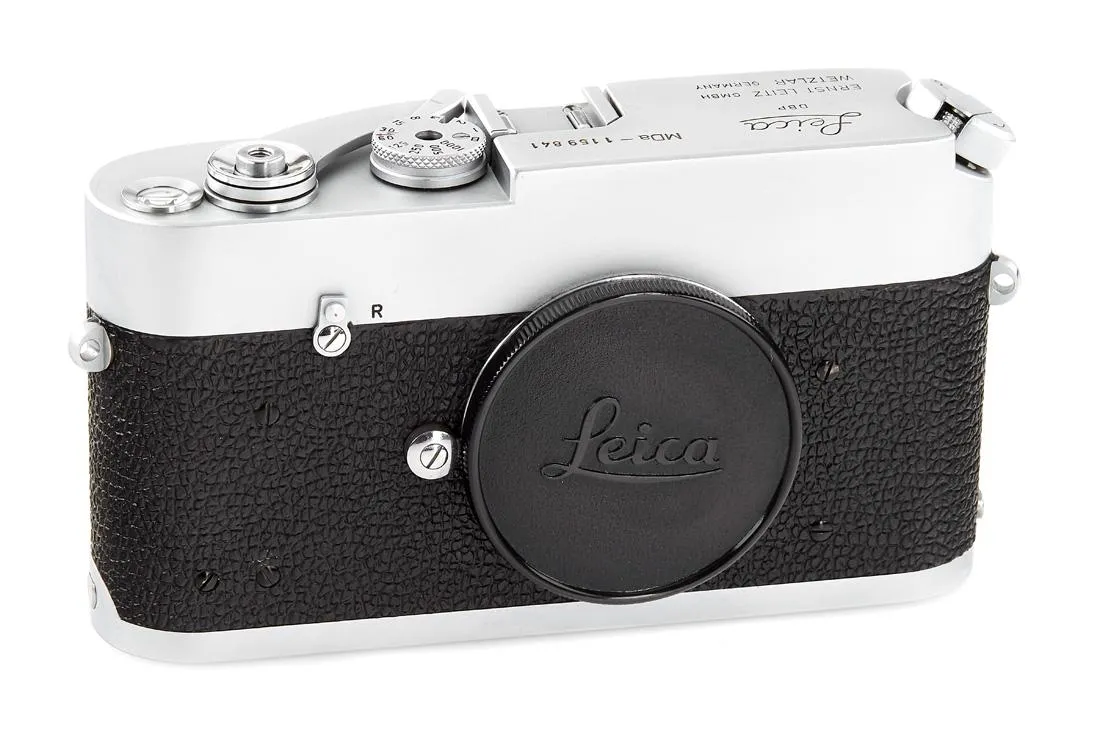
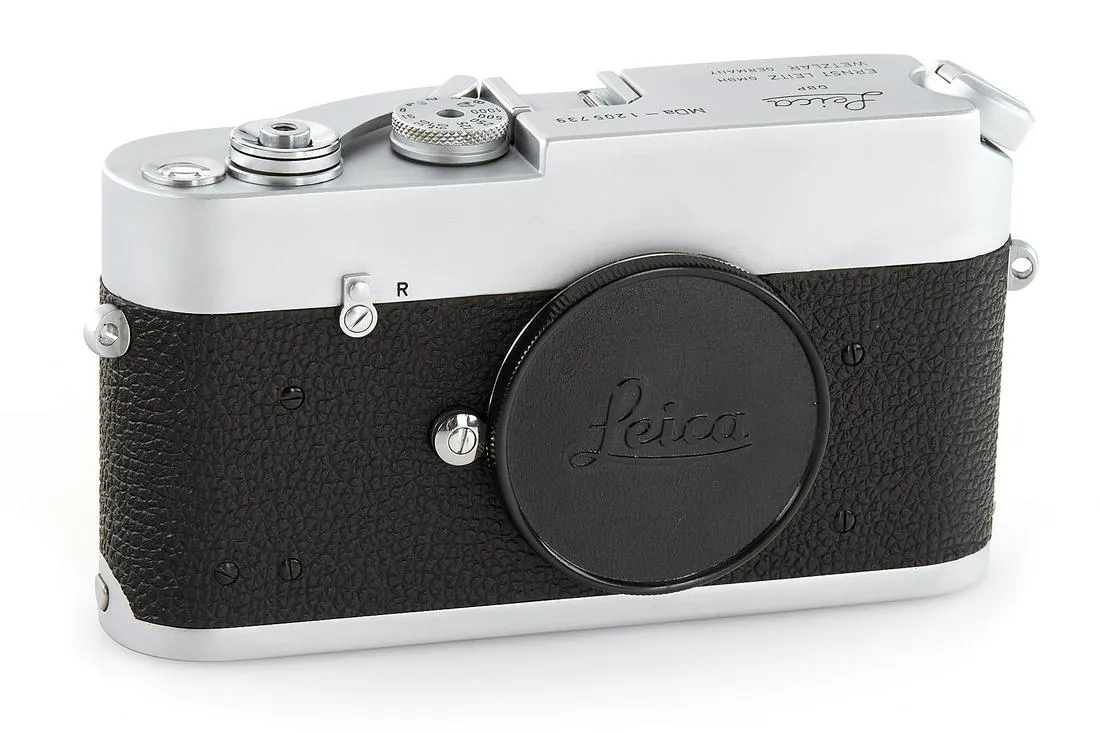
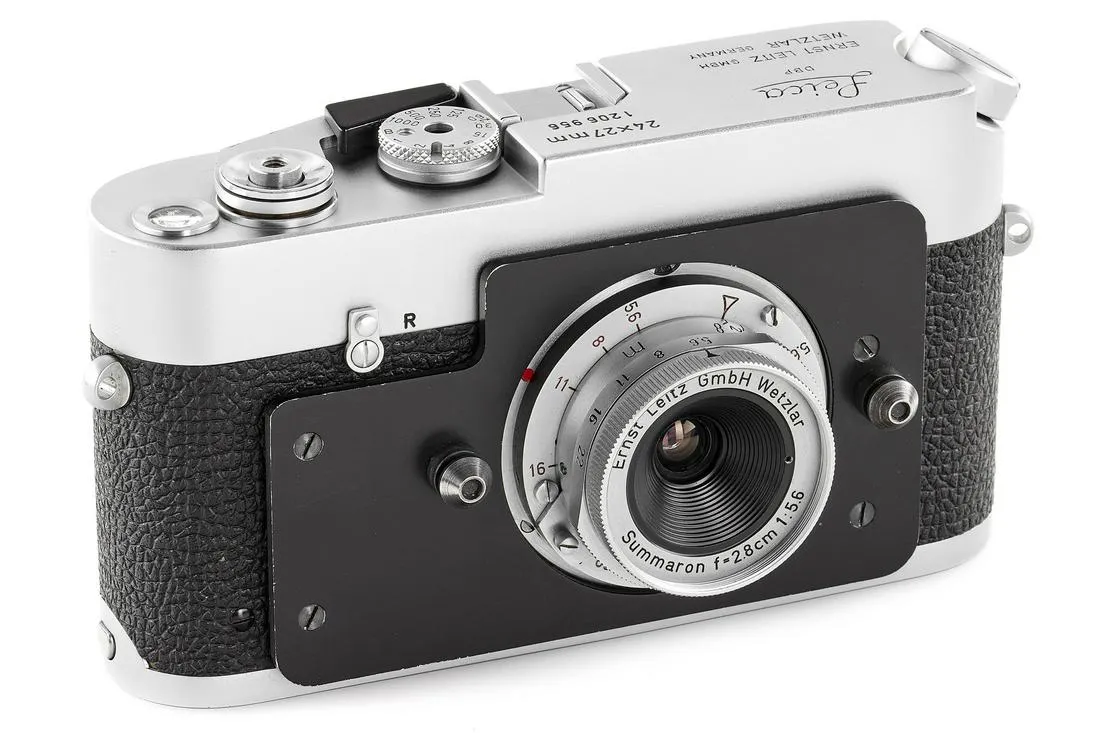
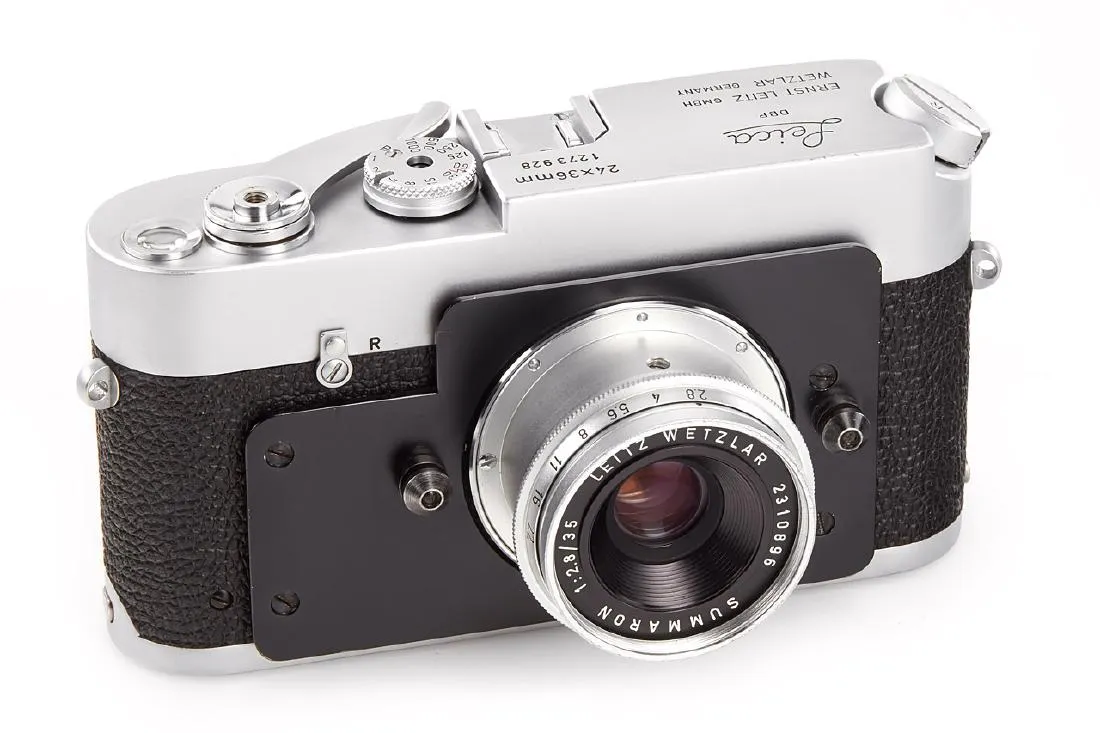

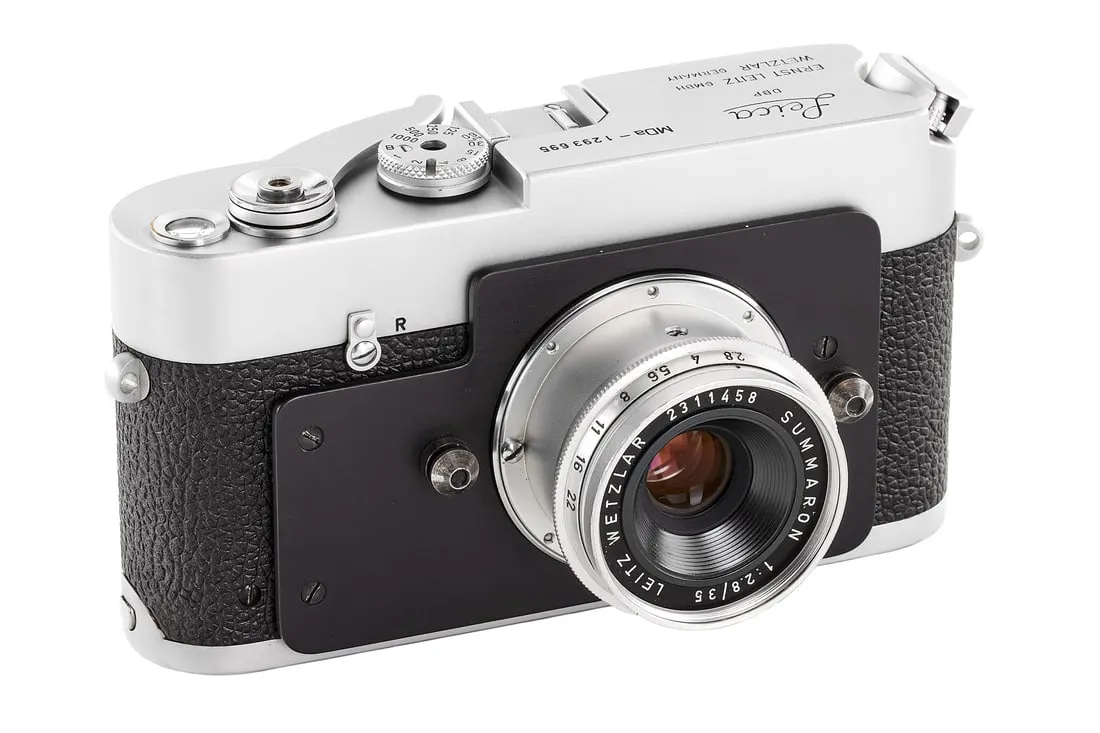
The Leica MDa succeeded the MD and applied the same finderless technical arrangement to the M4 generation. It has neither a rangefinder nor a conventional viewfinder and was intended for scientific, medical, copying and administrative recording work. The M4-derived mechanism brought the rapid-loading system and angled rewind crank to the technical body. Registration equipment could be fitted for recording identifying information with the image, and special Postkamera versions also existed. The MDa was consequently a configurable recording body rather than simply a stripped-down M4 for ordinary photography.
1966
1966
Leica
M2-M
The Leica M2-M was the first factory production M body specifically prepared for an electric motor. Its development followed work by the New York engineer Norman Goldberg, whose motor design was taken up by E. Leitz New York. 275 M2-M cameras were made in the recorded factory group. The motor attached beneath the body and drove the film transport through a modified mechanism. The camera could also operate manually with the motor removed. The M2-M provided the immediate technical basis for the M4-M and subsequent M4 motor cameras.
1966-1975
Leica
MDa
The Leica MDa succeeded the MD and applied the same finderless technical arrangement to the M4 generation. It has neither a rangefinder nor a conventional viewfinder and was intended for scientific, medical, copying and administrative recording work. The M4-derived mechanism brought the rapid-loading system and angled rewind crank to the technical body. Registration equipment could be fitted for recording identifying information with the image, and special Postkamera versions also existed. The MDa was consequently a configurable recording body rather than simply a stripped-down M4 for ordinary photography.
1967

1967-1969
Leica
M4-M DA
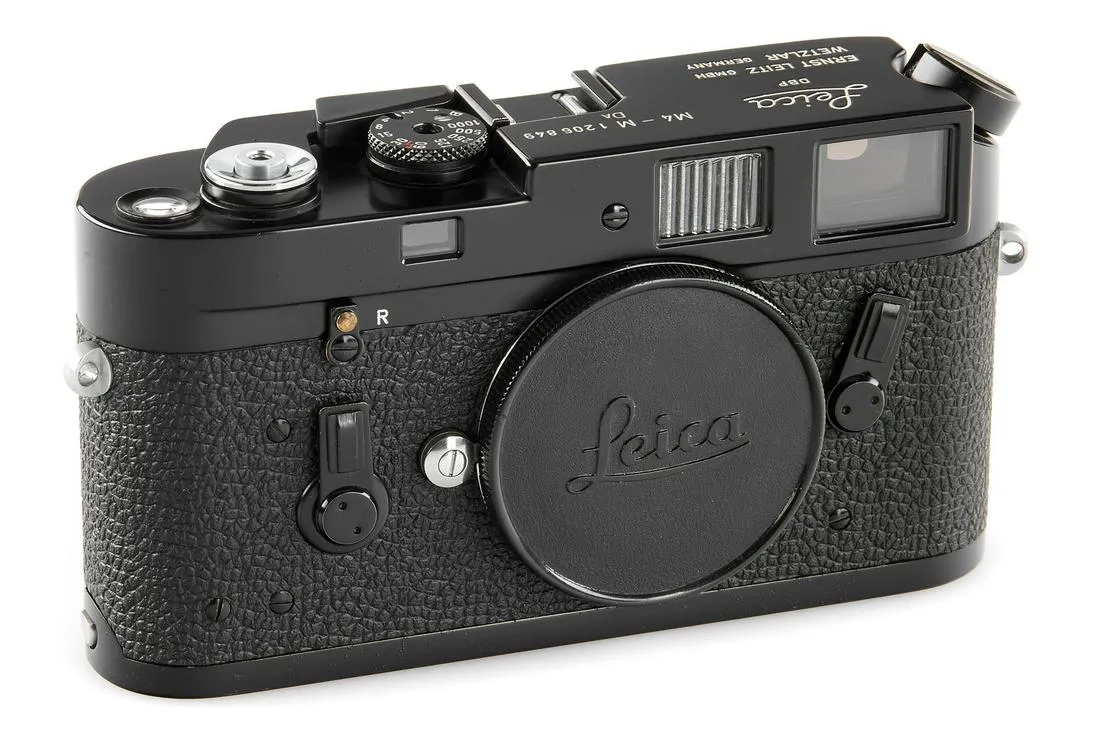
The M4-M DA belongs to a small group of specialist bodies associated with Leica’s data-recording and medical work. Surplus M4-M or related motor-body components were adapted with a grooved body casting for marker or identification strips. Some of this work was connected with camera bodies prepared for Zeiss fundus instruments used in examination and photography of the eye. The resulting cameras do not necessarily retain the normal motor capability suggested by the M4-M name. Only 65 examples are represented, reflecting their specialized origin rather than a normal commercial M-camera series.

1967-1976
Leica
M4

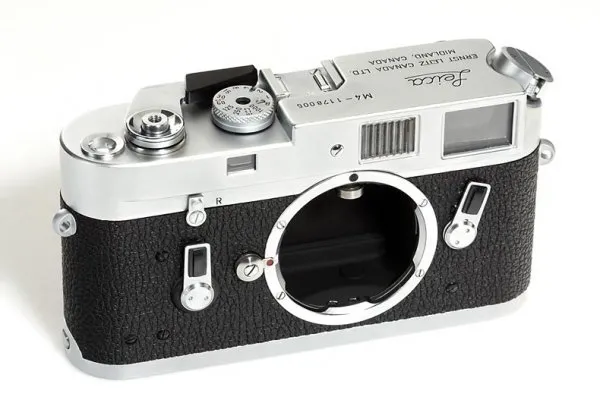
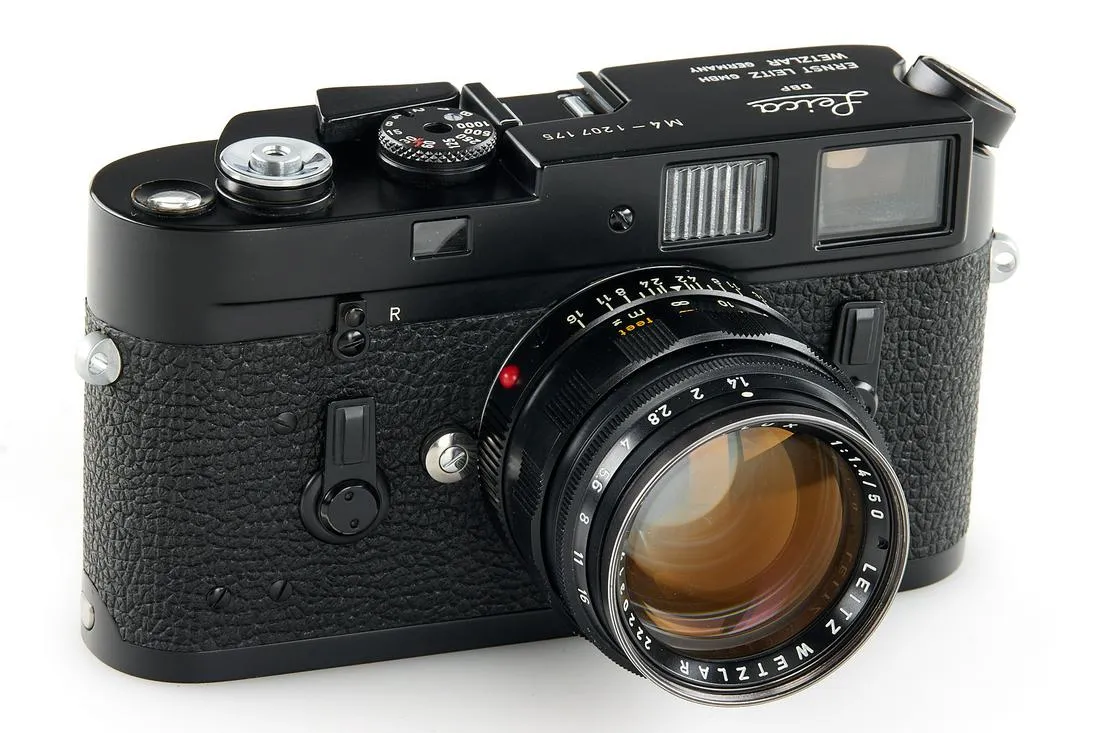
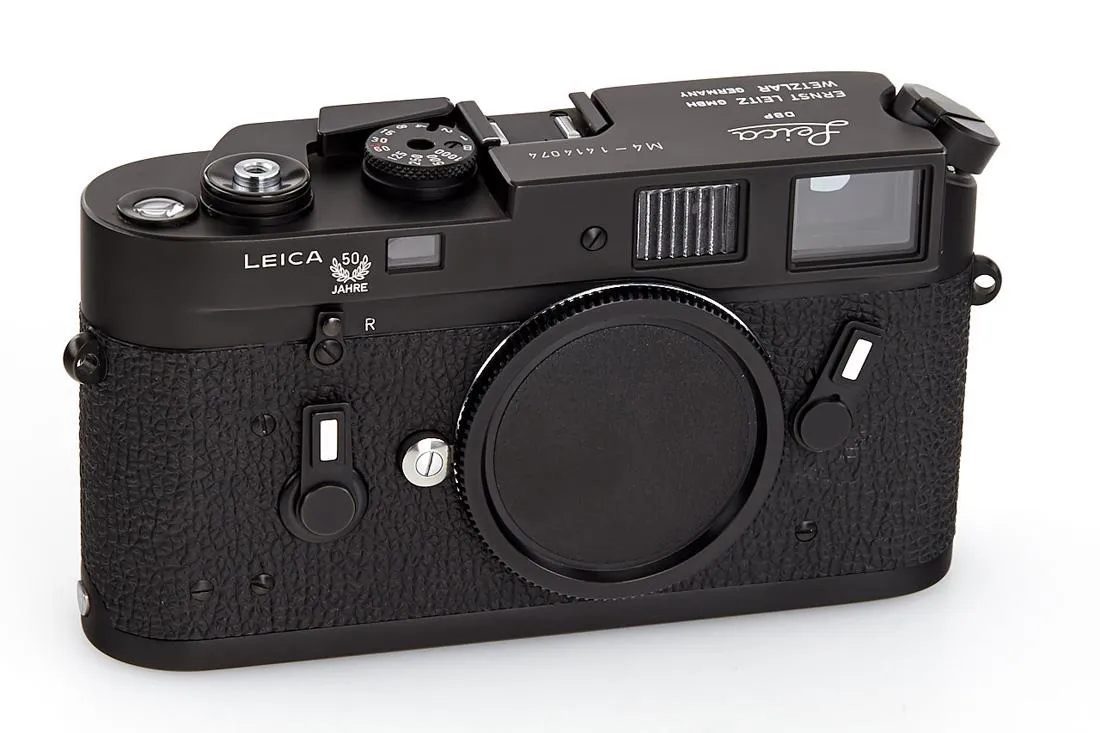
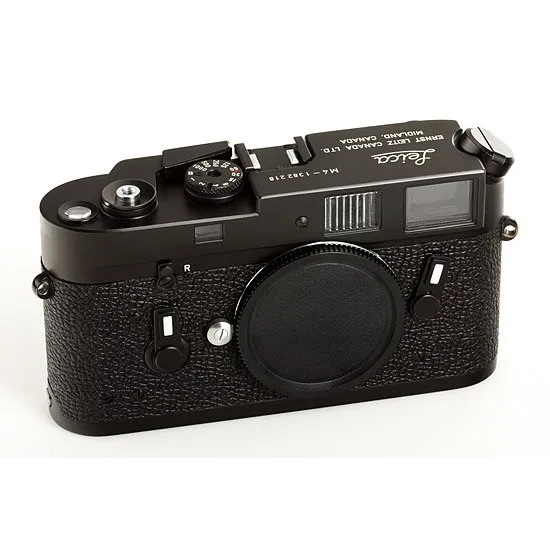
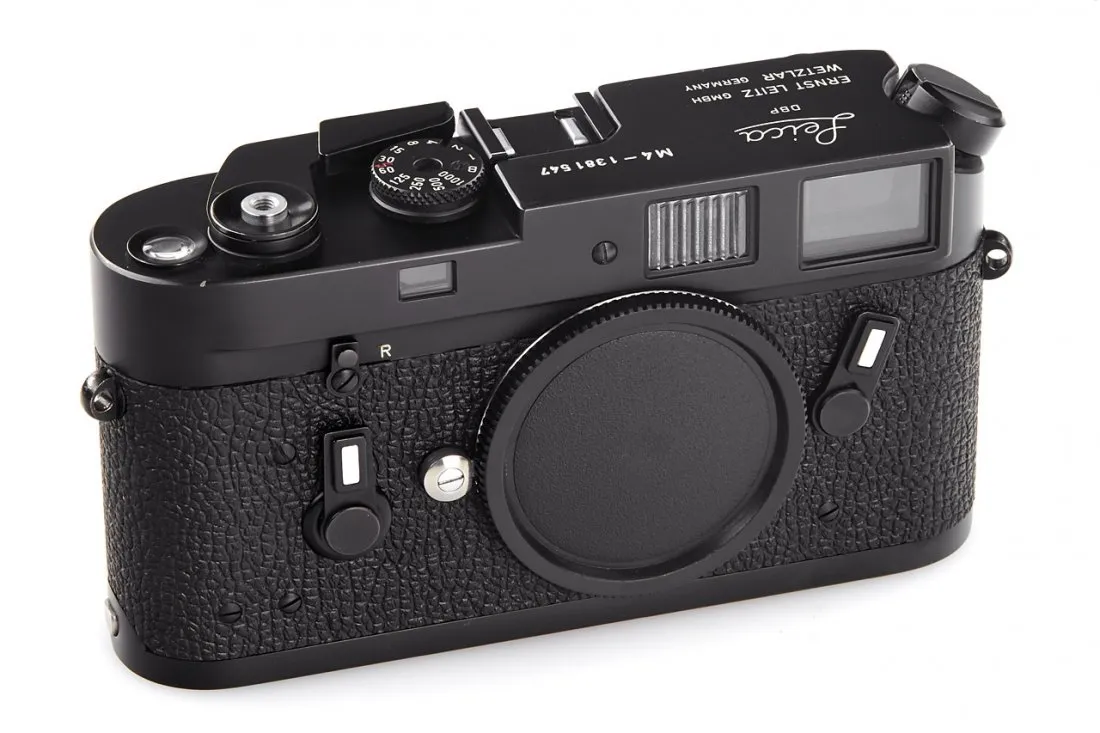
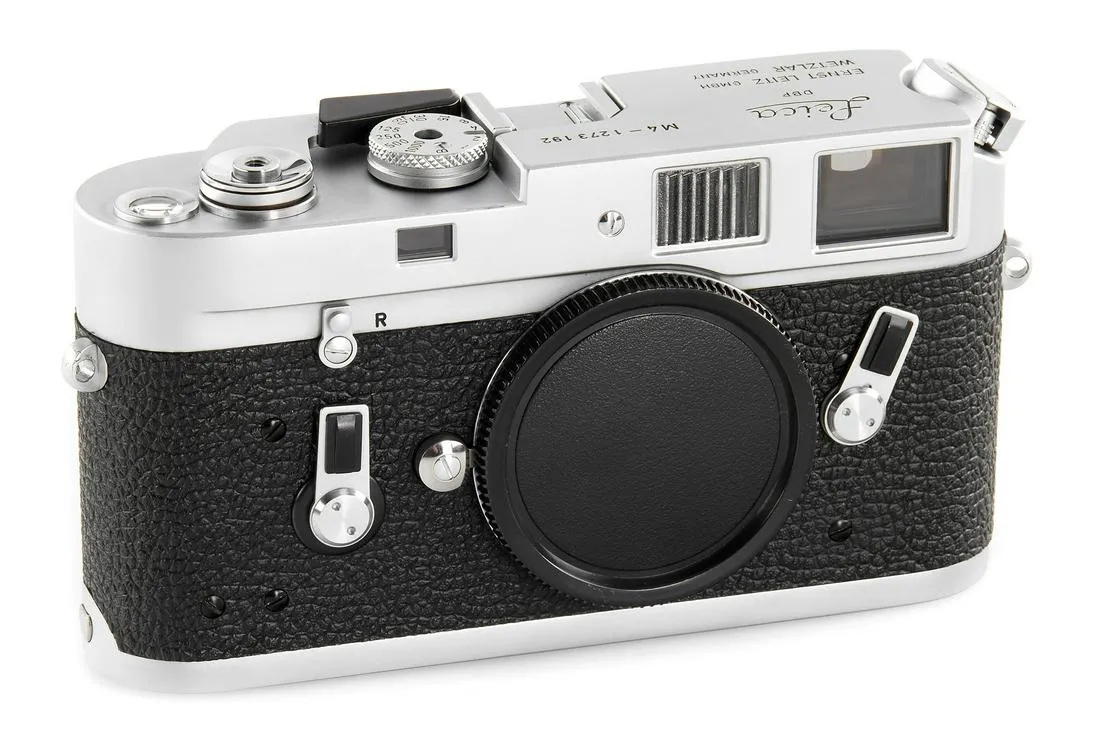
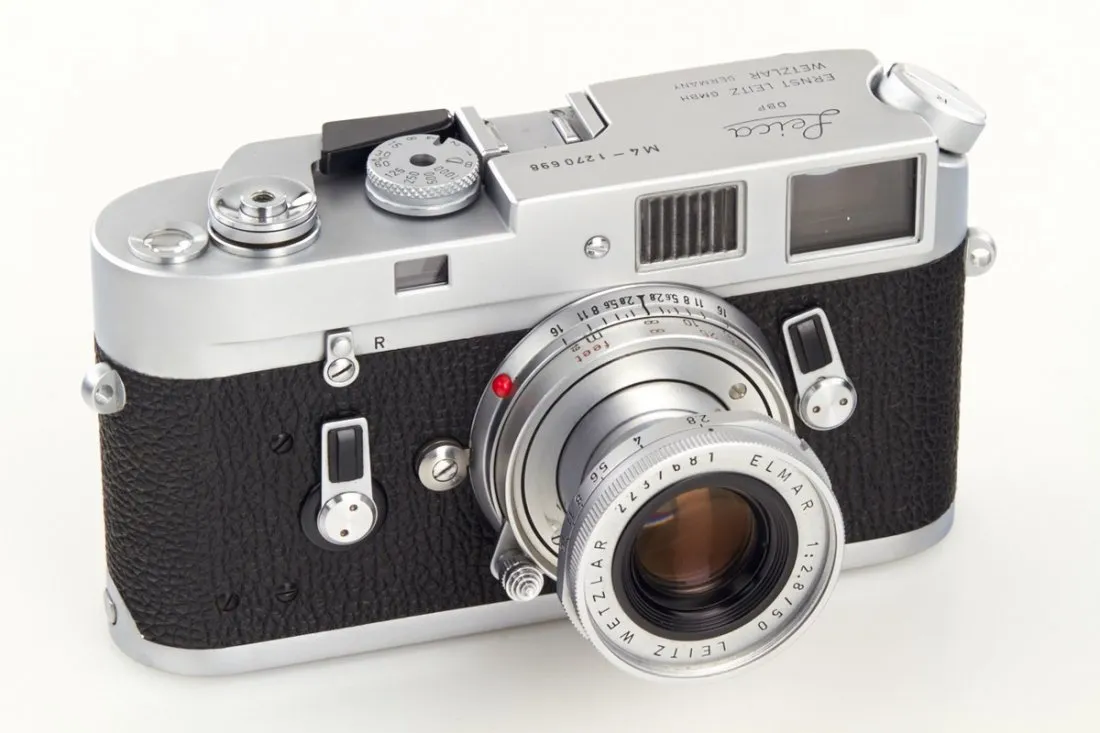
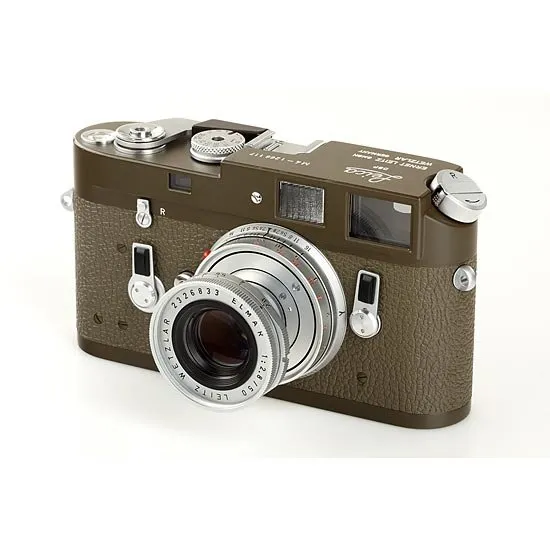
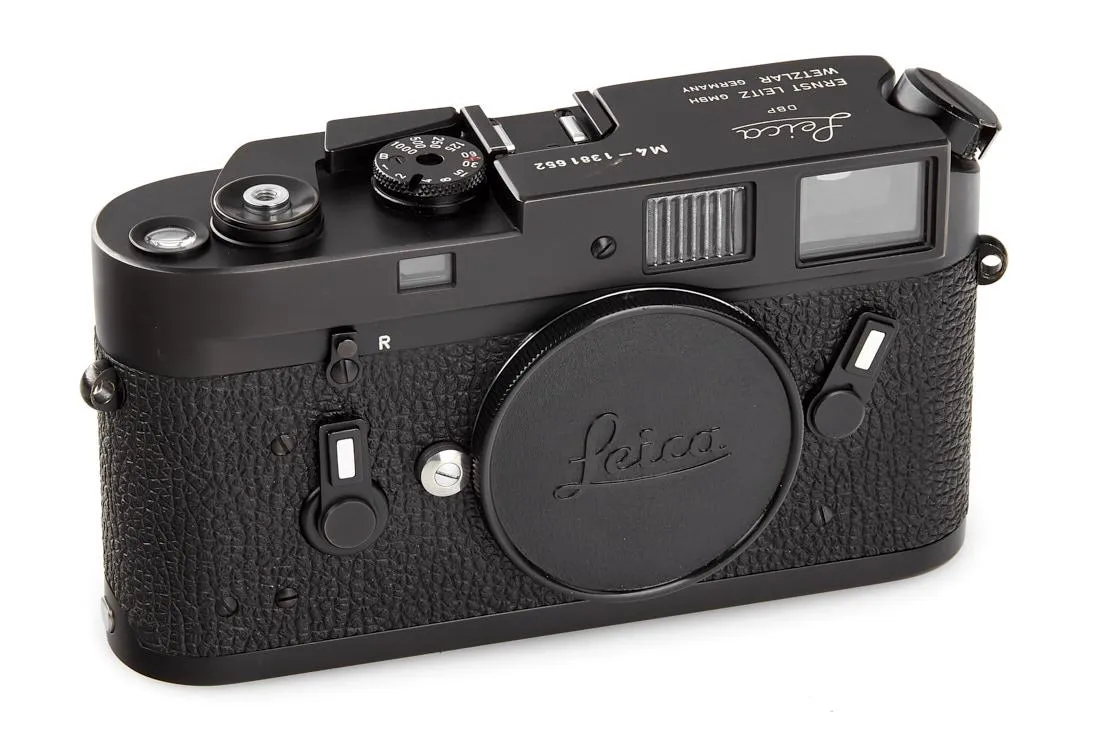
The Leica M4 revised the handling of the traditional meterless M body. Its 0.72× finder provided frames for 35mm, 50mm, 90mm and 135mm lenses. A new rapid-loading arrangement eliminated the removable take-up spool used by earlier M cameras. Rewinding was accelerated by an angled folding crank, while the film-advance lever gained an articulated end section. The shutter remained mechanical and no exposure meter was incorporated. These film-handling and control changes were retained, in modified form, by the M4-2, M4-P and original M6.

1967-1969
Leica
M4-M

The Leica M4-M adapted the M4 for the E. Leitz New York electric motor system. Internal changes were necessary to connect the motor to the camera’s film transport, so the body differed mechanically from a standard M4. The drive attached beneath the camera and provided automatic film advance for professional and institutional work. Production was very small, with only a few hundred cameras represented. The M4-M followed the motor work carried out with the M2-M and was succeeded by cameras bearing the M4 MOT designation.
1967
1967-1969
Leica
M4-M DA
The M4-M DA belongs to a small group of specialist bodies associated with Leica’s data-recording and medical work. Surplus M4-M or related motor-body components were adapted with a grooved body casting for marker or identification strips. Some of this work was connected with camera bodies prepared for Zeiss fundus instruments used in examination and photography of the eye. The resulting cameras do not necessarily retain the normal motor capability suggested by the M4-M name. Only 65 examples are represented, reflecting their specialized origin rather than a normal commercial M-camera series.
1967-1976
Leica
M4
The Leica M4 revised the handling of the traditional meterless M body. Its 0.72× finder provided frames for 35mm, 50mm, 90mm and 135mm lenses. A new rapid-loading arrangement eliminated the removable take-up spool used by earlier M cameras. Rewinding was accelerated by an angled folding crank, while the film-advance lever gained an articulated end section. The shutter remained mechanical and no exposure meter was incorporated. These film-handling and control changes were retained, in modified form, by the M4-2, M4-P and original M6.
1967-1969
Leica
M4-M
The Leica M4-M adapted the M4 for the E. Leitz New York electric motor system. Internal changes were necessary to connect the motor to the camera’s film transport, so the body differed mechanically from a standard M4. The drive attached beneath the camera and provided automatic film advance for professional and institutional work. Production was very small, with only a few hundred cameras represented. The M4-M followed the motor work carried out with the M2-M and was succeeded by cameras bearing the M4 MOT designation.
1969

1969
Leica
M2-R
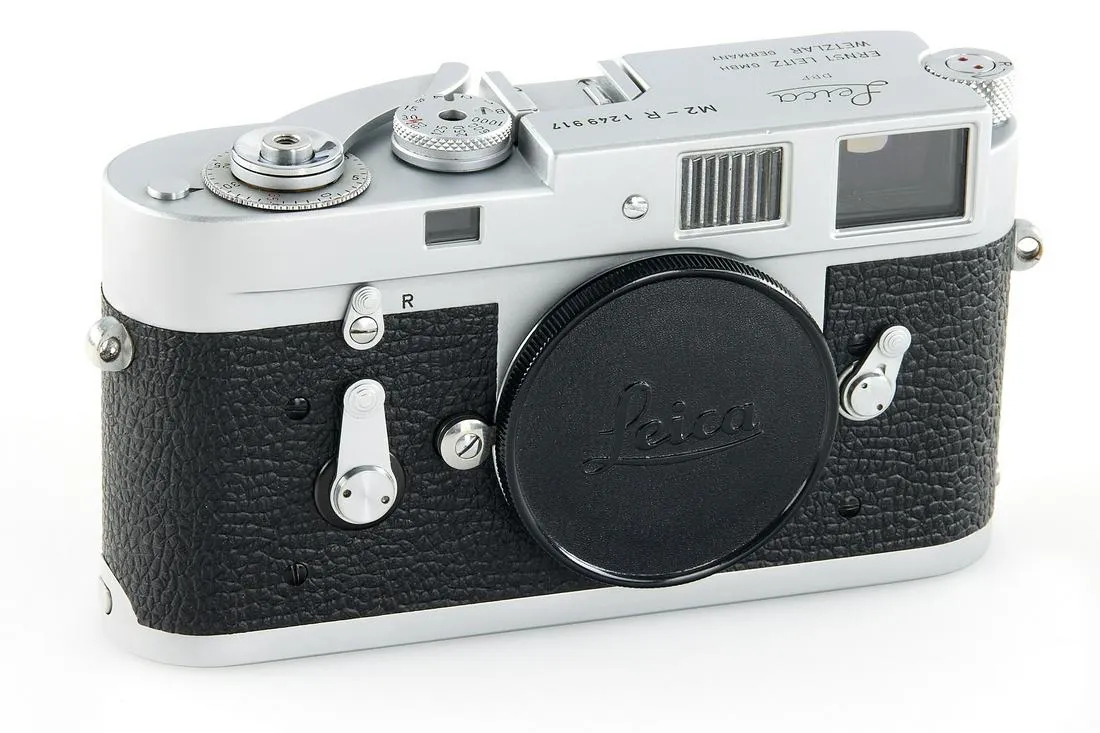
The Leica M2-R combined the M2 viewing system with the rapid-loading arrangement developed for the M4. Its origins are connected with the KS-15(4) camera supplied for United States military use. The revised take-up mechanism allowed film to be inserted without removing and threading the separate M2 spool. Civilian cameras carrying the M2-R designation followed, with approximately 2,000 examples represented. The normal M2 finder and manually reset frame counter were retained, so the principal distinction was the quicker film-loading mechanism rather than a change to the rangefinder itself.
1969-1971
Leica
M4 MOT
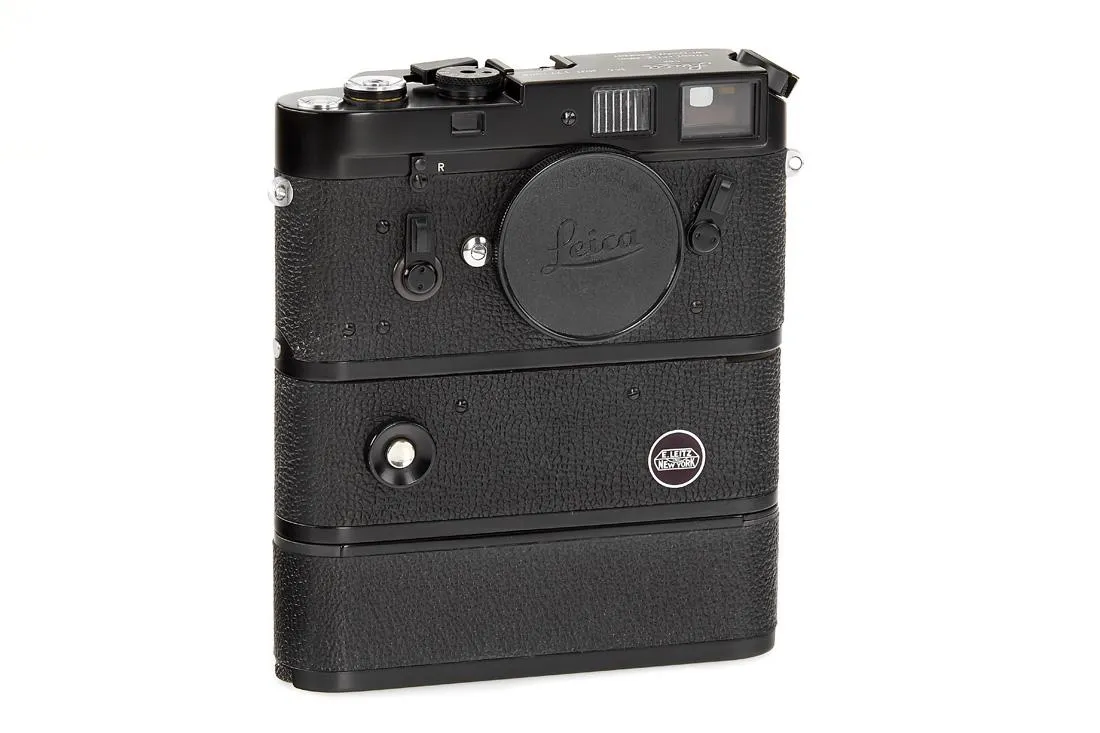
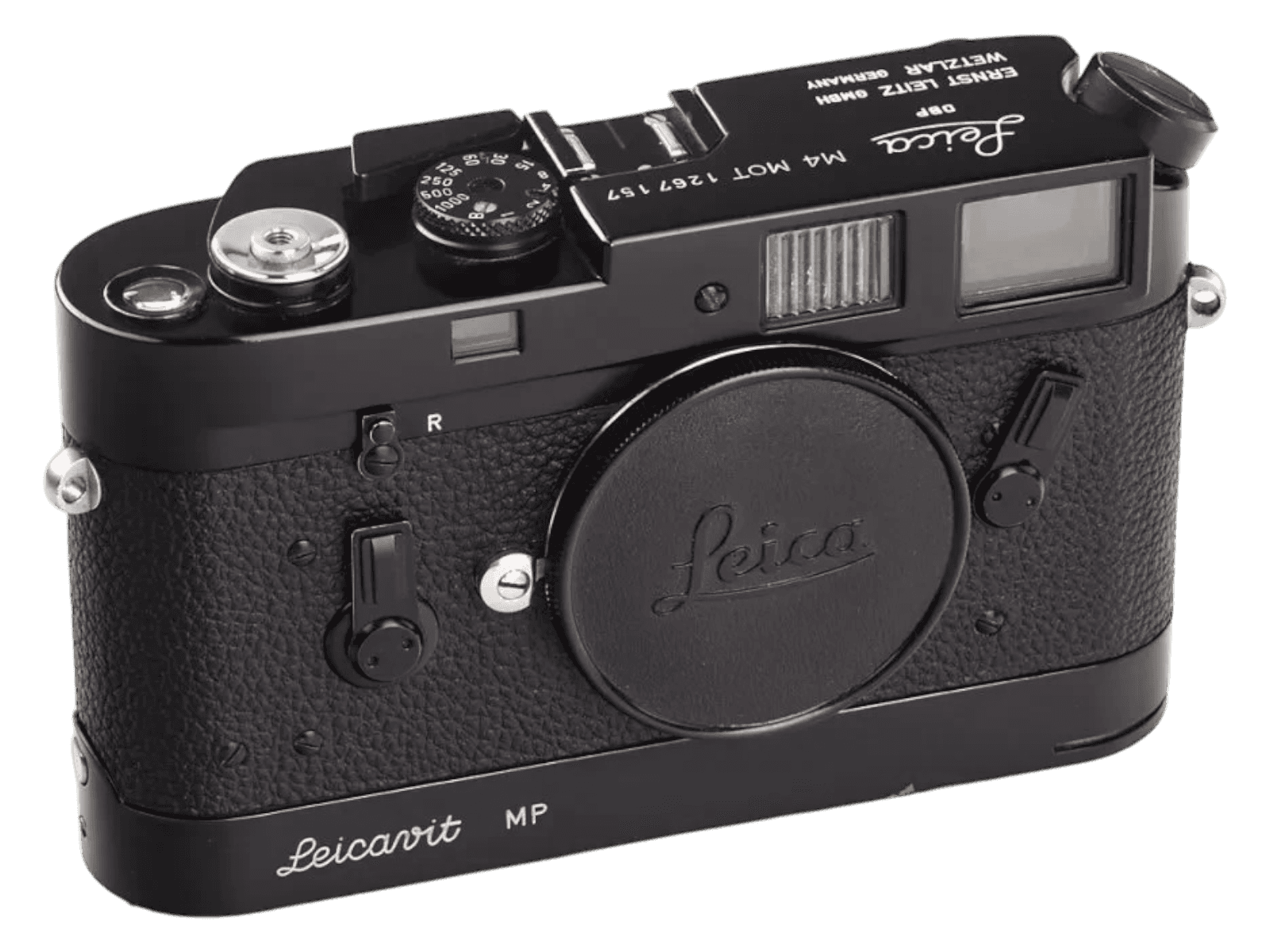
The Leica M4 MOT was a motor-ready development of the M4 and continued the work begun with the M2-M and M4-M. The electric motor attached beneath the camera and drove the film transport automatically. The necessary mechanical coupling required a purpose-built body rather than an ordinary M4 with a motor simply added afterward. The camera was produced in small numbers for applications where sequential exposures were required. Later M cameras incorporated motor-winder compatibility more routinely, making a separate specialist motor body unnecessary.
1969
1969
Leica
M2-R
The Leica M2-R combined the M2 viewing system with the rapid-loading arrangement developed for the M4. Its origins are connected with the KS-15(4) camera supplied for United States military use. The revised take-up mechanism allowed film to be inserted without removing and threading the separate M2 spool. Civilian cameras carrying the M2-R designation followed, with approximately 2,000 examples represented. The normal M2 finder and manually reset frame counter were retained, so the principal distinction was the quicker film-loading mechanism rather than a change to the rangefinder itself.
1969-1971
Leica
M4 MOT
The Leica M4 MOT was a motor-ready development of the M4 and continued the work begun with the M2-M and M4-M. The electric motor attached beneath the camera and drove the film transport automatically. The necessary mechanical coupling required a purpose-built body rather than an ordinary M4 with a motor simply added afterward. The camera was produced in small numbers for applications where sequential exposures were required. Later M cameras incorporated motor-winder compatibility more routinely, making a separate specialist motor body unnecessary.
1970

1970
Leica
MDa MOT
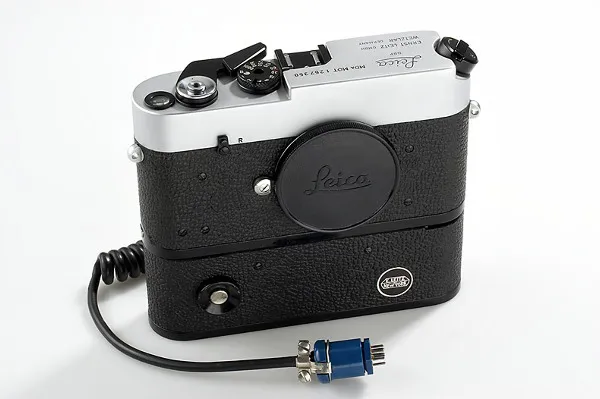
The MDa MOT combined the finderless technical MDa body with the E. Leitz New York motor system. Only 27 cameras are represented. Examples were supplied for specialized medical equipment, including Zeiss fundus cameras used to photograph the interior of the eye. In such an installation the medical instrument supplied the viewing and optical system, while the Leica body provided the shutter, film transport and 35mm recording medium. Motor advance permitted successive exposures without manual winding. It is therefore a medical and technical camera rather than a motorized version intended primarily for reportage.
1970
1970
Leica
MDa MOT
The MDa MOT combined the finderless technical MDa body with the E. Leitz New York motor system. Only 27 cameras are represented. Examples were supplied for specialized medical equipment, including Zeiss fundus cameras used to photograph the interior of the eye. In such an installation the medical instrument supplied the viewing and optical system, while the Leica body provided the shutter, film transport and 35mm recording medium. Motor advance permitted successive exposures without manual winding. It is therefore a medical and technical camera rather than a motorized version intended primarily for reportage.
1971

1971-1992
Leica
M5
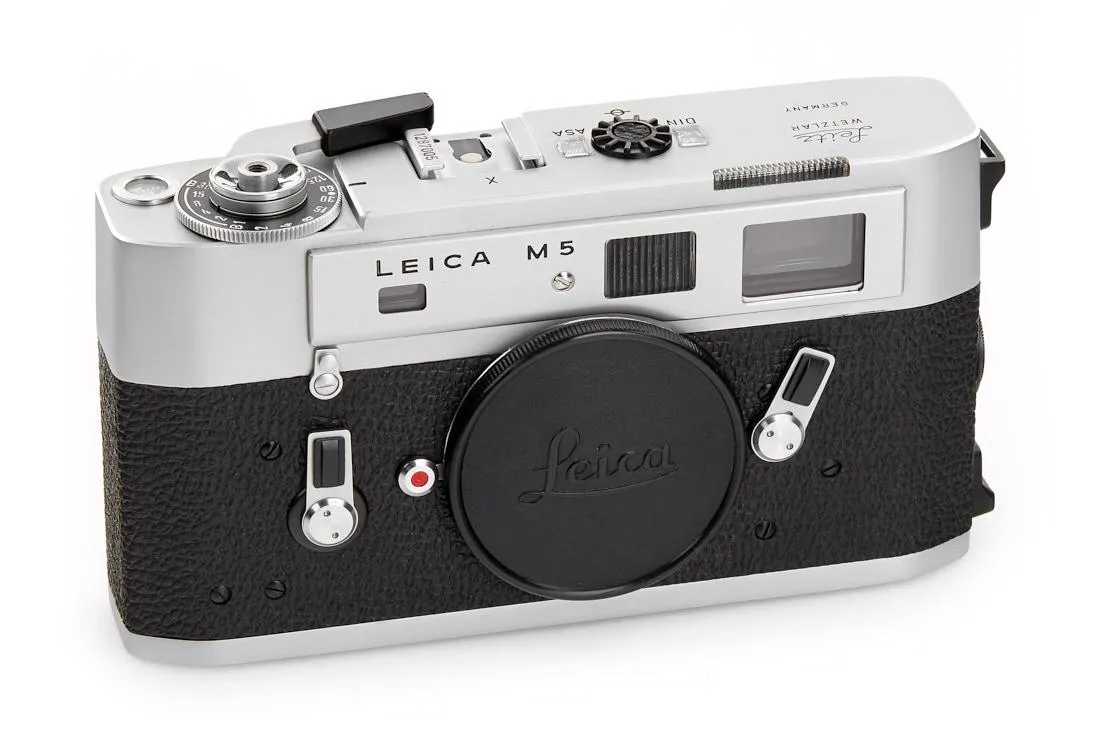

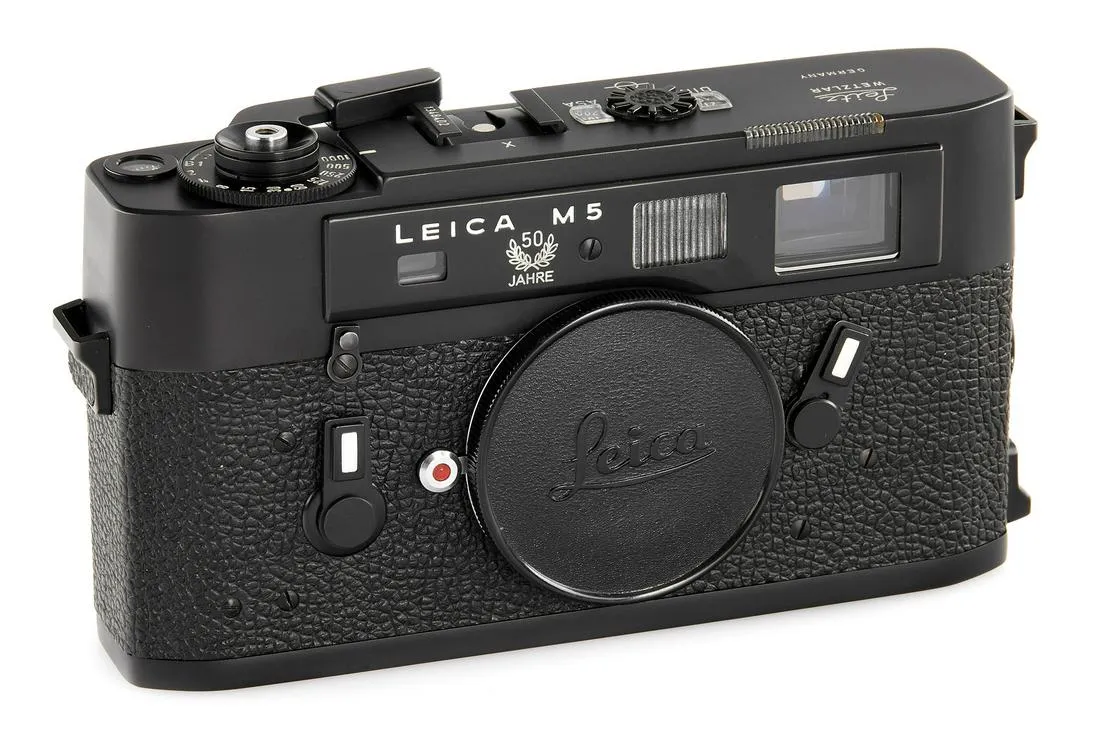
The Leica M5 was the first production M camera with an integrated through-the-lens exposure meter. A CdS measuring cell moved into the light path when the shutter was cocked and withdrew before the exposure. Meter information and shutter speed could be read in the finder. The mechanism required a larger body and a revised control layout, including a large shutter-speed dial extending toward the front of the camera. Demand was lower than Leica expected, with the increased size frequently cited as a reason. The later M6 returned TTL metering to a body much closer to the traditional M proportions.
1971
1971-1992
Leica
M5
The Leica M5 was the first production M camera with an integrated through-the-lens exposure meter. A CdS measuring cell moved into the light path when the shutter was cocked and withdrew before the exposure. Meter information and shutter speed could be read in the finder. The mechanism required a larger body and a revised control layout, including a large shutter-speed dial extending toward the front of the camera. Demand was lower than Leica expected, with the increased size frequently cited as a reason. The later M6 returned TTL metering to a body much closer to the traditional M proportions.
1972
1972
Leica
KE-7A
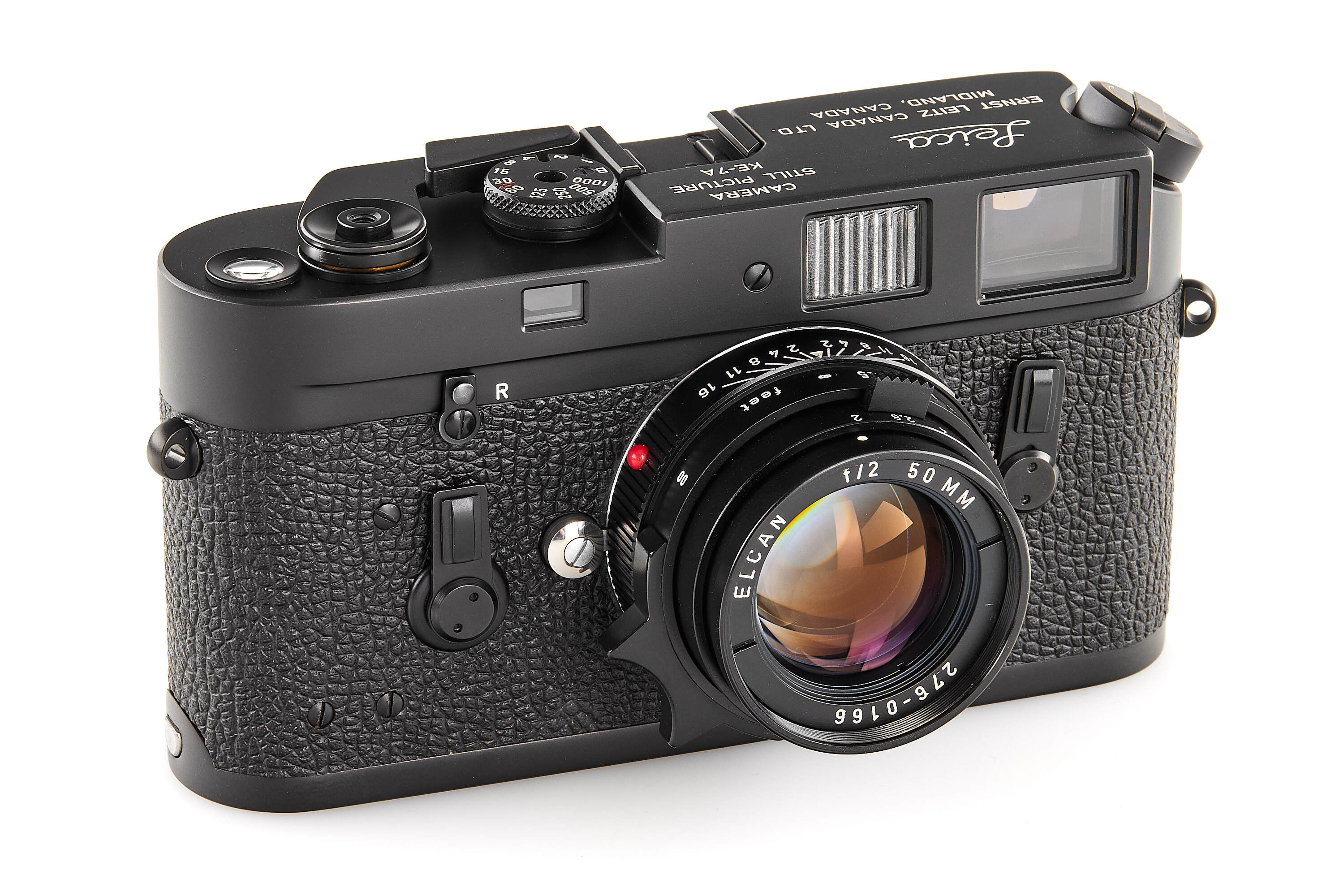

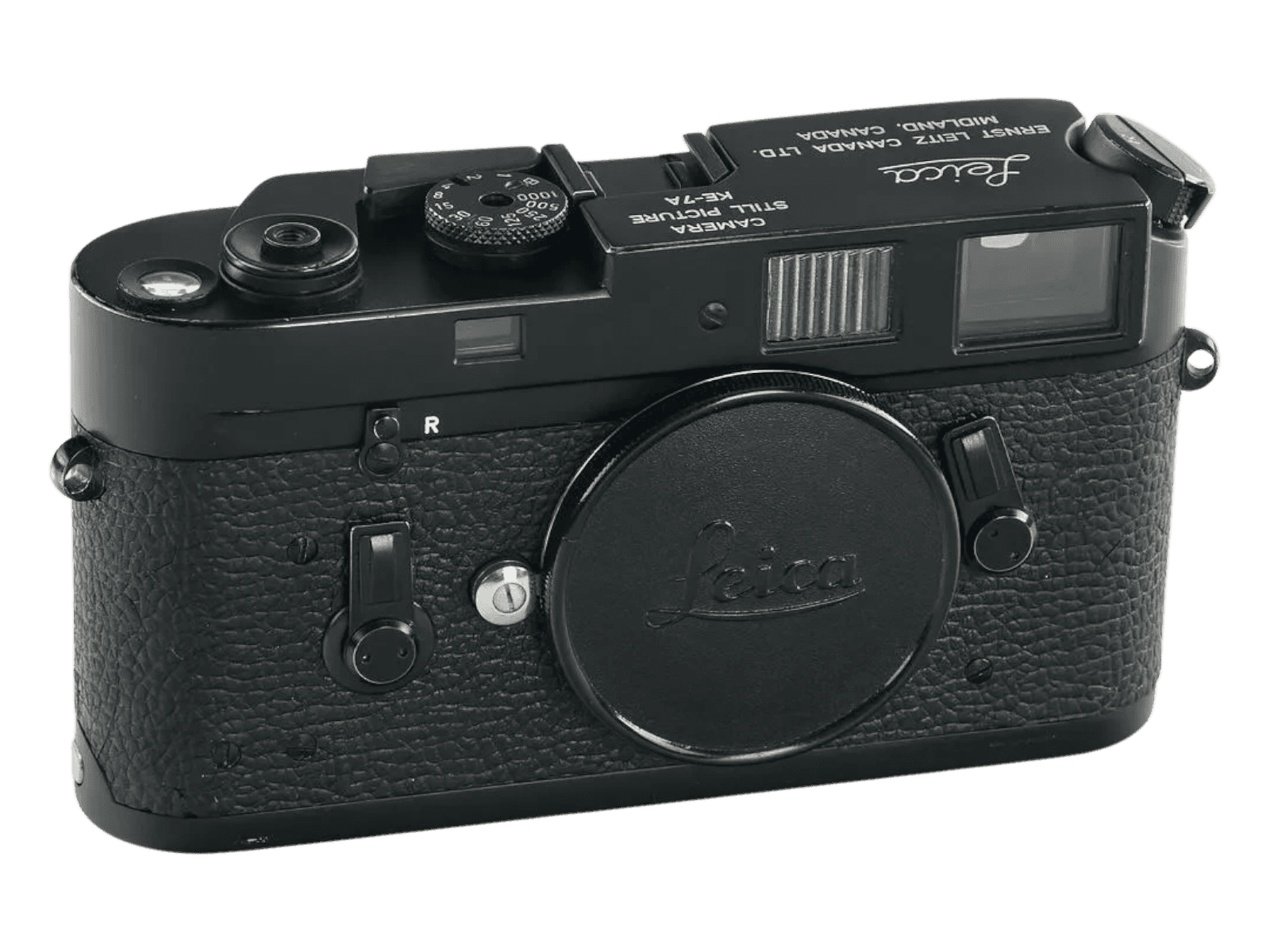
The KE-7A was an M4-derived camera made by Ernst Leitz Canada for a United States military requirement. The body was finished in black chrome and supplied in military sets, commonly with the Canadian-made 50mm f/2 ELCAN lens. Military examples carry contract identification, while a small number of related civilian cameras also exist. 505 cameras are represented across the recorded variants. The KE-7A retained the mechanical rangefinder arrangement of the M4; its distinction lies principally in its military specification, supply and associated equipment rather than in a new photographic operating system.
1972
1972
Leica
KE-7A
The KE-7A was an M4-derived camera made by Ernst Leitz Canada for a United States military requirement. The body was finished in black chrome and supplied in military sets, commonly with the Canadian-made 50mm f/2 ELCAN lens. Military examples carry contract identification, while a small number of related civilian cameras also exist. 505 cameras are represented across the recorded variants. The KE-7A retained the mechanical rangefinder arrangement of the M4; its distinction lies principally in its military specification, supply and associated equipment rather than in a new photographic operating system.
1973

1973-1975
Leica
CL
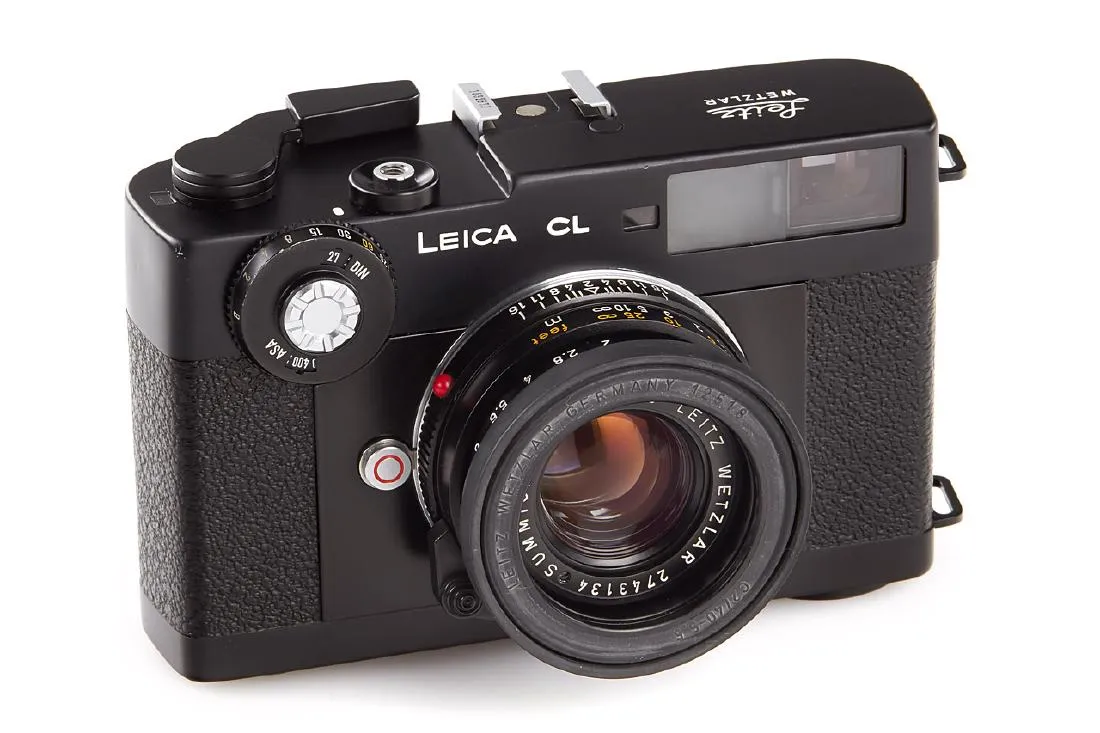
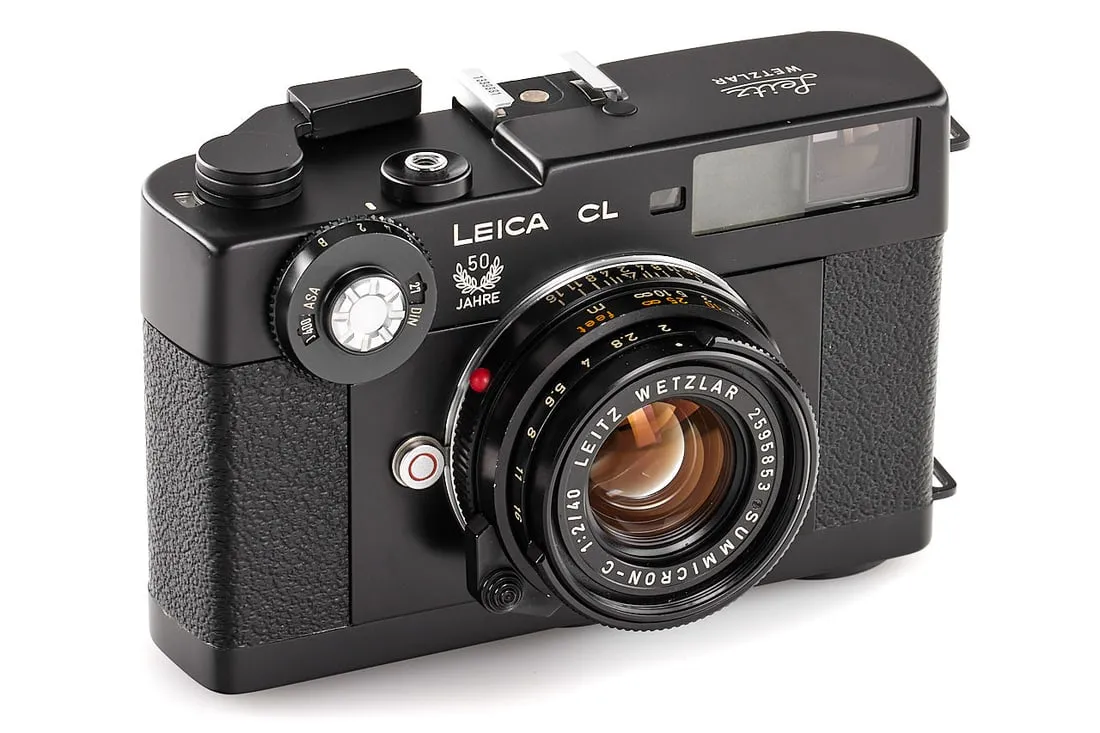
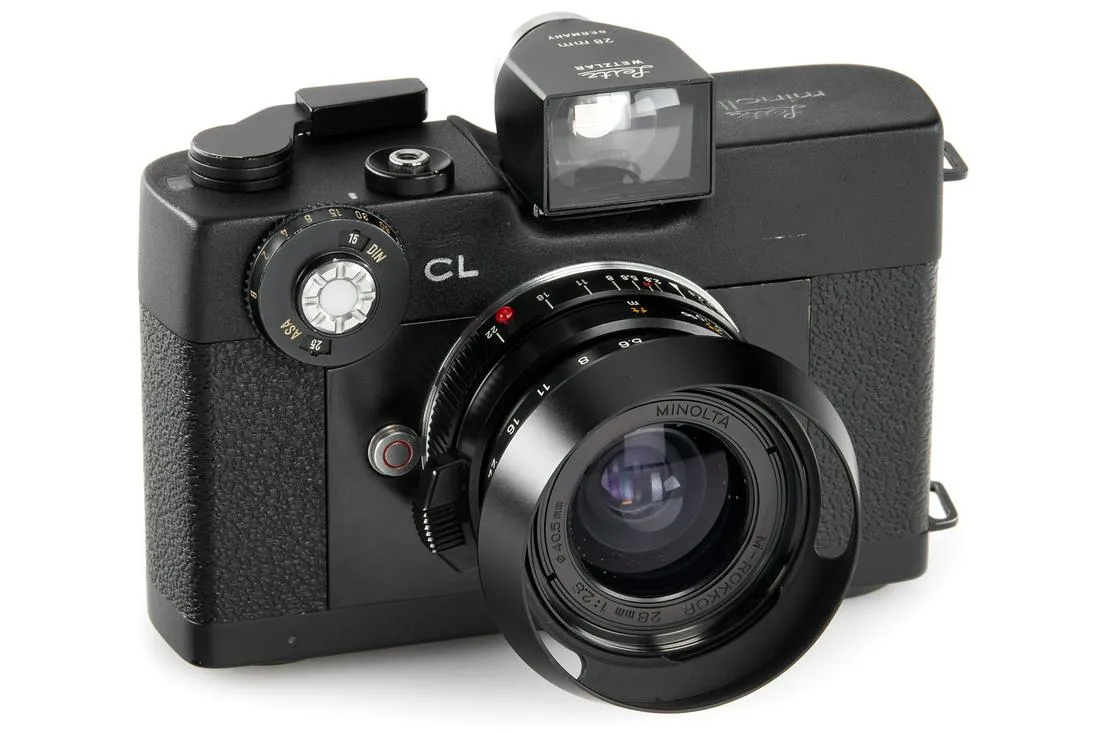
The Leica CL was a compact M-bayonet rangefinder developed by Leitz in cooperation with Minolta and manufactured in Japan. It used a through-the-lens CdS exposure meter on a swinging arm in front of the shutter, following the general measuring principle used in the M5. The finder carried frames suited to 40mm, 50mm and 90mm lenses, and the 40mm f/2 Summicron-C was the standard lens most closely associated with the camera. The CL provided an M-mount camera substantially smaller and less expensive than the contemporary full-size Leica bodies. Minolta later developed the related CLE.
1973
1973-1975
Leica
CL
The Leica CL was a compact M-bayonet rangefinder developed by Leitz in cooperation with Minolta and manufactured in Japan. It used a through-the-lens CdS exposure meter on a swinging arm in front of the shutter, following the general measuring principle used in the M5. The finder carried frames suited to 40mm, 50mm and 90mm lenses, and the 40mm f/2 Summicron-C was the standard lens most closely associated with the camera. The CL provided an M-mount camera substantially smaller and less expensive than the contemporary full-size Leica bodies. Minolta later developed the related CLE.
1977

1977-1993
Leica
M4-2
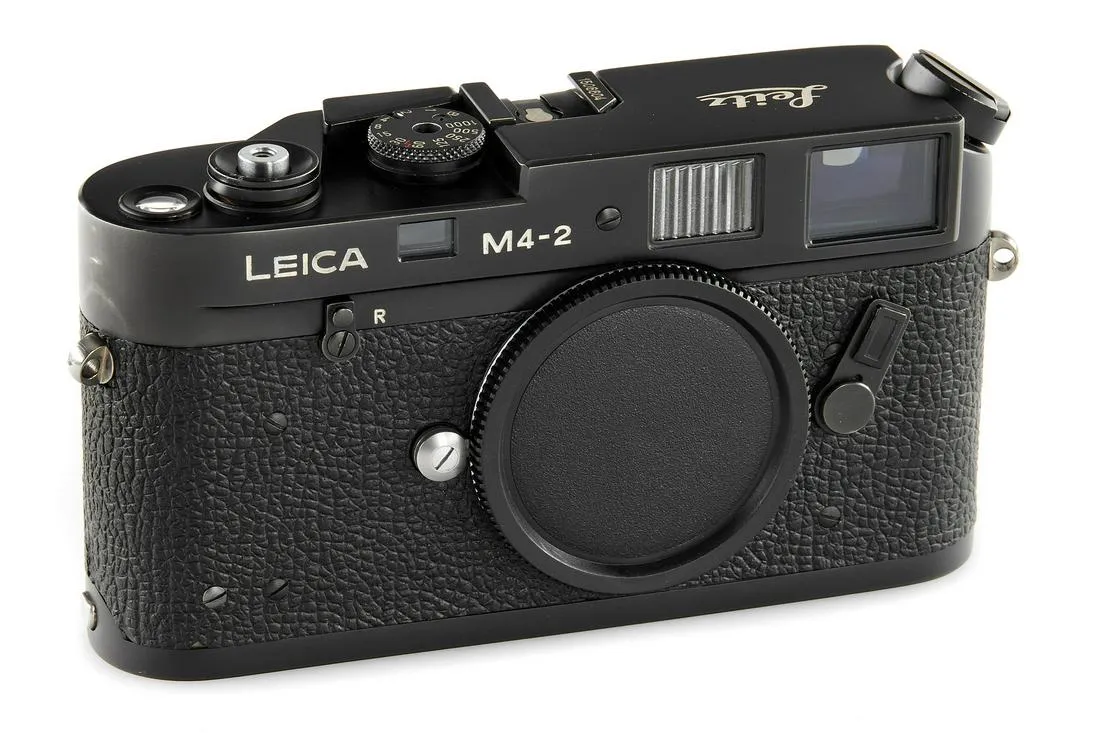
Black Chrome
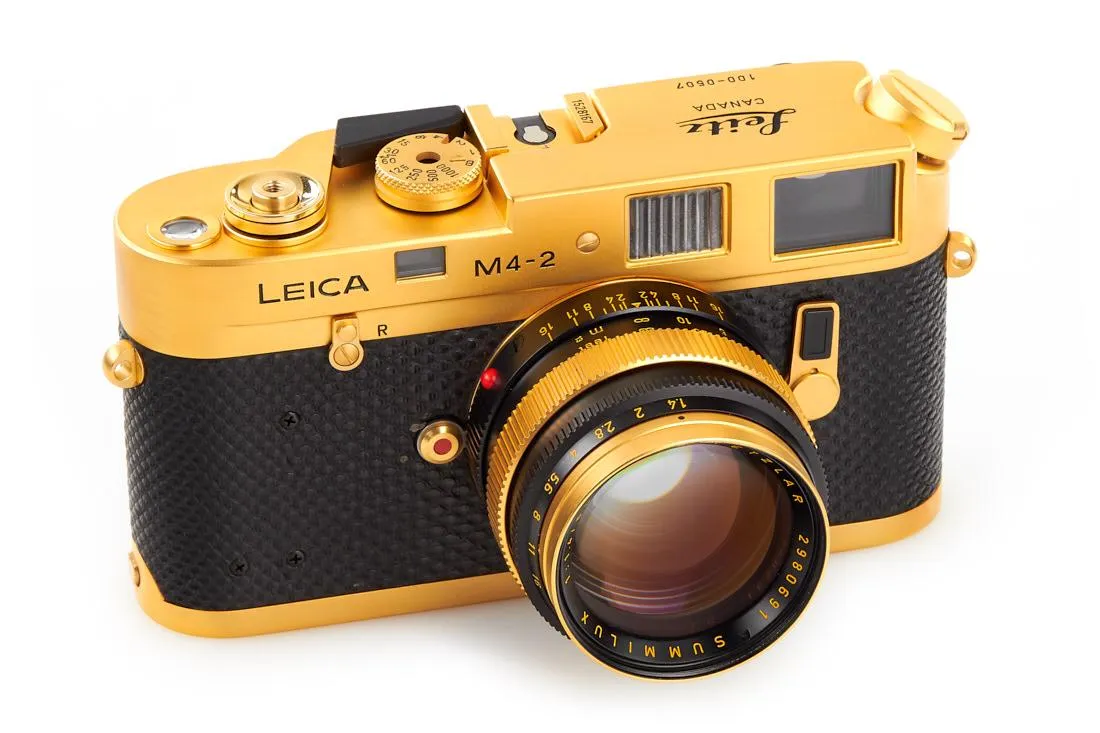
Gold, 100 Years Oskar Barnack

Black Chrome, KE-7A
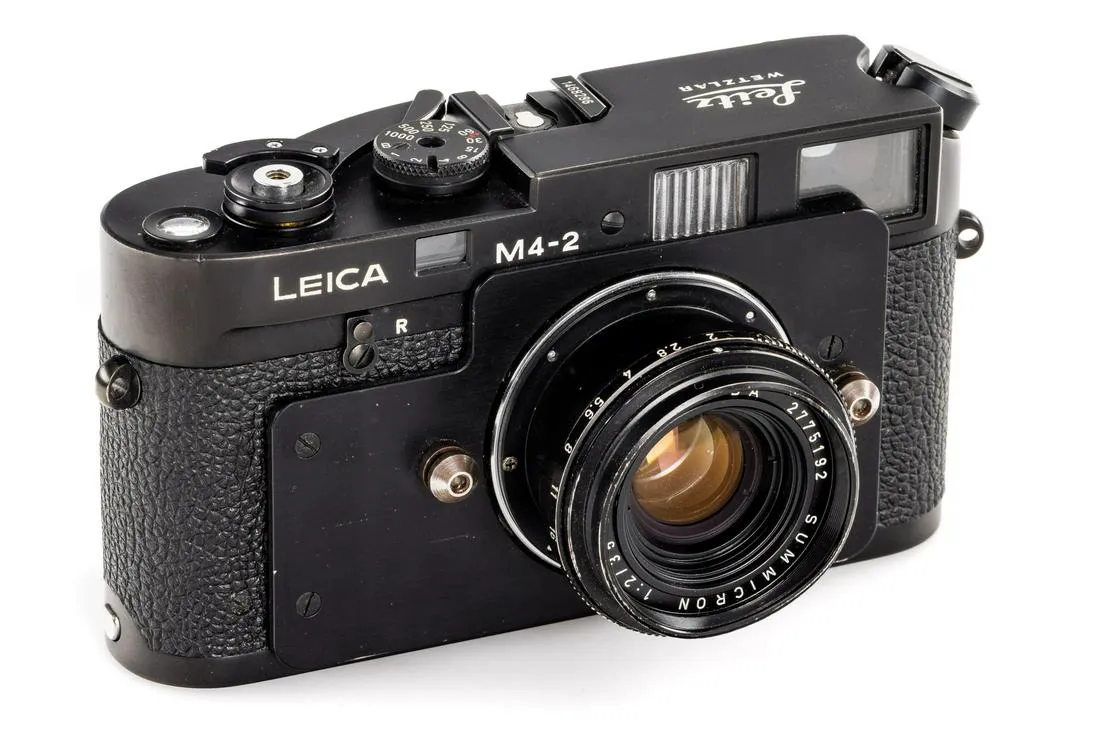
Black Chrome, Post
Black Chrome, Ernst Leitz Canada Limited Midland Ontario

Chrome

Black Chrome, Red Dot, (Made in Canada) Engraving

Black Chrome, (Wetzlar / Made by Leitz Canada) Engraving
Black Chrome, (Made in Canada) Engraving

Black Chrome, (Wetzlar / Canada) Engraving
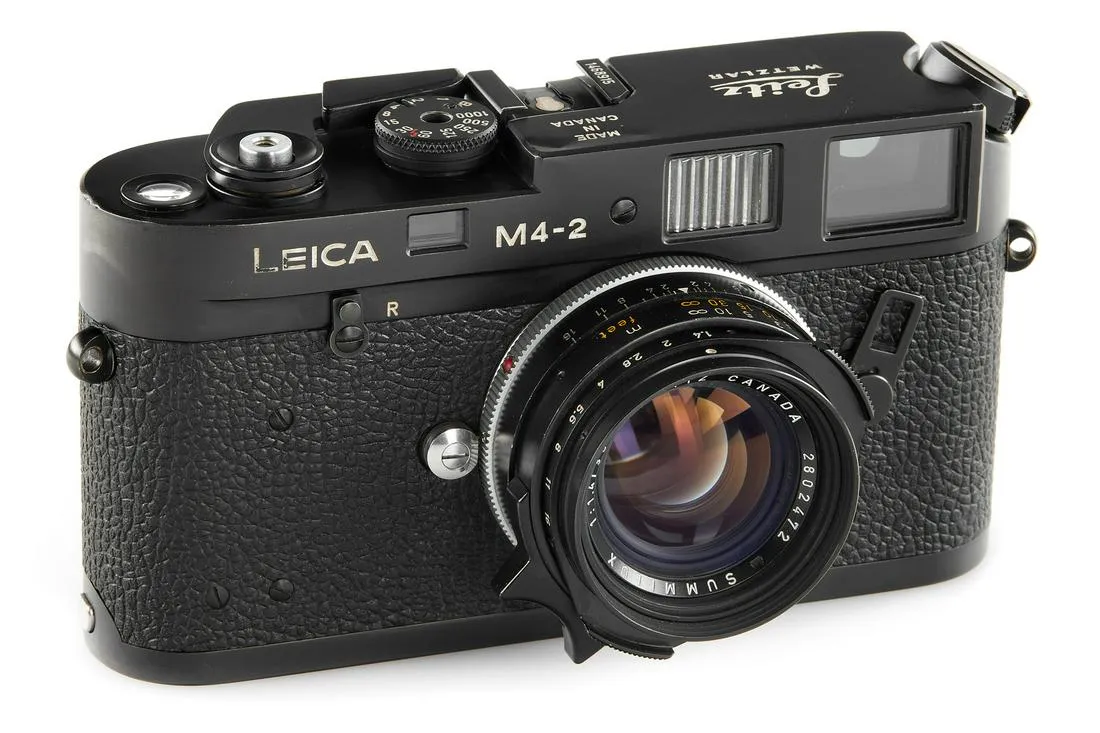
The Leica M4-2 resumed production of the conventional M4-type body after the M5 period. Manufacture was centred at Ernst Leitz Canada in Midland, Ontario, with changes intended to simplify production. The M4 self-timer was omitted, while a hot shoe and provision for an electric motor winder were added. The finder retained the M4 arrangement for 35mm, 50mm, 90mm and 135mm lenses. The M4-2 established the production basis from which the M4-P and then the original M6 were developed. Later special variants account for recorded examples outside the principal manufacturing period.

1977-1986
Leica
MD-2

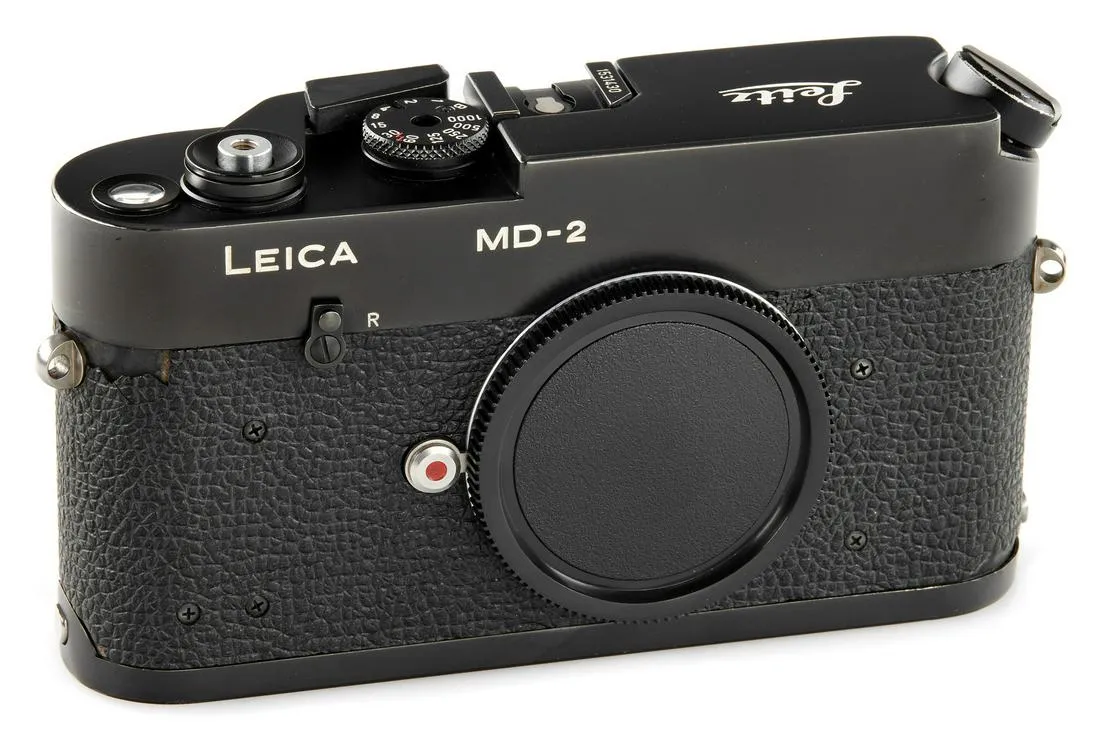
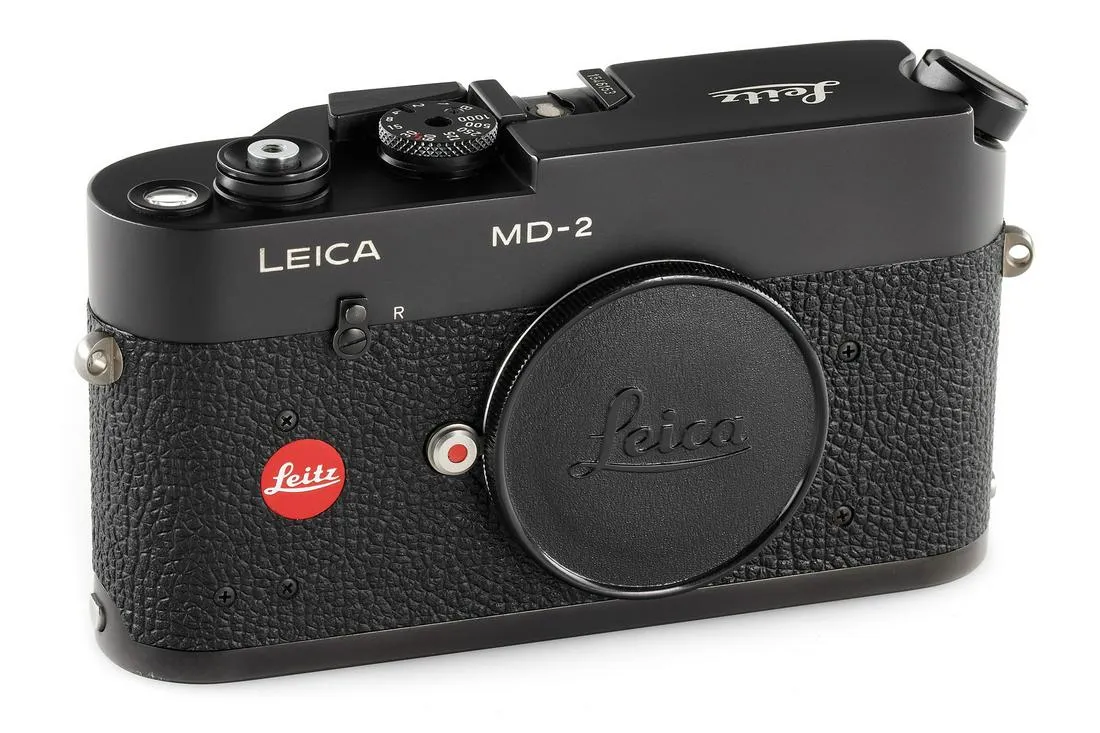
The Leica MD-2 was the finderless technical counterpart of the M4-2 generation. It omitted both the rangefinder and normal optical viewfinder and was intended for microscopes, reproduction apparatus and other scientific or industrial installations. The body retained the M bayonet, mechanical shutter and contemporary film transport. An accessory shoe also permitted auxiliary equipment or an external finder to be fitted when required. The MD-2 was the last major regular member of Leica’s long sequence of purpose-built finderless film bodies, following the Ic, If, Ig, MD and MDa.
1977
1977-1993
Leica
M4-2
Black Chrome
Gold, 100 Years Oskar Barnack
Black Chrome, KE-7A
Black Chrome, Post
Black Chrome, Ernst Leitz Canada Limited Midland Ontario
Chrome
Black Chrome, Red Dot, (Made in Canada) Engraving
Black Chrome, (Wetzlar / Made by Leitz Canada) Engraving
Black Chrome, (Made in Canada) Engraving
Black Chrome, (Wetzlar / Canada) Engraving
The Leica M4-2 resumed production of the conventional M4-type body after the M5 period. Manufacture was centred at Ernst Leitz Canada in Midland, Ontario, with changes intended to simplify production. The M4 self-timer was omitted, while a hot shoe and provision for an electric motor winder were added. The finder retained the M4 arrangement for 35mm, 50mm, 90mm and 135mm lenses. The M4-2 established the production basis from which the M4-P and then the original M6 were developed. Later special variants account for recorded examples outside the principal manufacturing period.
1977-1986
Leica
MD-2
The Leica MD-2 was the finderless technical counterpart of the M4-2 generation. It omitted both the rangefinder and normal optical viewfinder and was intended for microscopes, reproduction apparatus and other scientific or industrial installations. The body retained the M bayonet, mechanical shutter and contemporary film transport. An accessory shoe also permitted auxiliary equipment or an external finder to be fitted when required. The MD-2 was the last major regular member of Leica’s long sequence of purpose-built finderless film bodies, following the Ic, If, Ig, MD and MDa.
1980

1980-1986
Leica
M4-P

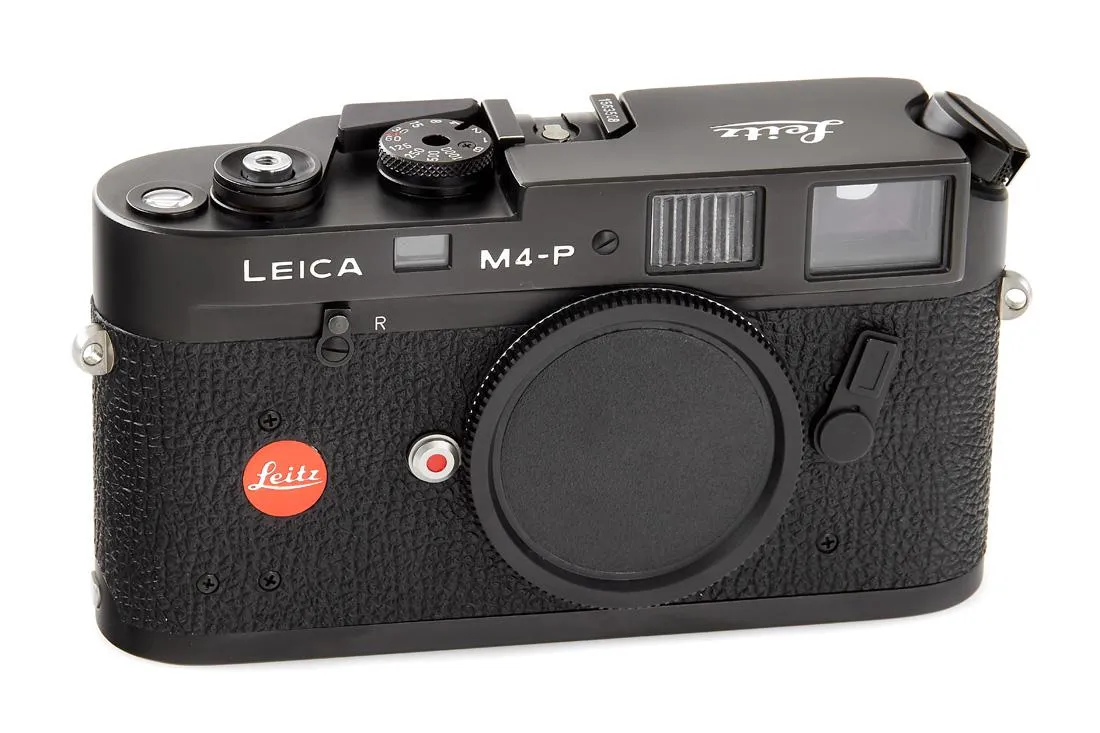

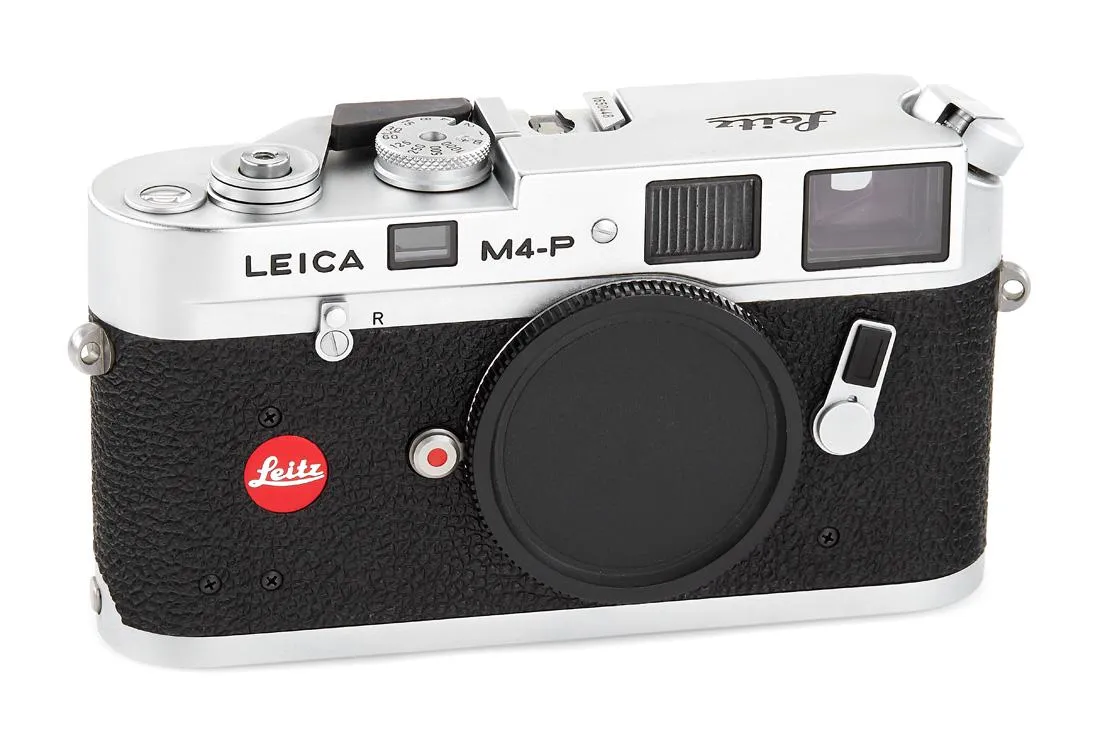

The Leica M4-P extended the M4-2 finder to six focal lengths. Its paired bright lines covered 28/90mm, 35/135mm and 50/75mm, adding direct framing for 28mm and 75mm lenses. The camera remained mechanical and meterless and retained the hot shoe and motor compatibility of the M4-2. This six-frame finder arrangement was subsequently carried into the original M6. The M4-P therefore differs from the earlier M4 family principally in the expanded viewfinder rather than through a change to the shutter or exposure system.
1980
1980-1986
Leica
M4-P
The Leica M4-P extended the M4-2 finder to six focal lengths. Its paired bright lines covered 28/90mm, 35/135mm and 50/75mm, adding direct framing for 28mm and 75mm lenses. The camera remained mechanical and meterless and retained the hot shoe and motor compatibility of the M4-2. This six-frame finder arrangement was subsequently carried into the original M6. The M4-P therefore differs from the earlier M4 family principally in the expanded viewfinder rather than through a change to the shutter or exposure system.
1983

1983-1999
Leica
M6

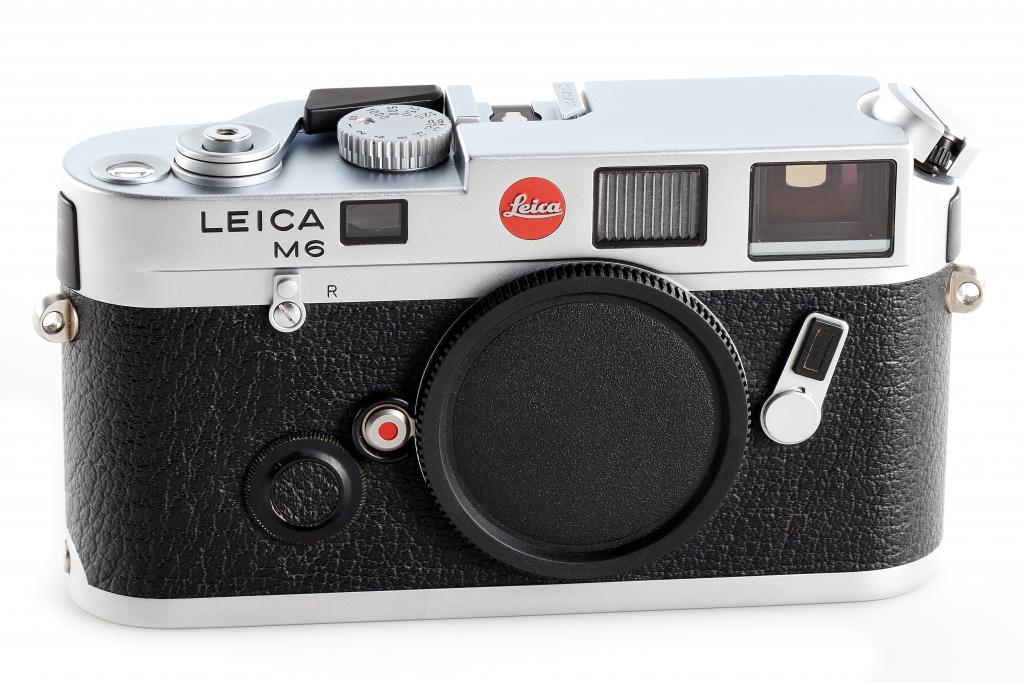
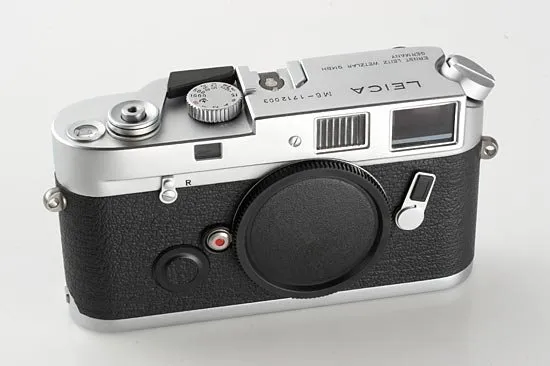
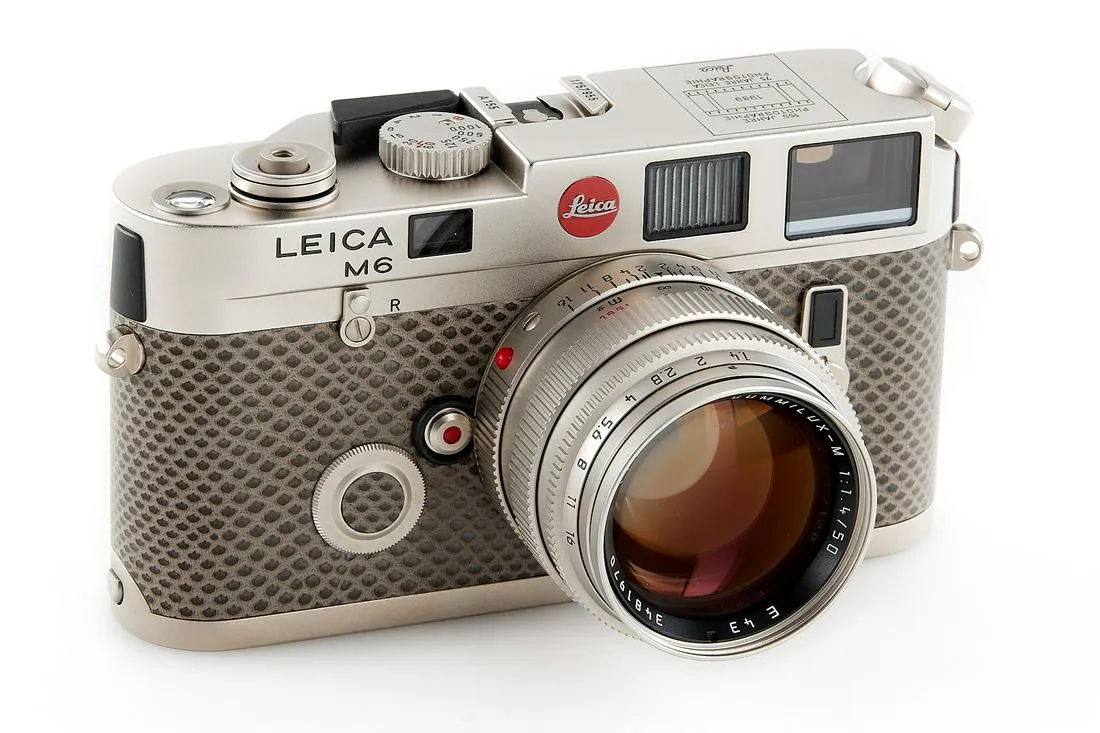

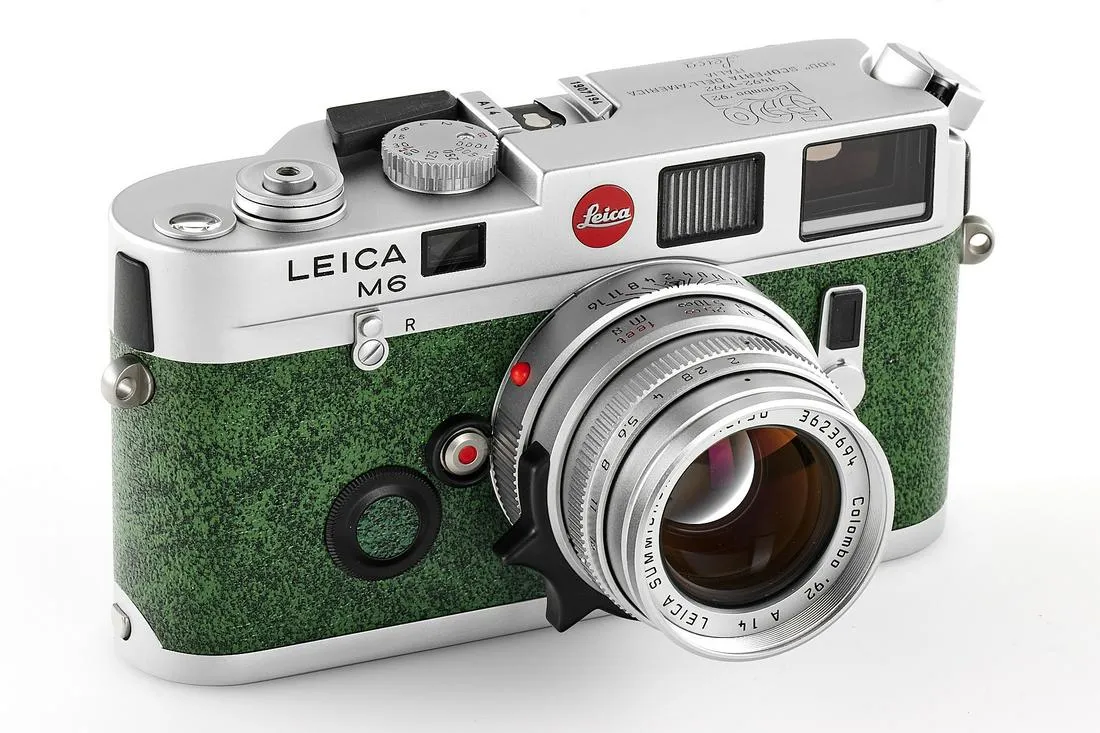
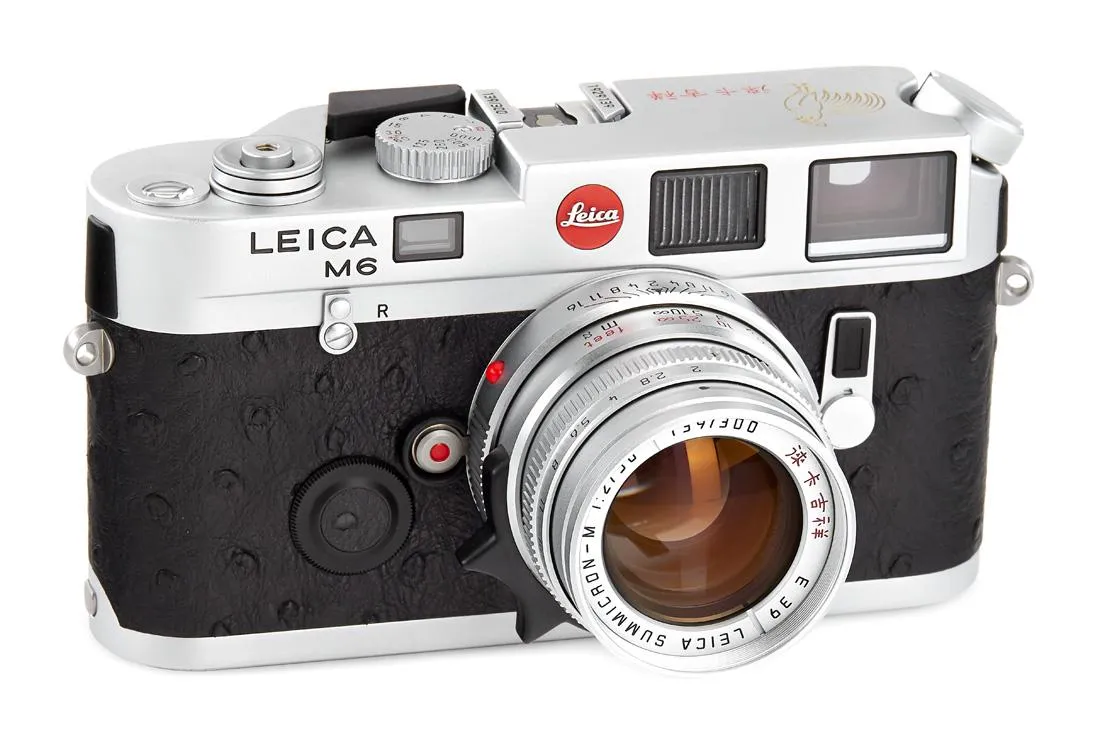
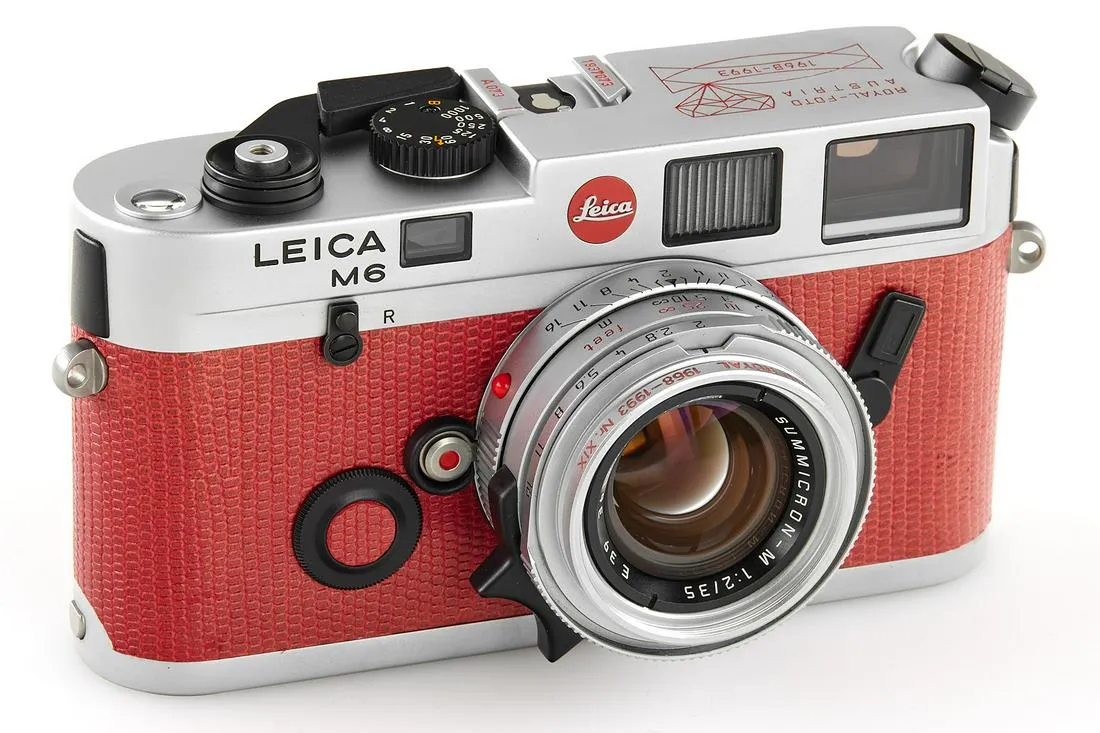
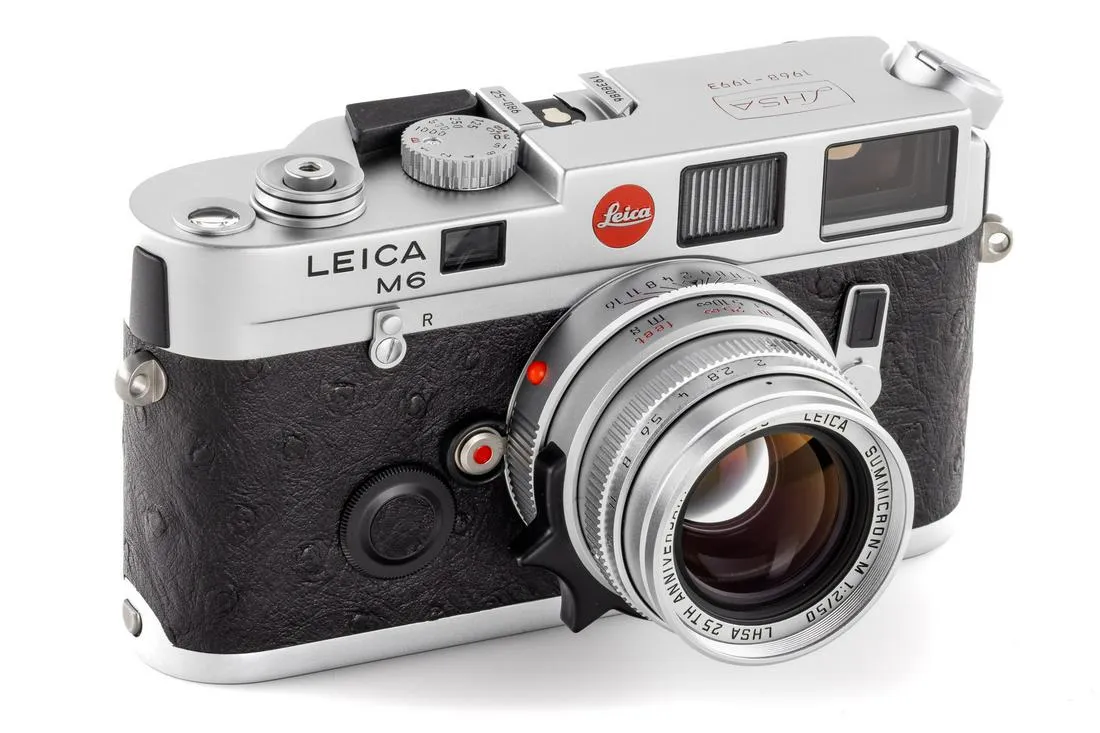

The Leica M6 combined the traditional mechanical M shutter with a built-in selective TTL exposure meter. Light was measured from a marked area on the first shutter curtain and the result displayed through LEDs in the finder. The batteries powered the meter rather than the shutter, so the mechanical exposure settings remained available without electrical power. The body and six-frame viewfinder developed directly from the M4-P. The M6 became one of the largest Leica M production groups, with nearly 129,000 cameras represented across the recorded variants.
1983
1983-1999
Leica
M6
The Leica M6 combined the traditional mechanical M shutter with a built-in selective TTL exposure meter. Light was measured from a marked area on the first shutter curtain and the result displayed through LEDs in the finder. The batteries powered the meter rather than the shutter, so the mechanical exposure settings remained available without electrical power. The body and six-frame viewfinder developed directly from the M4-P. The M6 became one of the largest Leica M production groups, with nearly 129,000 cameras represented across the recorded variants.
1994

1994
Leica
M6J

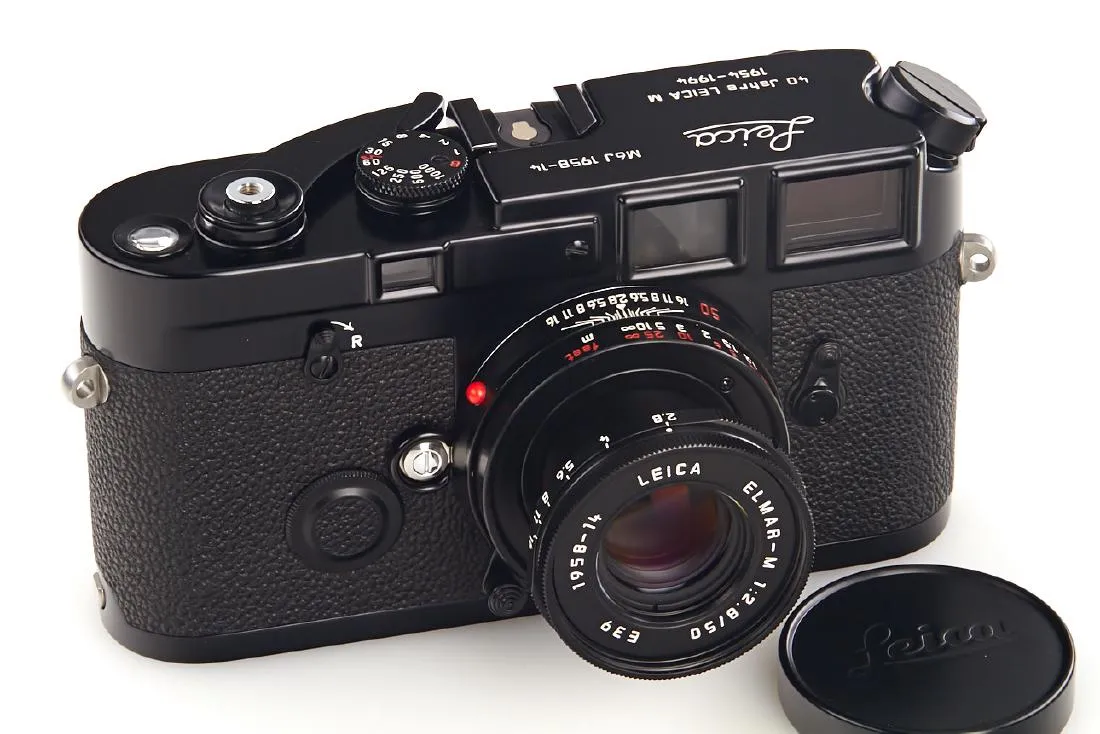
The M6J was made in 1994 to mark forty years of the Leica M system. 1,640 cameras were produced, arranged as forty cameras for each of the forty-one years numbered 1954 through 1994. The body combined M6 exposure metering with several M3-derived exterior details. Its most important technical distinction was the approximately 0.85× finder, providing greater rangefinder magnification than the standard M6. Frames were provided for 35mm, 50mm, 90mm and 135mm lenses. The camera was supplied with a matching collapsible 50mm f/2.8 Elmar.
1994
1994
Leica
M6J
The M6J was made in 1994 to mark forty years of the Leica M system. 1,640 cameras were produced, arranged as forty cameras for each of the forty-one years numbered 1954 through 1994. The body combined M6 exposure metering with several M3-derived exterior details. Its most important technical distinction was the approximately 0.85× finder, providing greater rangefinder magnification than the standard M6. Frames were provided for 35mm, 50mm, 90mm and 135mm lenses. The camera was supplied with a matching collapsible 50mm f/2.8 Elmar.
1998

1998-2008
Leica
M6 TTL
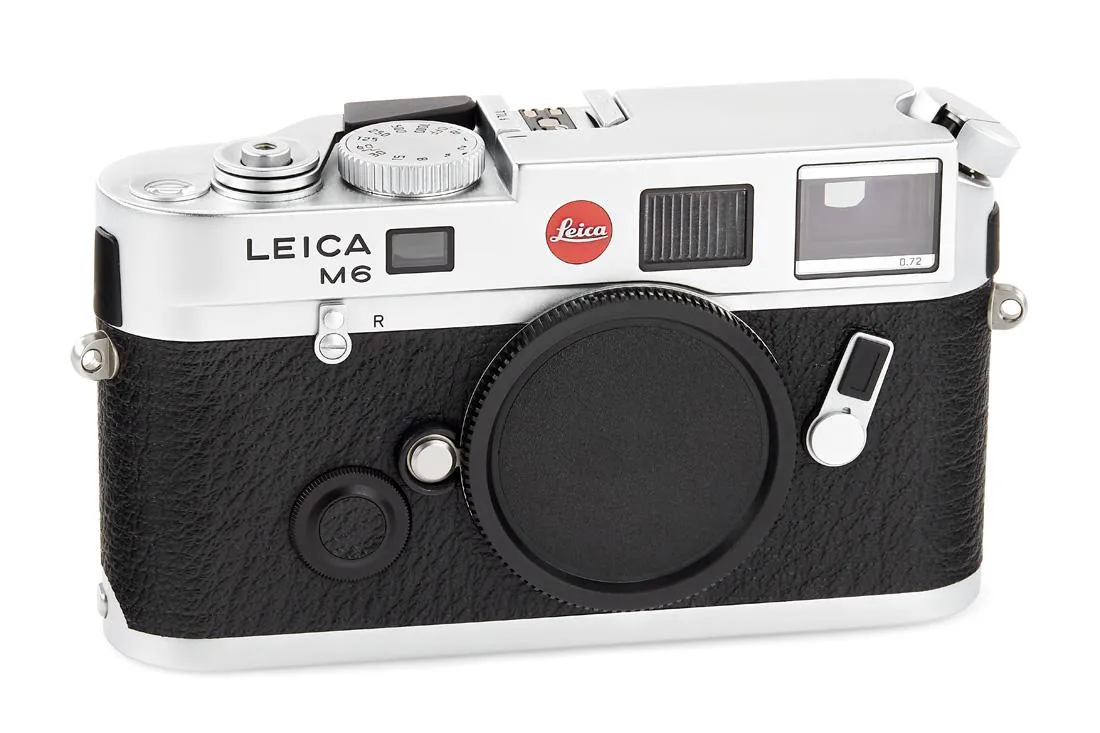

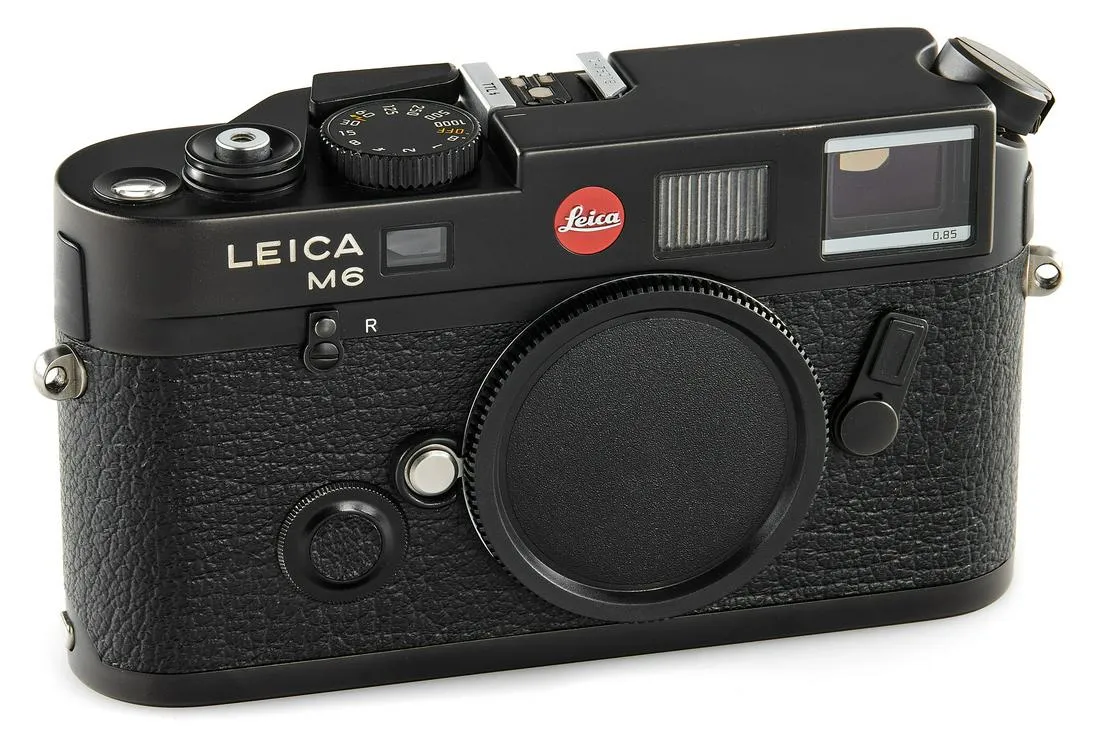
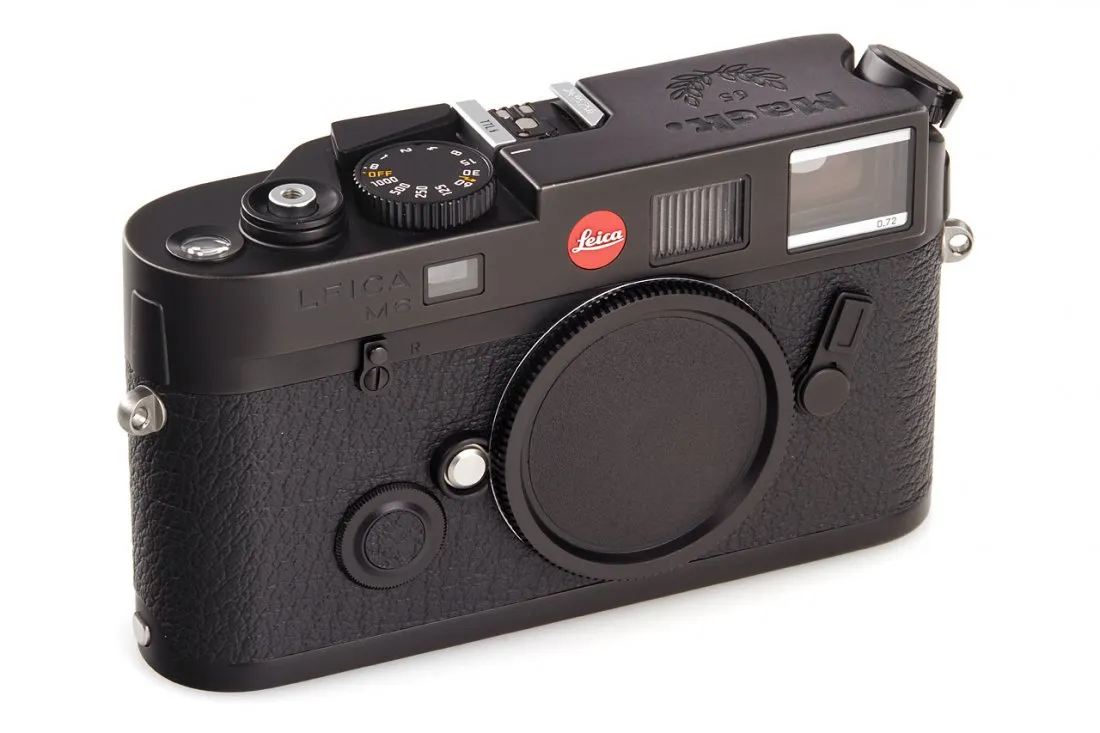
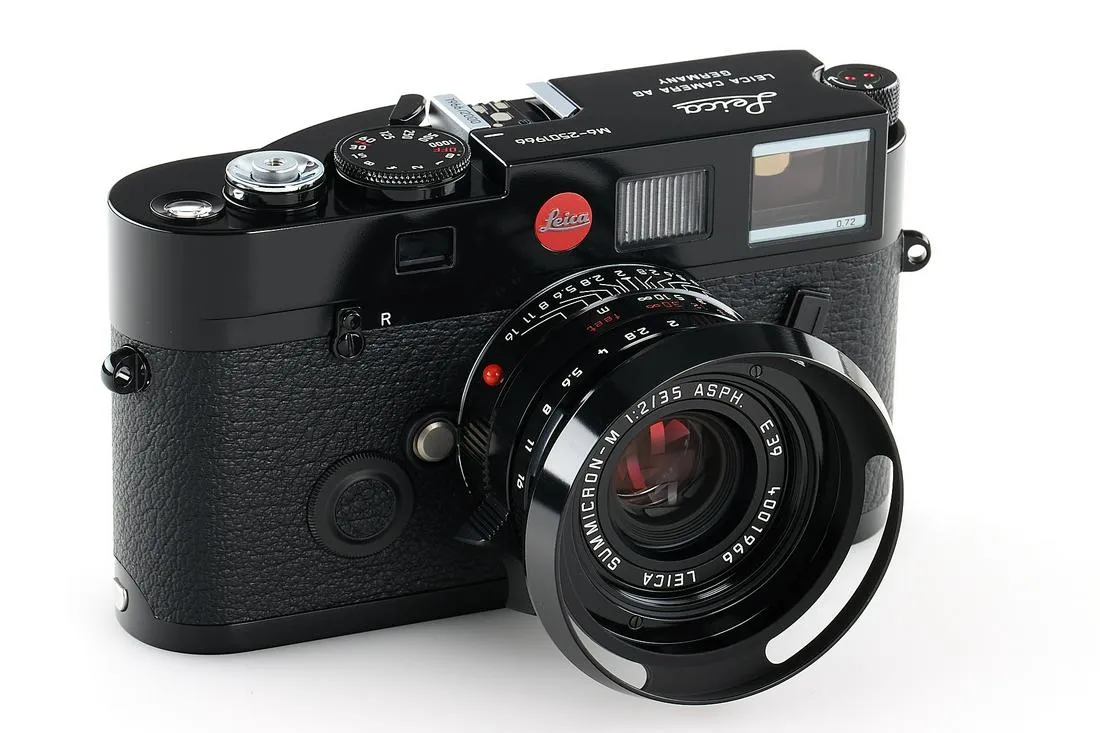

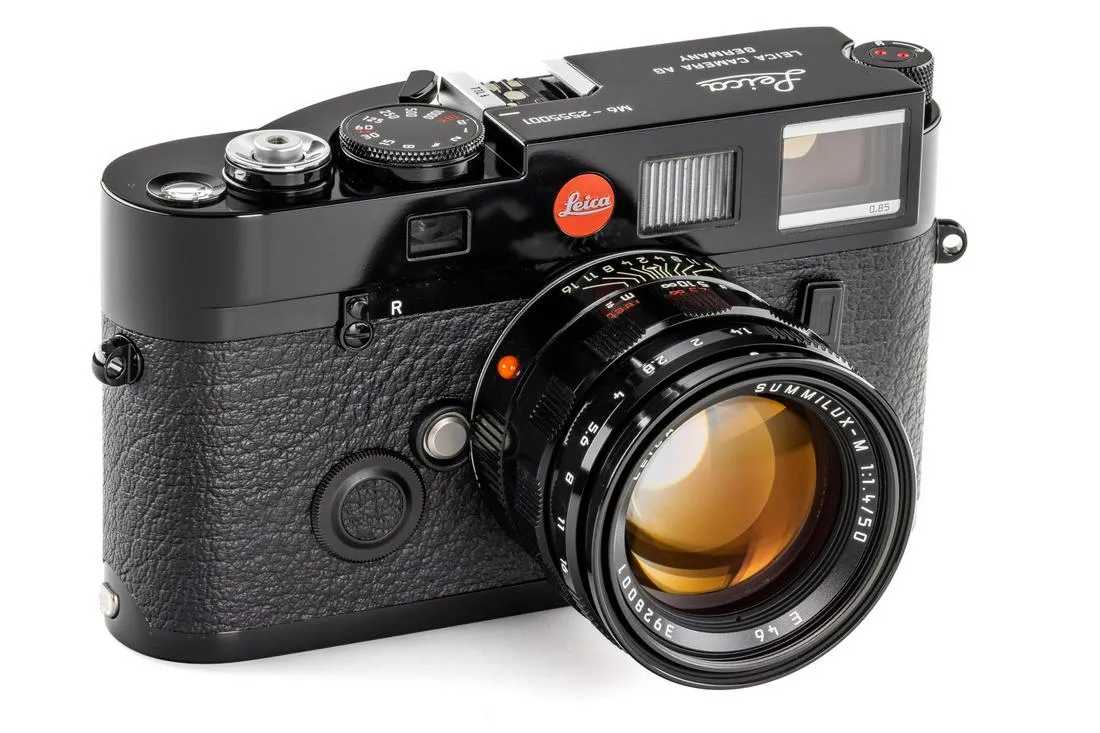

The Leica M6 TTL added through-the-lens flash exposure control to the M6. Additional electronics made the upper body slightly taller, and the shutter-speed dial became larger. Its direction of rotation was reversed so that adjustment corresponded directly with the directional meter indications in the finder. Versions were offered with 0.58×, 0.72× and 0.85× finder magnifications to suit different lens ranges and viewing requirements. The focal-plane shutter itself remained mechanically controlled, so battery power was required for metering and TTL flash functions rather than for ordinary shutter operation.
1998
1998-2008
Leica
M6 TTL
The Leica M6 TTL added through-the-lens flash exposure control to the M6. Additional electronics made the upper body slightly taller, and the shutter-speed dial became larger. Its direction of rotation was reversed so that adjustment corresponded directly with the directional meter indications in the finder. Versions were offered with 0.58×, 0.72× and 0.85× finder magnifications to suit different lens ranges and viewing requirements. The focal-plane shutter itself remained mechanically controlled, so battery power was required for metering and TTL flash functions rather than for ordinary shutter operation.
2000

2000-2004
Leica
0-serie (2000)

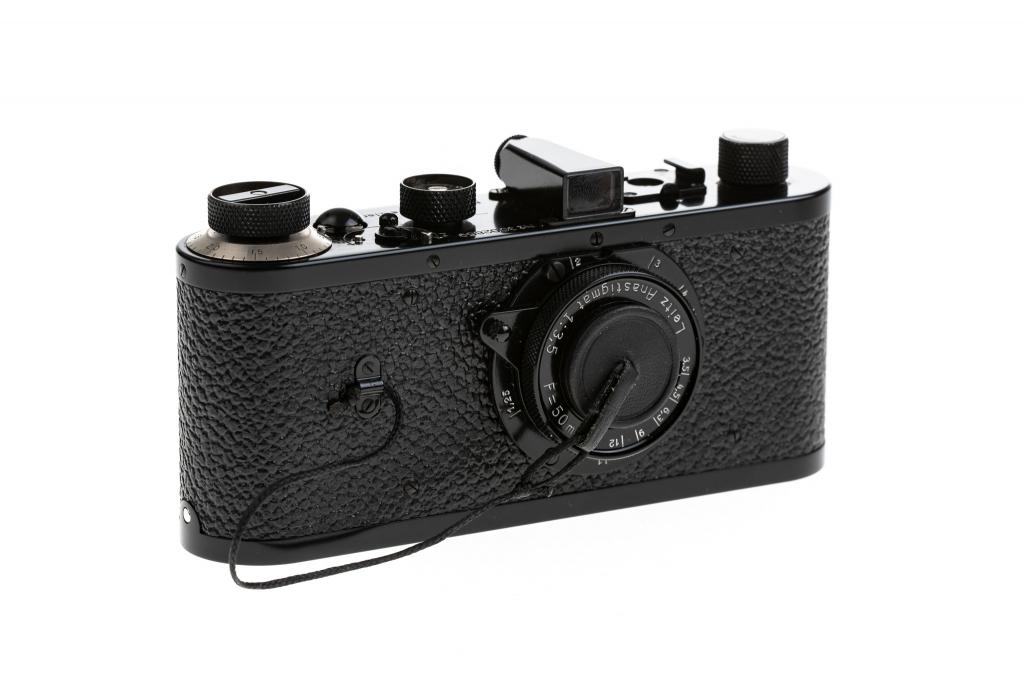
The later 0-Serie was a working reproduction of the early experimental camera, introduced at Photokina in 2000. It uses 35mm film and a fixed Anastigmat 50mm f/3.5 lens and retains the unusual operating arrangement of the original rather than disguising a modern Leica mechanism inside an old-style body. There is no coupled rangefinder or exposure meter. A second related version followed in connection with the 125th anniversary of Oskar Barnack’s birth. The two recorded variants together account for 5,000 cameras.
2000
2000-2004
Leica
0-serie (2000)
The later 0-Serie was a working reproduction of the early experimental camera, introduced at Photokina in 2000. It uses 35mm film and a fixed Anastigmat 50mm f/3.5 lens and retains the unusual operating arrangement of the original rather than disguising a modern Leica mechanism inside an old-style body. There is no coupled rangefinder or exposure meter. A second related version followed in connection with the 125th anniversary of Oskar Barnack’s birth. The two recorded variants together account for 5,000 cameras.
2001

2001-2009
Leica
M7
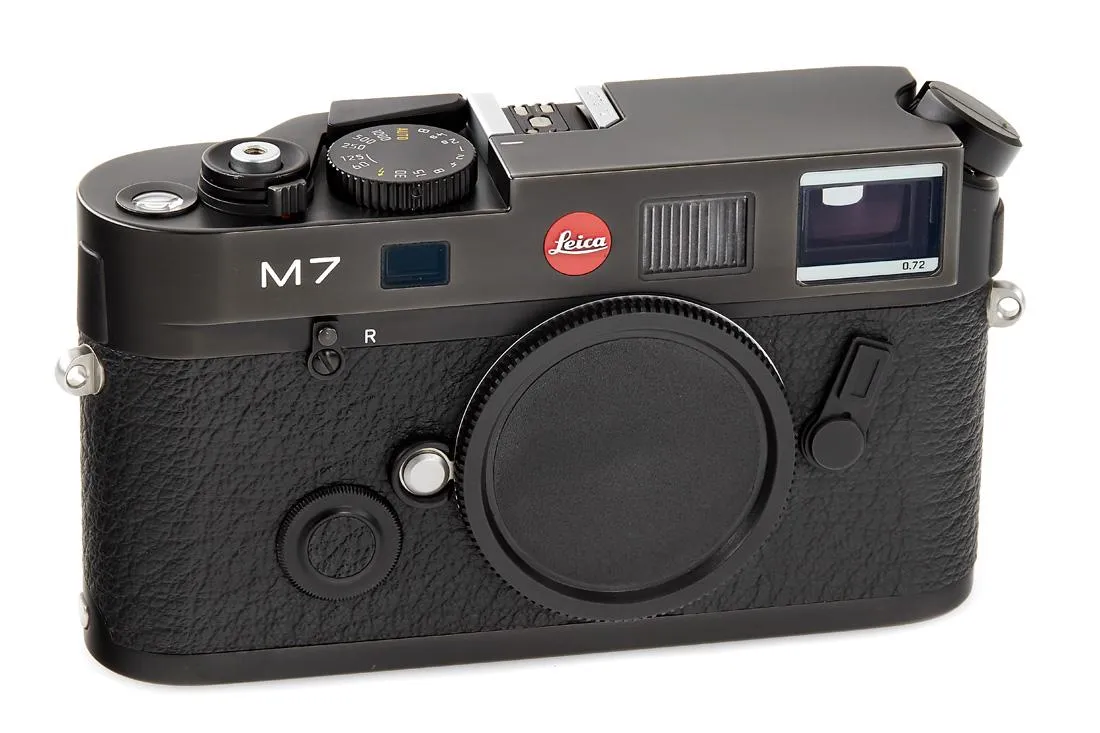

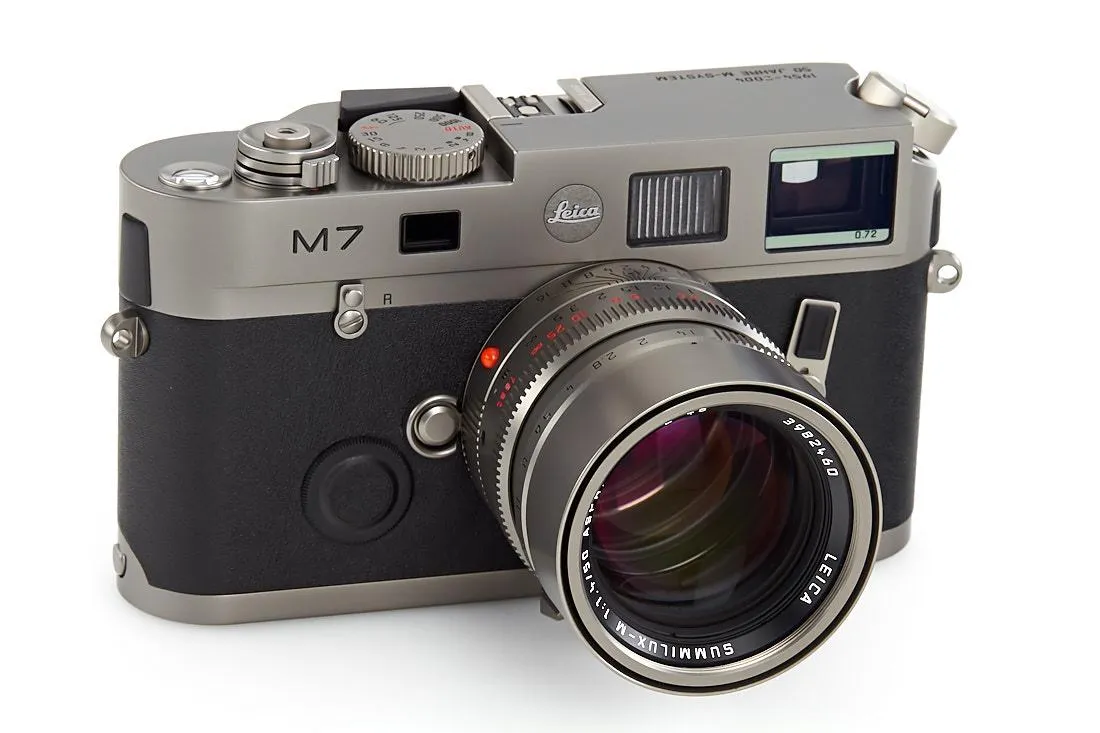


The Leica M7 introduced an electronically controlled shutter to the M film rangefinder and added aperture-priority automatic exposure. With the shutter dial at AUTO, the photographer selected the aperture and the camera set a continuously variable shutter speed. Manual shutter-speed selection remained available. Most speeds require electrical power, but 1/60 and 1/125 second can operate mechanically as emergency settings. The camera also retained TTL metering and flash functions. The M7 was therefore the first 35mm M to make automatic exposure an integral part of normal operation while retaining manual focusing and the optical rangefinder.

2001-2003
Leica
MP 6
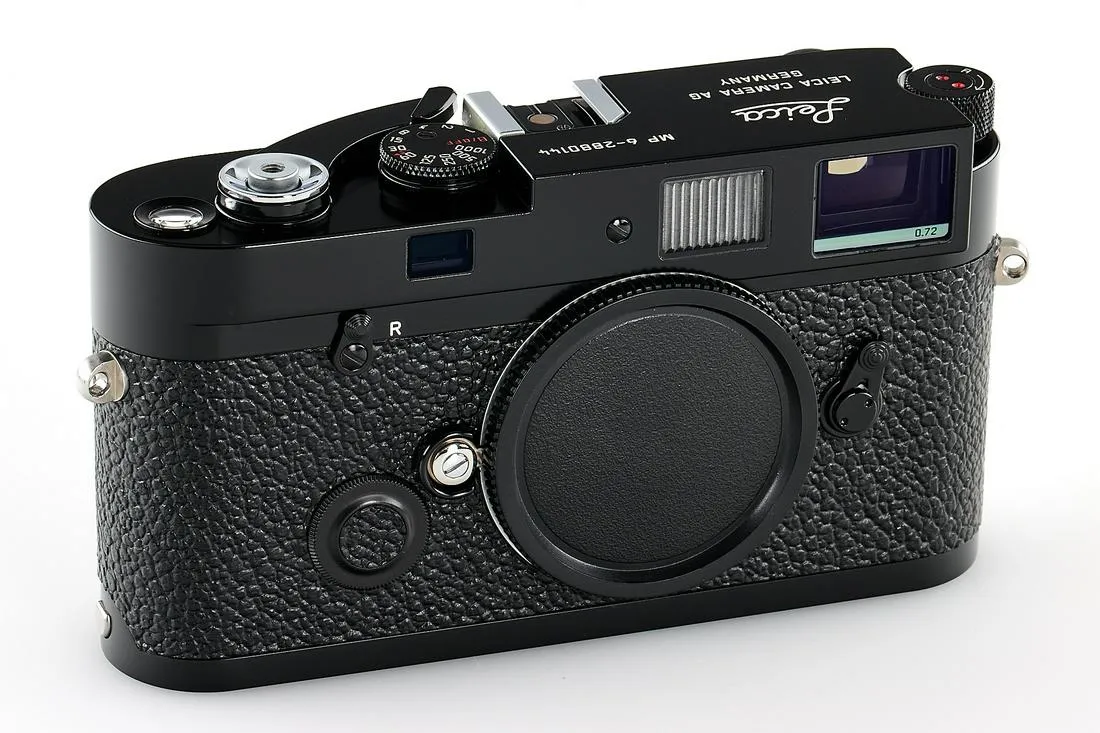

The MP 6 was a Japanese-market special version associated with the introduction of the modern MP. Mechanically it follows the regular MP, including its mechanical shutter and built-in TTL exposure meter, but uses exterior details intended to recall earlier Leica M cameras. These include traditional covering and altered top-plate engraving; variants also differ in the film-speed control used on the back. A Leicavit-M could be fitted in place of the normal base plate. The MP 6 preceded or accompanied the establishment of the modern MP as a regular production model rather than constituting a separate mechanical camera design.
2001
2001-2009
Leica
M7
The Leica M7 introduced an electronically controlled shutter to the M film rangefinder and added aperture-priority automatic exposure. With the shutter dial at AUTO, the photographer selected the aperture and the camera set a continuously variable shutter speed. Manual shutter-speed selection remained available. Most speeds require electrical power, but 1/60 and 1/125 second can operate mechanically as emergency settings. The camera also retained TTL metering and flash functions. The M7 was therefore the first 35mm M to make automatic exposure an integral part of normal operation while retaining manual focusing and the optical rangefinder.
2001-2003
Leica
MP 6
The MP 6 was a Japanese-market special version associated with the introduction of the modern MP. Mechanically it follows the regular MP, including its mechanical shutter and built-in TTL exposure meter, but uses exterior details intended to recall earlier Leica M cameras. These include traditional covering and altered top-plate engraving; variants also differ in the film-speed control used on the back. A Leicavit-M could be fitted in place of the normal base plate. The MP 6 preceded or accompanied the establishment of the modern MP as a regular production model rather than constituting a separate mechanical camera design.
2002

2002-2023
Leica
MP
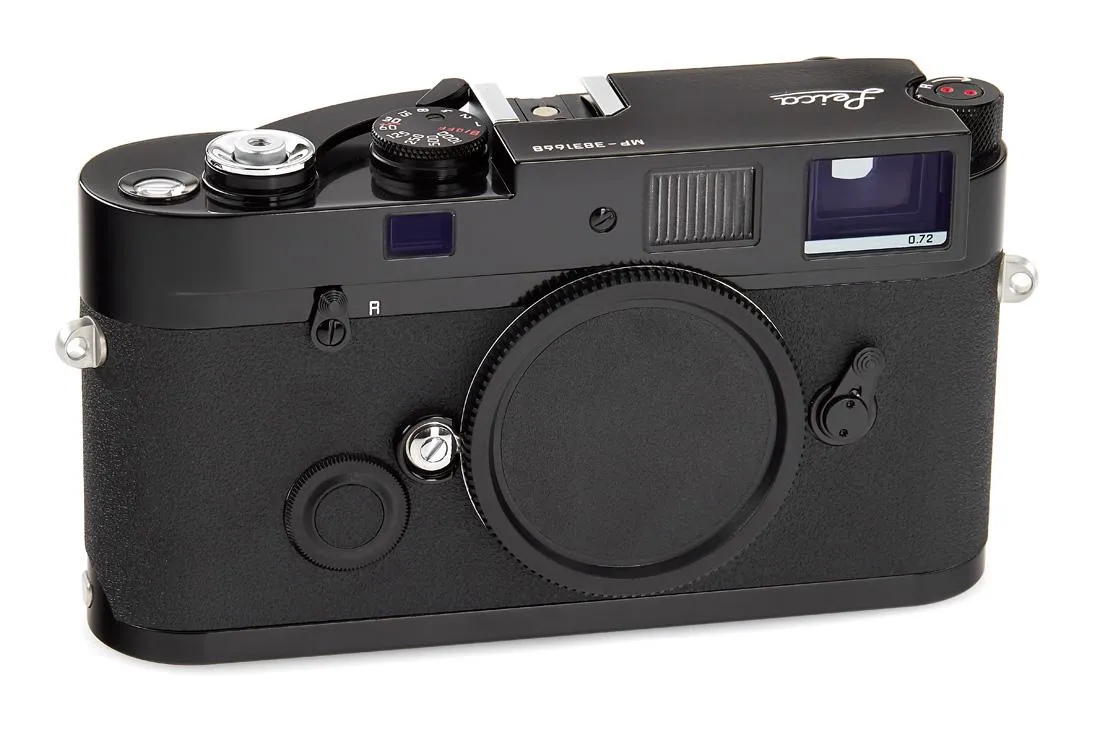
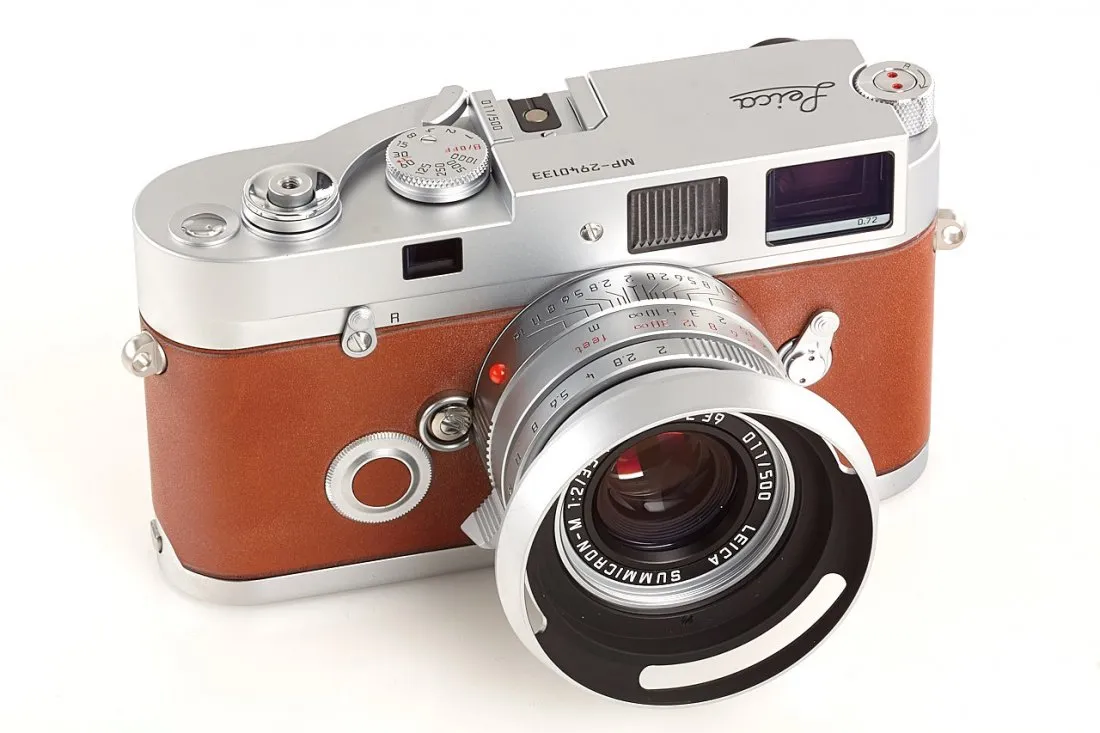
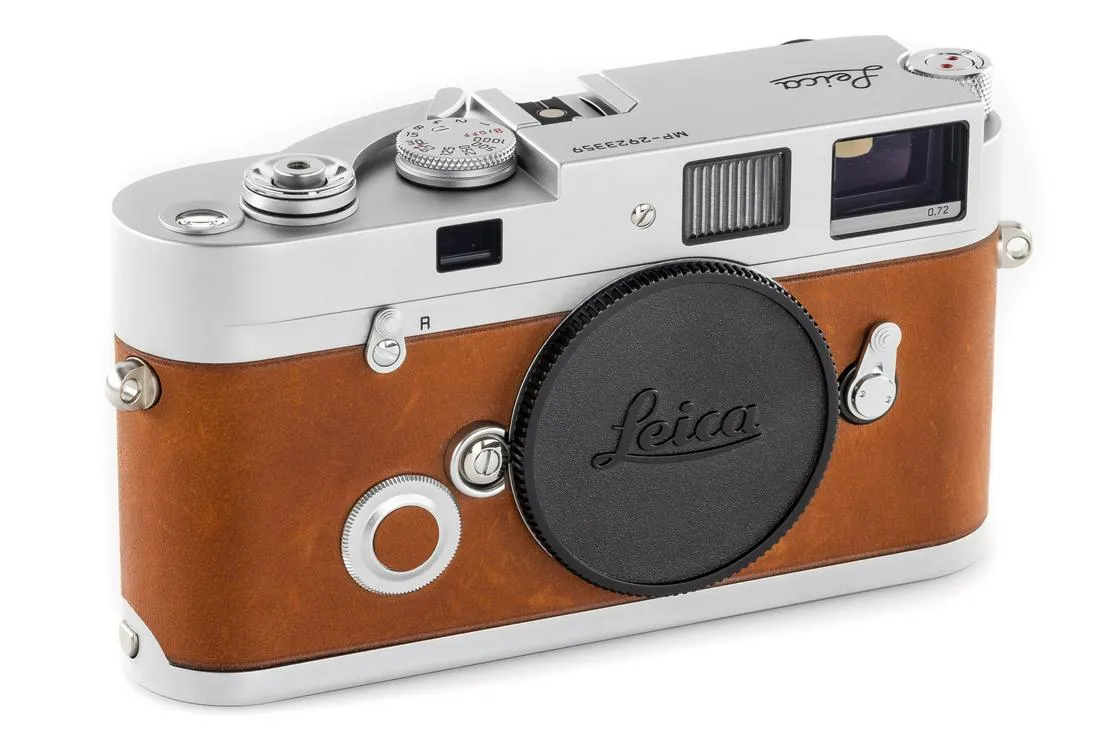

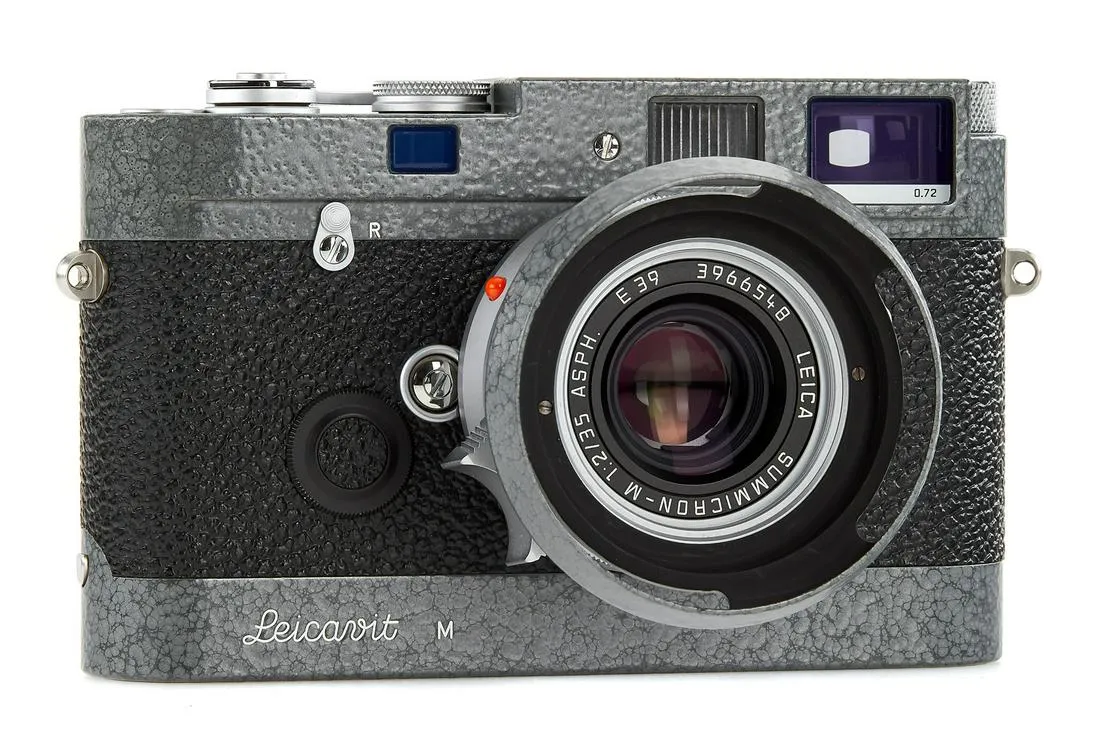
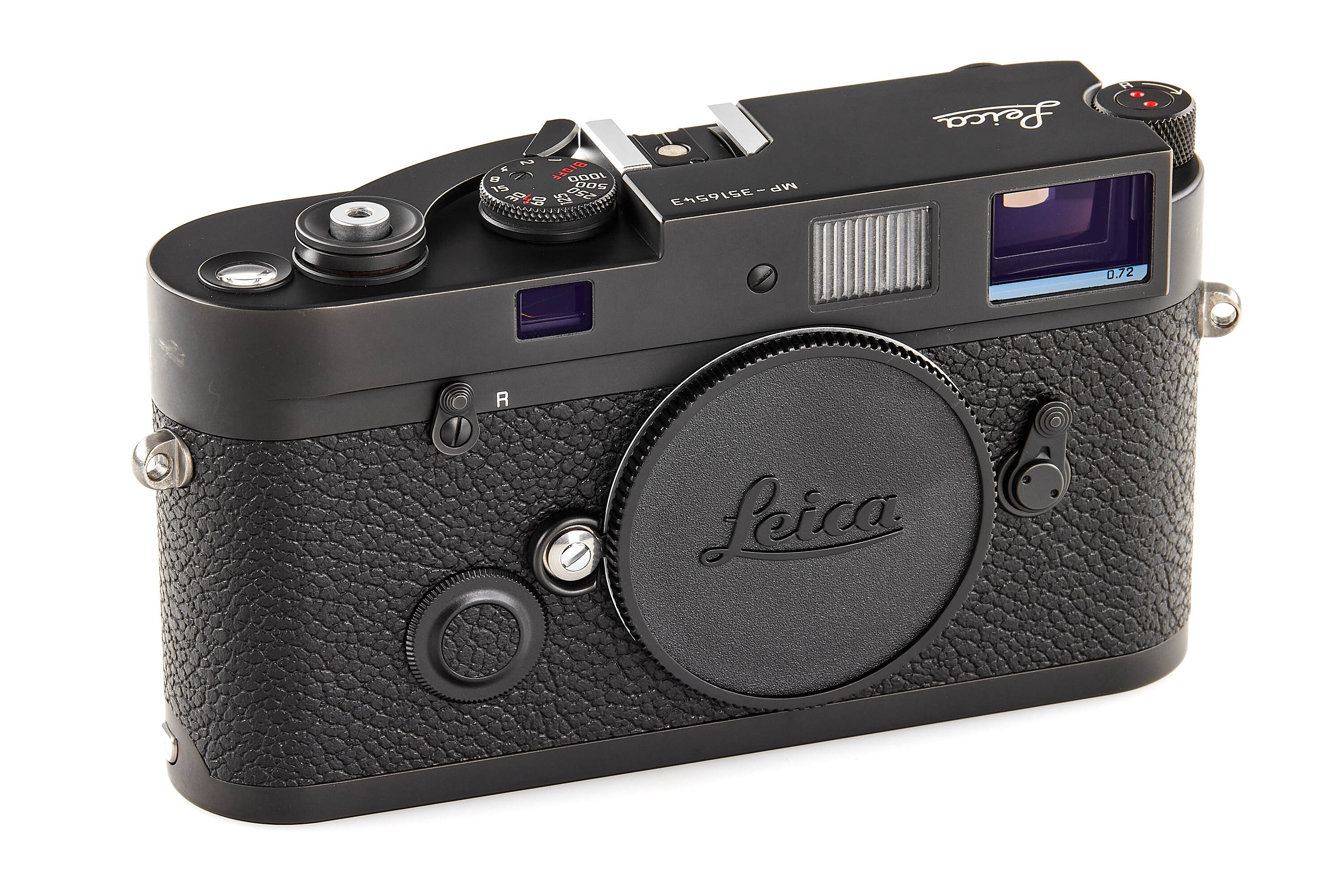
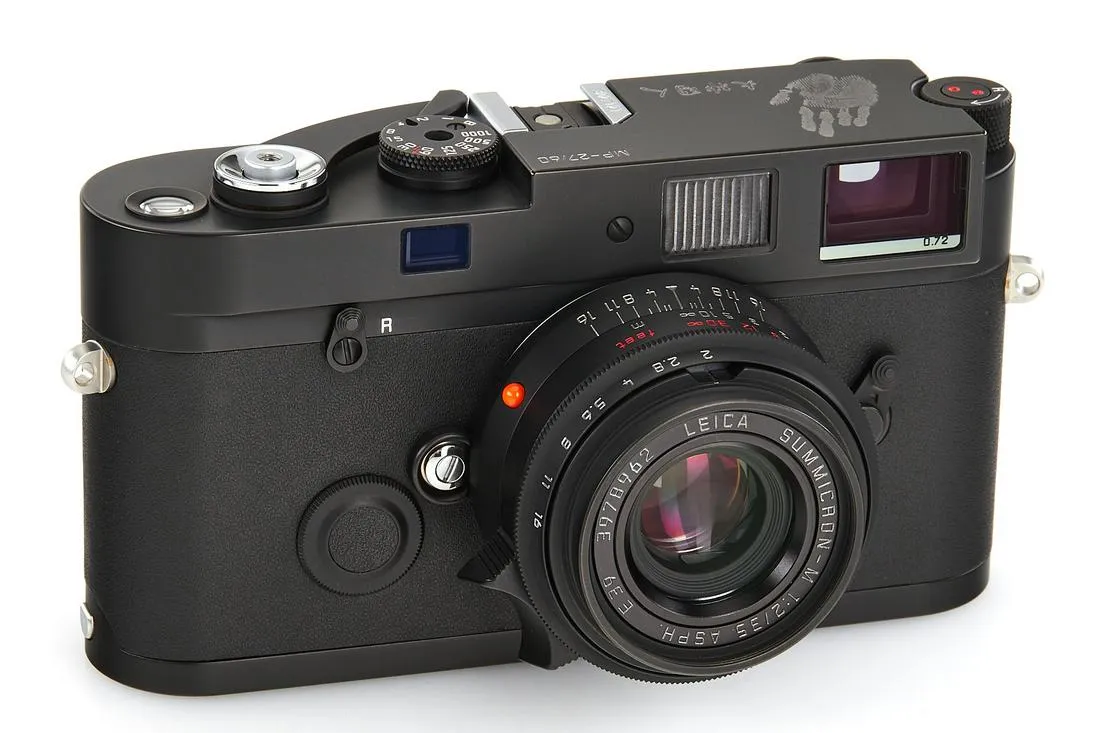

The modern Leica MP was introduced as a regular production mechanical M camera, distinct from the small professional MP series of the 1950s. It has a mechanically controlled cloth focal-plane shutter from one second to 1/1000 second and a selective TTL exposure meter. Battery power is required for the meter but not for the shutter. The standard finder has 0.72× magnification. Exterior details include a traditional rewind knob, while black-paint versions use brass top and bottom covers beneath the finish. The finder and rangefinder system were also revised to reduce stray light.
2002
2002-2023
Leica
MP
The modern Leica MP was introduced as a regular production mechanical M camera, distinct from the small professional MP series of the 1950s. It has a mechanically controlled cloth focal-plane shutter from one second to 1/1000 second and a selective TTL exposure meter. Battery power is required for the meter but not for the shutter. The standard finder has 0.72× magnification. Exterior details include a traditional rewind knob, while black-paint versions use brass top and bottom covers beneath the finish. The finder and rangefinder system were also revised to reduce stray light.
2005

2005
Leica
MP 3
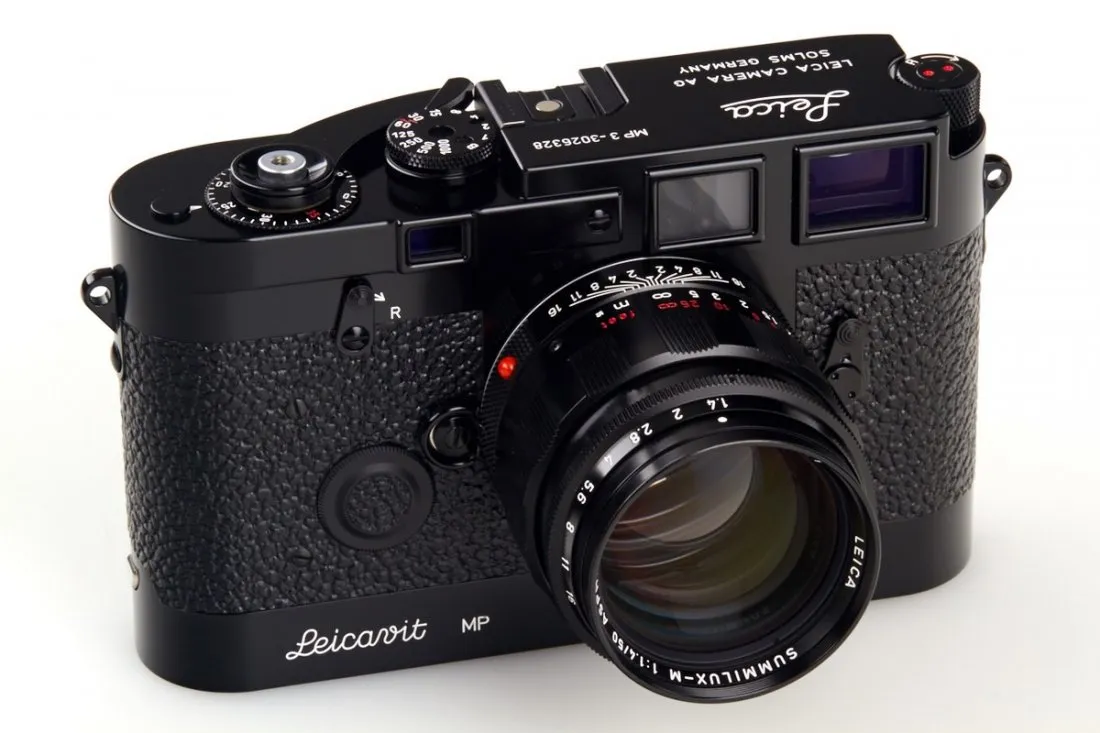

The Leica MP 3 was developed with the Leica Historical Society of America and used the modern MP mechanism beneath an extensively redesigned exterior. Early-M details included raised surrounds around the finder windows, extended strap lugs, a manually set external frame counter and a simplified finder with frames for 35mm, 50mm and 90mm lenses. The camera retained the modern TTL meter. Outfits could include a matching Leicavit and a 50mm f/1.4 Summilux-M ASPH. made with exterior styling based on an earlier Summilux. The special components required more alteration than a conventional finish-and-engraving edition.
2005
2005
Leica
MP 3
The Leica MP 3 was developed with the Leica Historical Society of America and used the modern MP mechanism beneath an extensively redesigned exterior. Early-M details included raised surrounds around the finder windows, extended strap lugs, a manually set external frame counter and a simplified finder with frames for 35mm, 50mm and 90mm lenses. The camera retained the modern TTL meter. Outfits could include a matching Leicavit and a 50mm f/1.4 Summilux-M ASPH. made with exterior styling based on an earlier Summilux. The special components required more alteration than a conventional finish-and-engraving edition.
2006

2006
Leica
M3 J
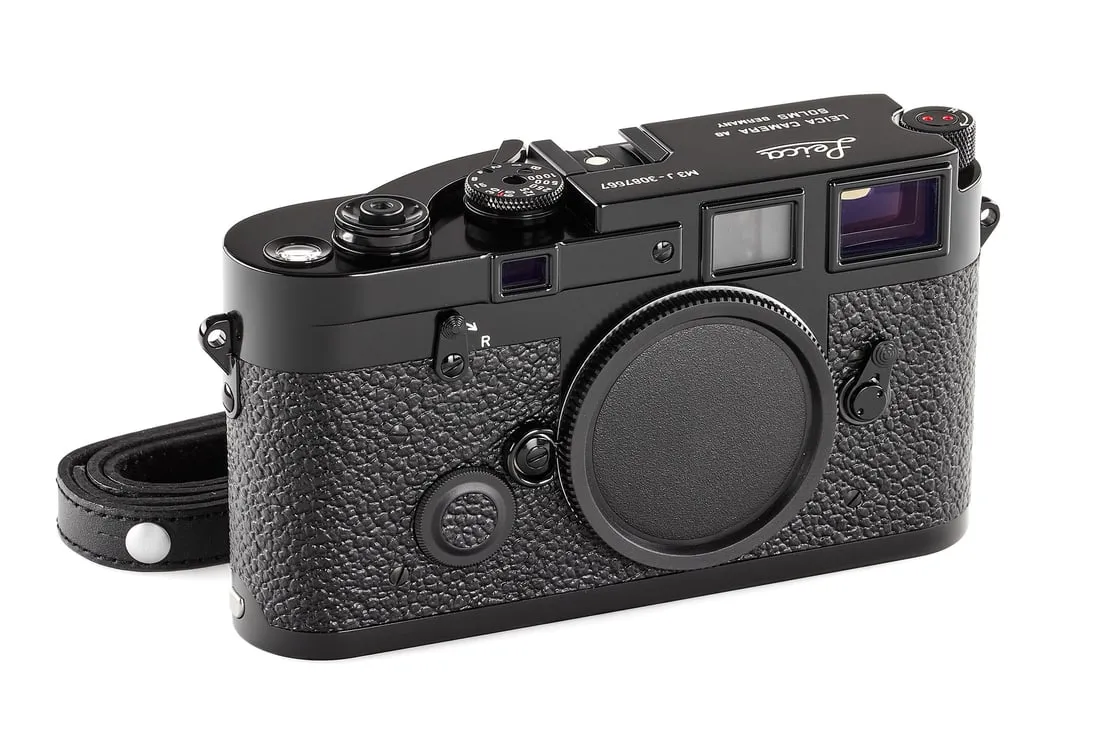
The Leica M3 J was made for the opening of Leica’s Ginza store in Tokyo in 2006. The camera is based mechanically on the contemporary MP but its exterior was designed after an early black-painted M3. Details included early-pattern strap lugs, black-painted controls and an M3-style upper body. Unlike the original M3, it has a built-in exposure meter and uses a 0.72× finder. The Japanese retail price at introduction was ¥627,900. The M3 J was therefore a modern metered MP internally, with external construction developed specifically to reproduce details of an early M3
2006
2006
Leica
M3 J
The Leica M3 J was made for the opening of Leica’s Ginza store in Tokyo in 2006. The camera is based mechanically on the contemporary MP but its exterior was designed after an early black-painted M3. Details included early-pattern strap lugs, black-painted controls and an M3-style upper body. Unlike the original M3, it has a built-in exposure meter and uses a 0.72× finder. The Japanese retail price at introduction was ¥627,900. The M3 J was therefore a modern metered MP internally, with external construction developed specifically to reproduce details of an early M3
2010
2010-2011
Leica
M3-P

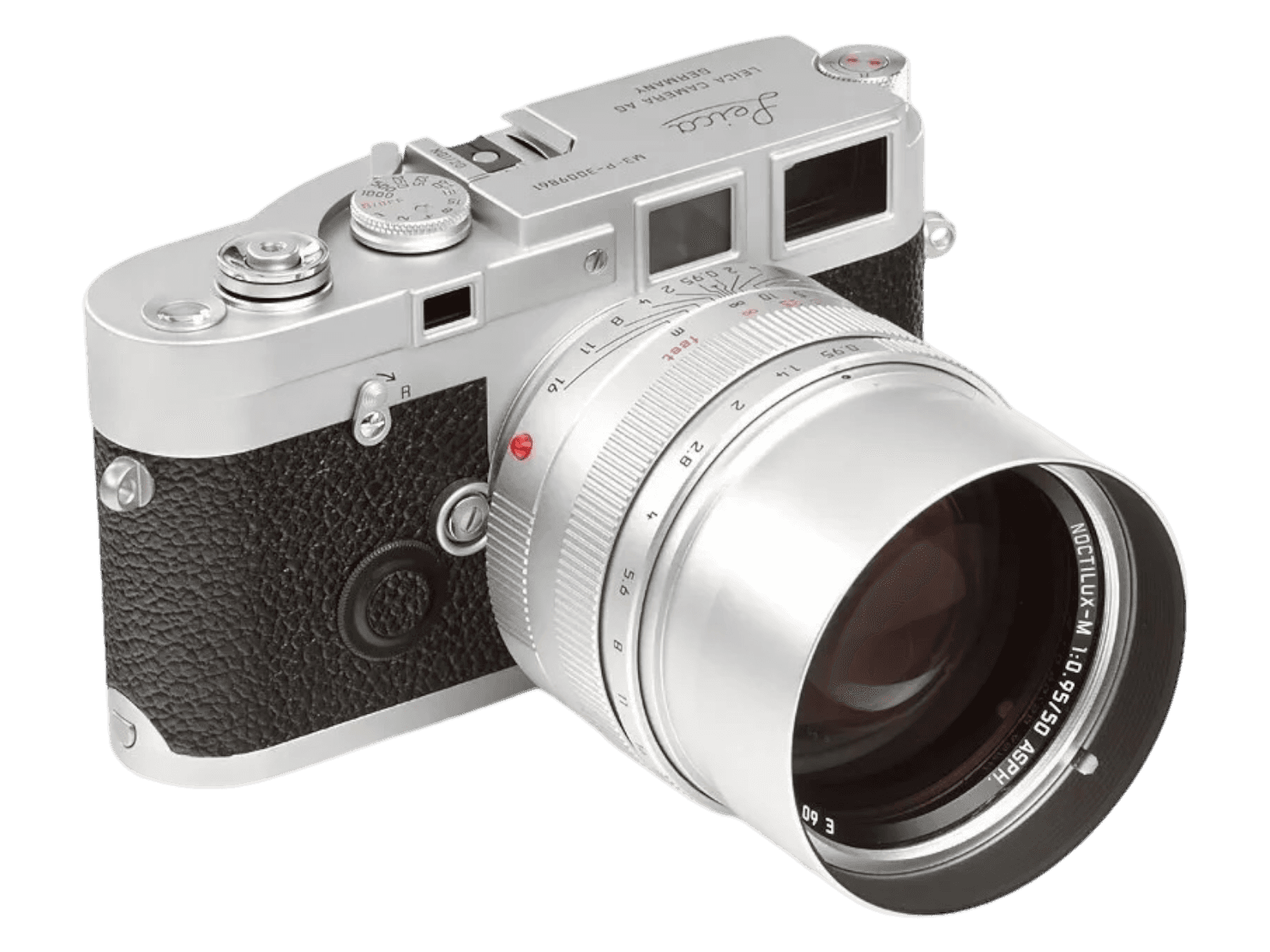
The M3-P was made to mark the twentieth anniversary of the Leica Shop in Vienna. It uses the modern mechanical MP as its basis but has a silver-chrome body with vulcanite covering and an upper housing patterned after the M3. Unlike an original M3, it retains a built-in exposure meter. The anniversary number was marked on the accessory shoe. Sets were supplied with a silver-finished Noctilux-M 50mm f/0.95 ASPH., a finish not used for the normal production version of that lens. The recorded cameras form a very small group within this special edition.
2010
2010-2011
Leica
M3-P
The M3-P was made to mark the twentieth anniversary of the Leica Shop in Vienna. It uses the modern mechanical MP as its basis but has a silver-chrome body with vulcanite covering and an upper housing patterned after the M3. Unlike an original M3, it retains a built-in exposure meter. The anniversary number was marked on the accessory shoe. Sets were supplied with a silver-finished Noctilux-M 50mm f/0.95 ASPH., a finish not used for the normal production version of that lens. The recorded cameras form a very small group within this special edition.
2014

2014-2024
Leica
M-A
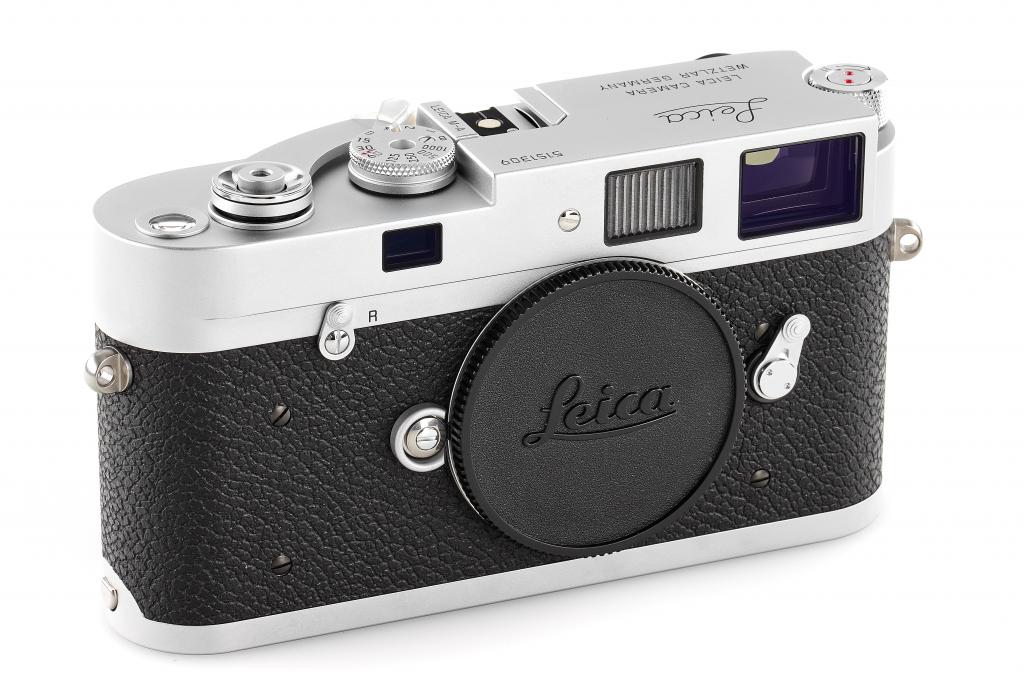
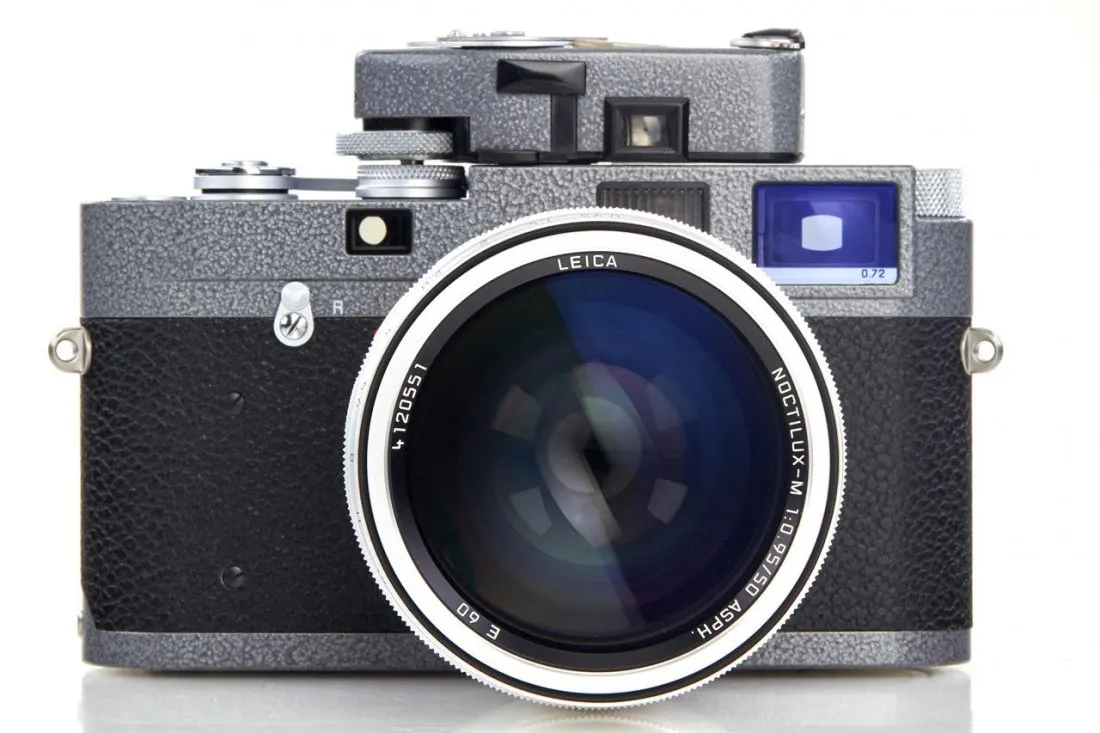
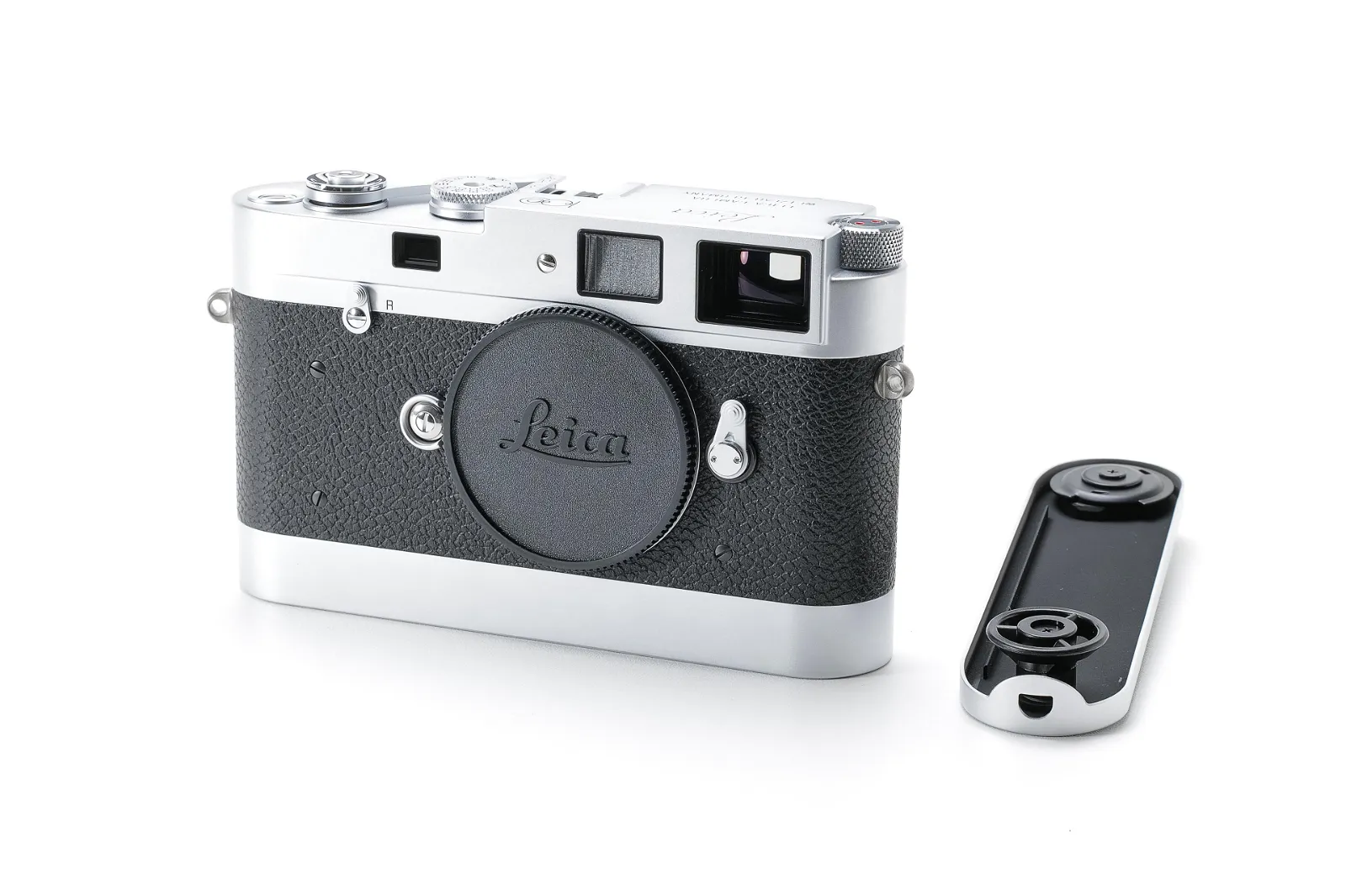
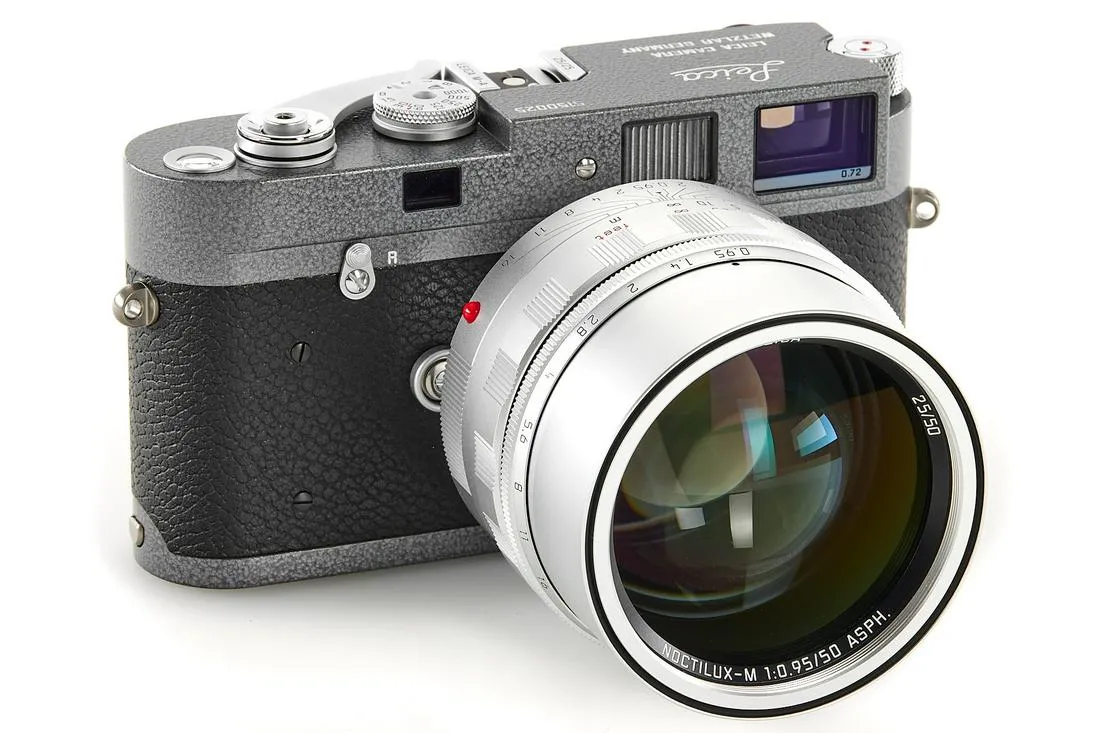
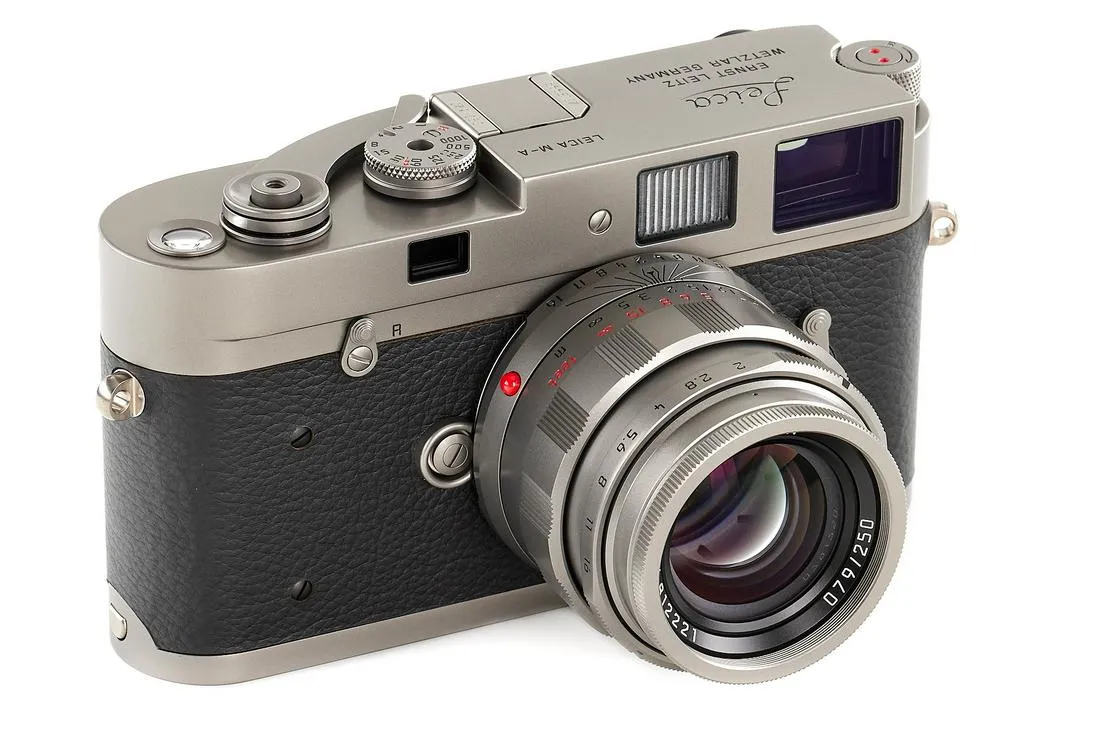

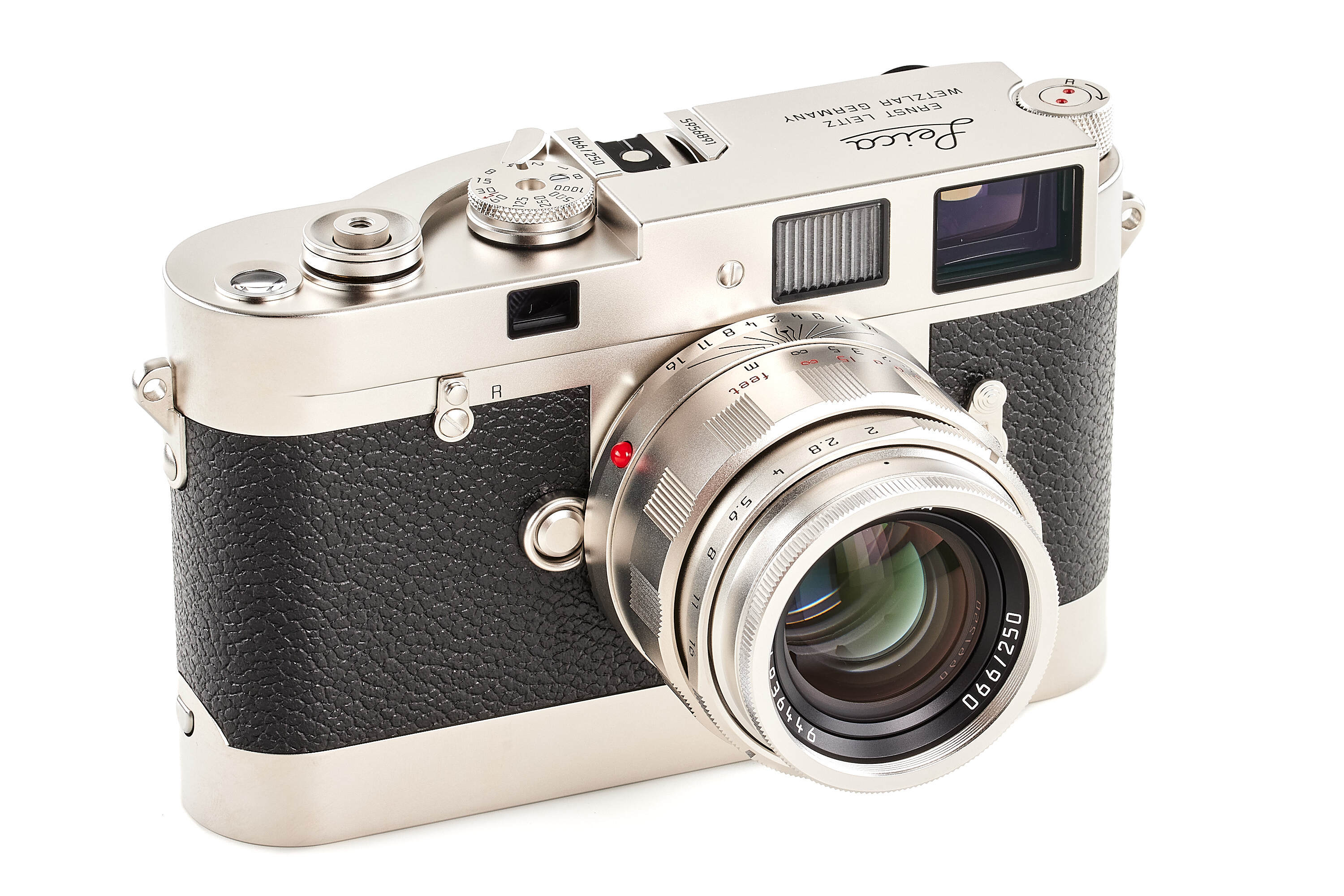
Introduced in 2014, the Leica M-A is a mechanical M rangefinder without an internal exposure meter. It requires no battery and contains no automatic exposure system. Shutter speeds from one second to 1/1000 second, together with B, are mechanically controlled; aperture is set on the lens and exposure must be determined externally. The camera retains the M bayonet and a 0.72× bright-line rangefinder. Its top and bottom covers are brass. Functionally, the M-A returns to the meterless arrangement of earlier M cameras while using contemporary Leica M construction.
2014
2014-2024
Leica
M-A
Introduced in 2014, the Leica M-A is a mechanical M rangefinder without an internal exposure meter. It requires no battery and contains no automatic exposure system. Shutter speeds from one second to 1/1000 second, together with B, are mechanically controlled; aperture is set on the lens and exposure must be determined externally. The camera retains the M bayonet and a 0.72× bright-line rangefinder. Its top and bottom covers are brass. Functionally, the M-A returns to the meterless arrangement of earlier M cameras while using contemporary Leica M construction.
2022

2022-2023
Leica
M6 (2022)

The M6 returned to production in 2022 with the basic operating arrangement of the earlier M6: a mechanical shutter combined with selective TTL exposure metering. The finder has 0.72× magnification and uses coated optical surfaces to reduce stray light. The meter retains directional arrows and adds a central red dot for correct exposure together with a battery warning. Construction also differs from many earlier M6 cameras: the new upper cover is machined from solid brass rather than die-cast zinc and finished in black lacquer. Batteries are used for the meter; the shutter remains mechanically controlled from one second to 1/1000 second.
2022
2022-2023
Leica
M6 (2022)
The M6 returned to production in 2022 with the basic operating arrangement of the earlier M6: a mechanical shutter combined with selective TTL exposure metering. The finder has 0.72× magnification and uses coated optical surfaces to reduce stray light. The meter retains directional arrows and adds a central red dot for correct exposure together with a battery warning. Construction also differs from many earlier M6 cameras: the new upper cover is machined from solid brass rather than die-cast zinc and finished in black lacquer. Batteries are used for the meter; the shutter remains mechanically controlled from one second to 1/1000 second.

" transform="translate(3 3)" width="44px"/></svg>)
© Jordan Lockhart / Lockhart's List 2026. All rights reserved. This website and its database content are protected by copyright and the EU Database Directive (96/9/EC).
Lockhart's List is an independent website and not affiliated or endorsed by Leica Camera AG or its subsidiaries. No part of this database may be reproduced or distributed in any form without written consent from the database creator. No images seen in this database may be altered, copied, or distributed without the express written permission of the image copyright holder. Images that appear in this database do so with the consent of their copyright holders. No responsibility or liability can be accepted with respect to estimated values or records of production and is for hobbyist purposes only. Classifications, quantities, records, images, sales, & market prices are subject to change, additions, & deletions. Any offers to buy or sell are purely preliminary and not binding. We hope you gain valuable insight from information contained herein & good luck on your endeavors.
© Jordan Lockhart / Lockhart's List 2026. All rights reserved. This website and its database content are protected by copyright and the EU Database Directive (96/9/EC).
Lockhart's List is an independent website and not affiliated or endorsed by Leica Camera AG or its subsidiaries. No part of this database may be reproduced or distributed in any form without written consent from the database creator. No images seen in this database may be altered, copied, or distributed without the express written permission of the image copyright holder. Images that appear in this database do so with the consent of their copyright holders. No responsibility or liability can be accepted with respect to estimated values or records of production and is for hobbyist purposes only. Classifications, quantities, records, images, sales, & market prices are subject to change, additions, & deletions. Any offers to buy or sell are purely preliminary and not binding. We hope you gain valuable insight from information contained herein & good luck on your endeavors.